Gastroparesis is Real

Janna Cross

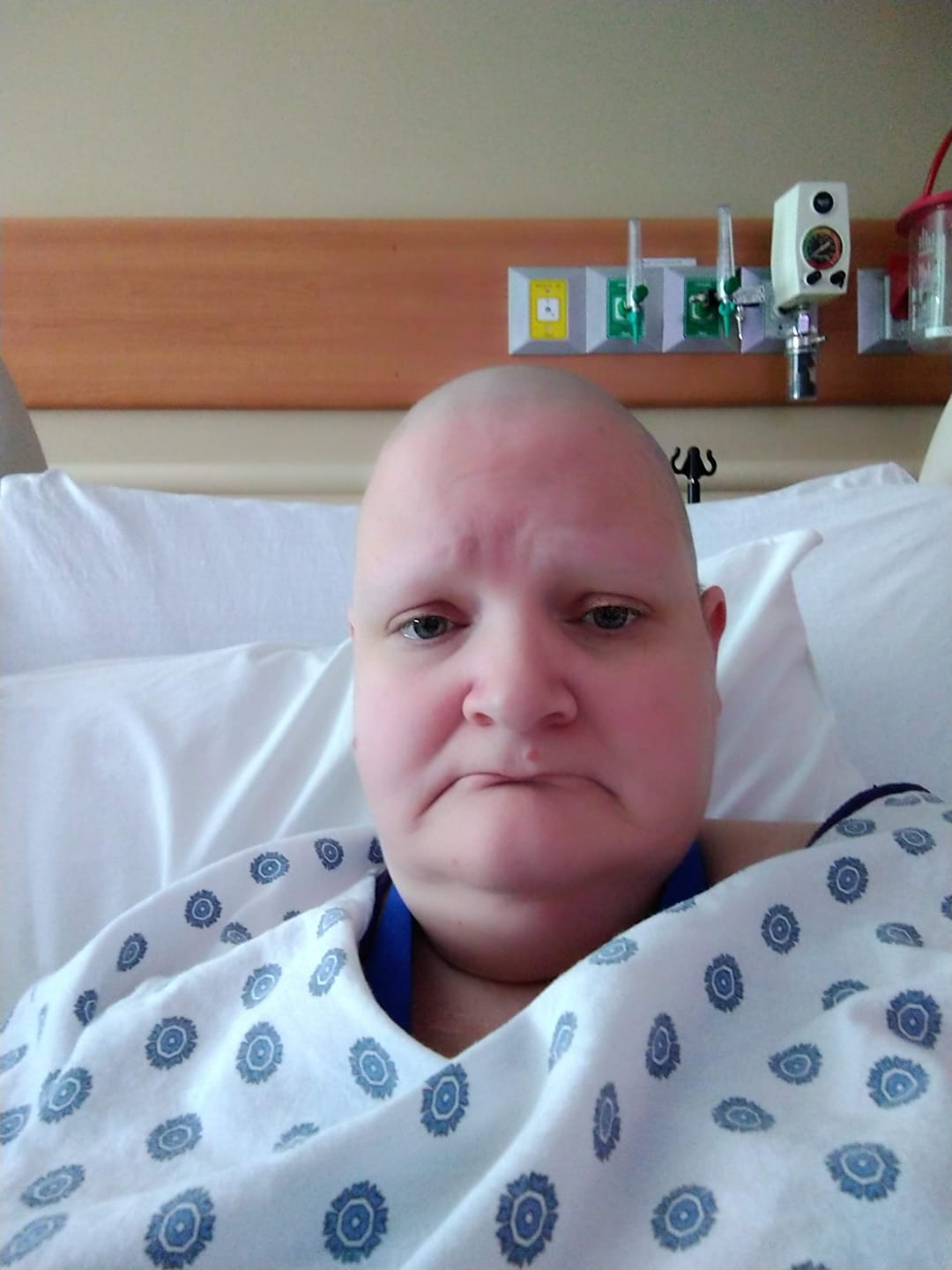
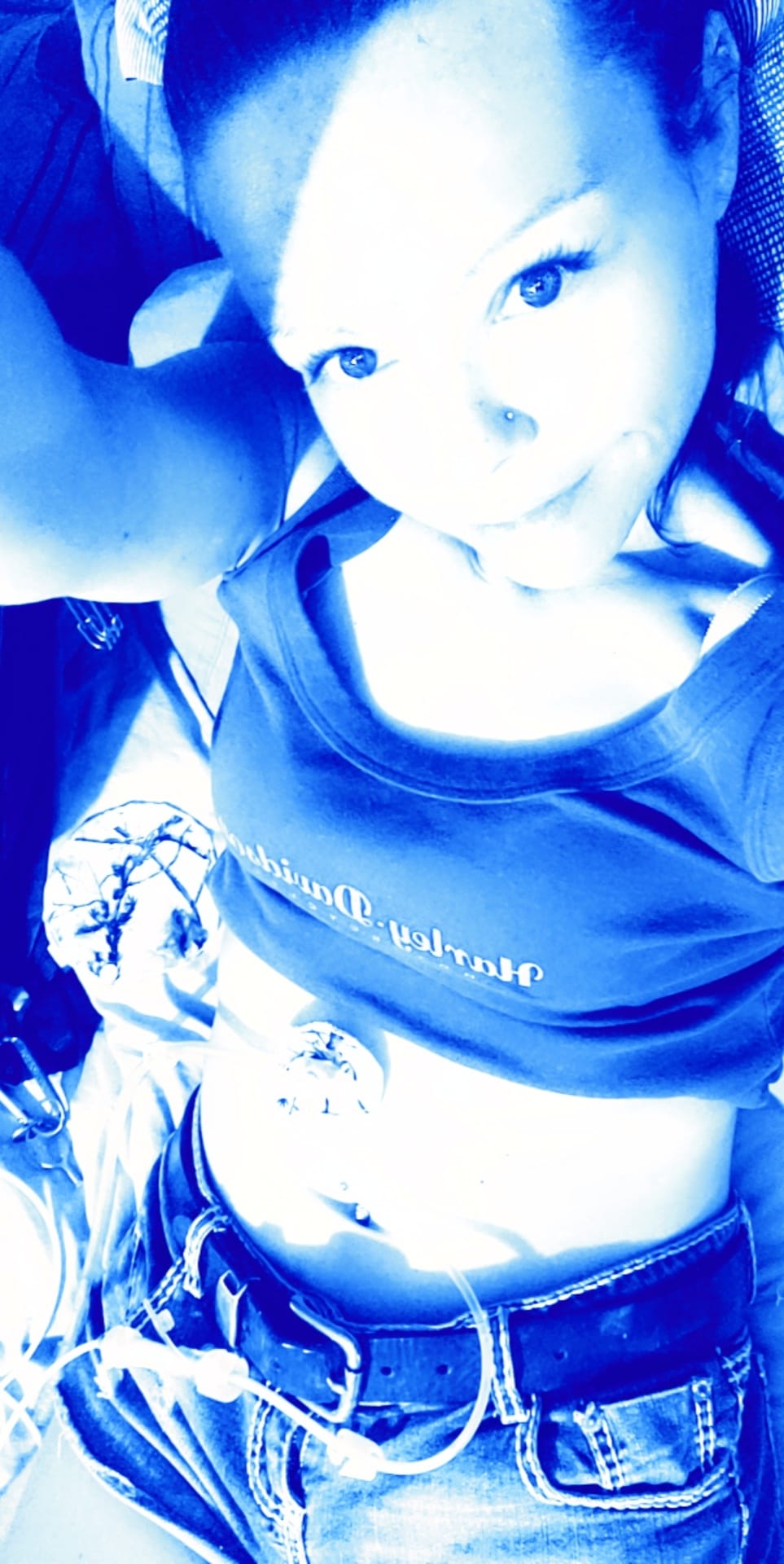
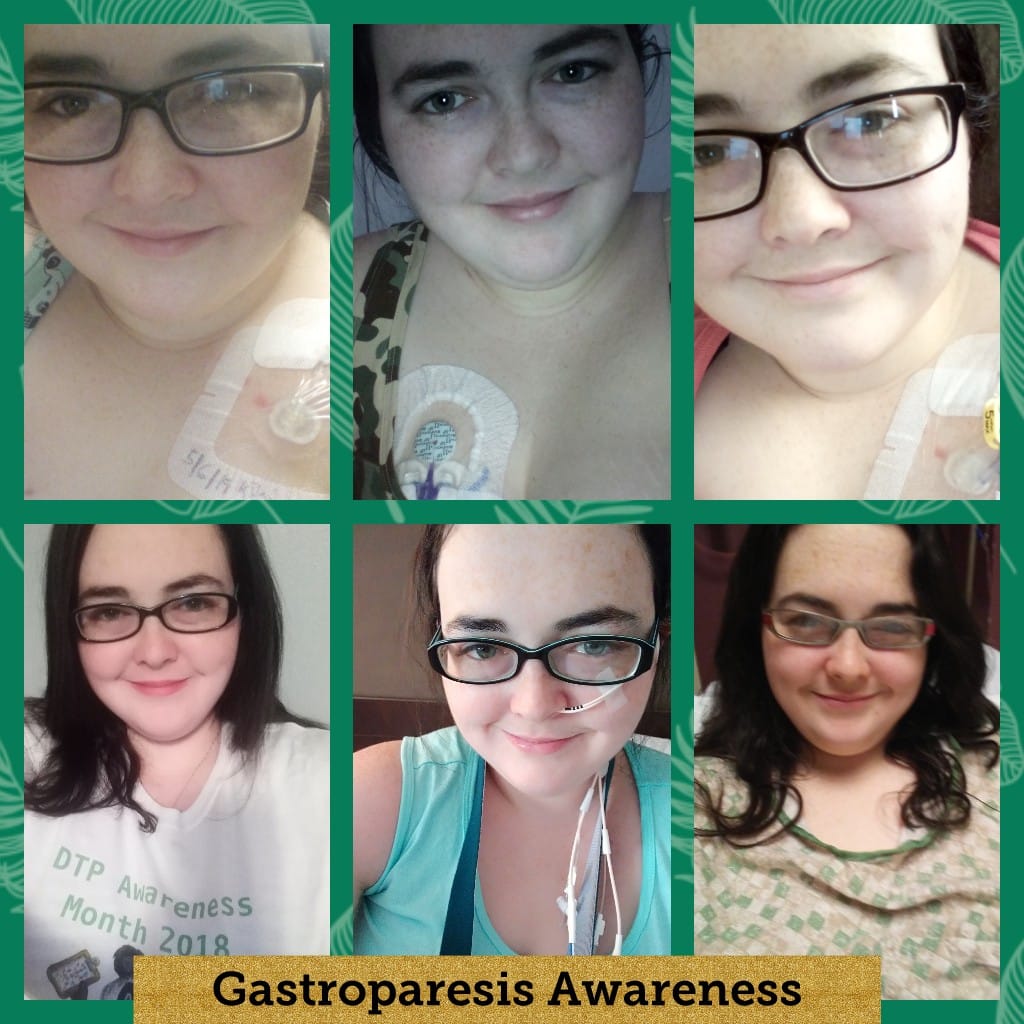
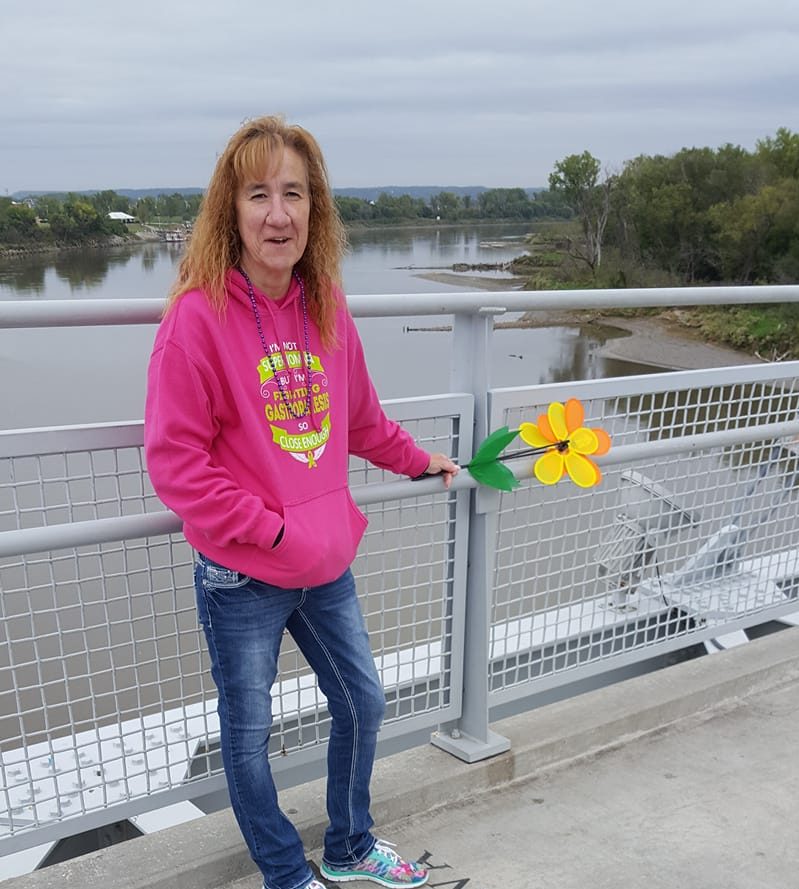
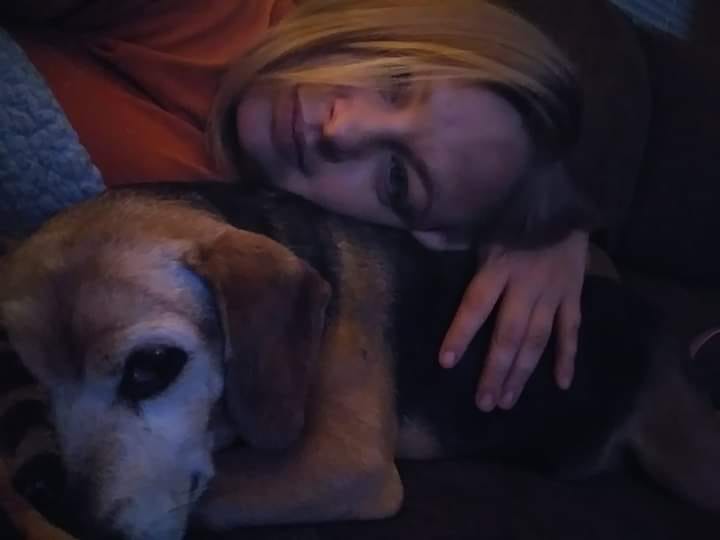
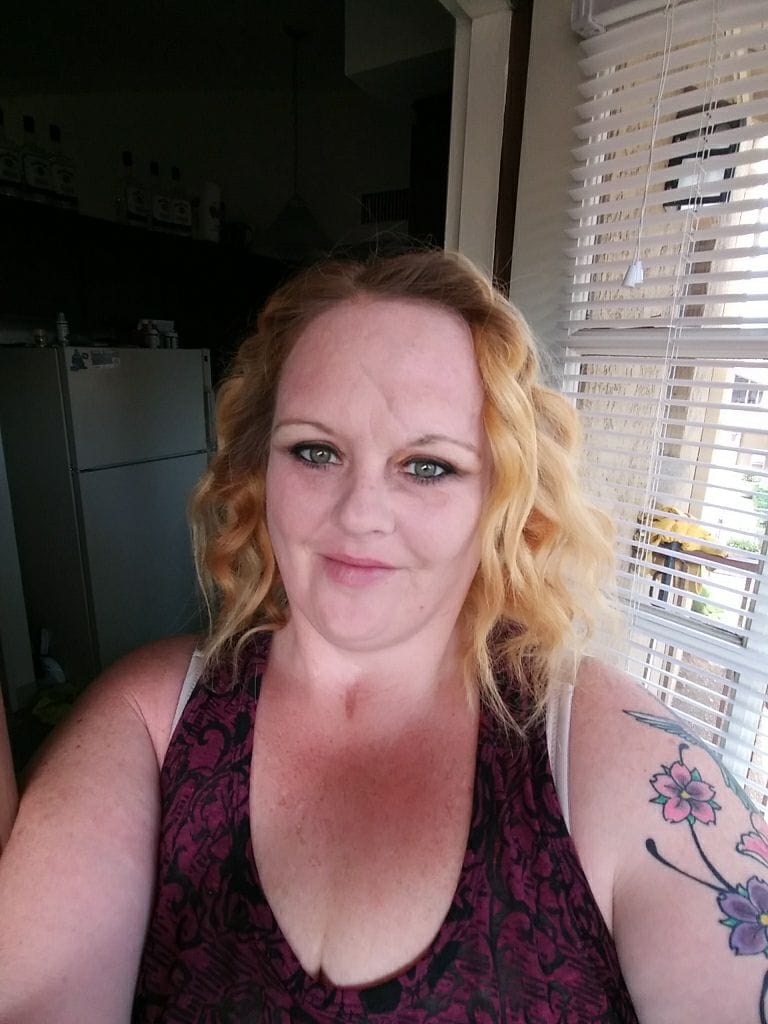
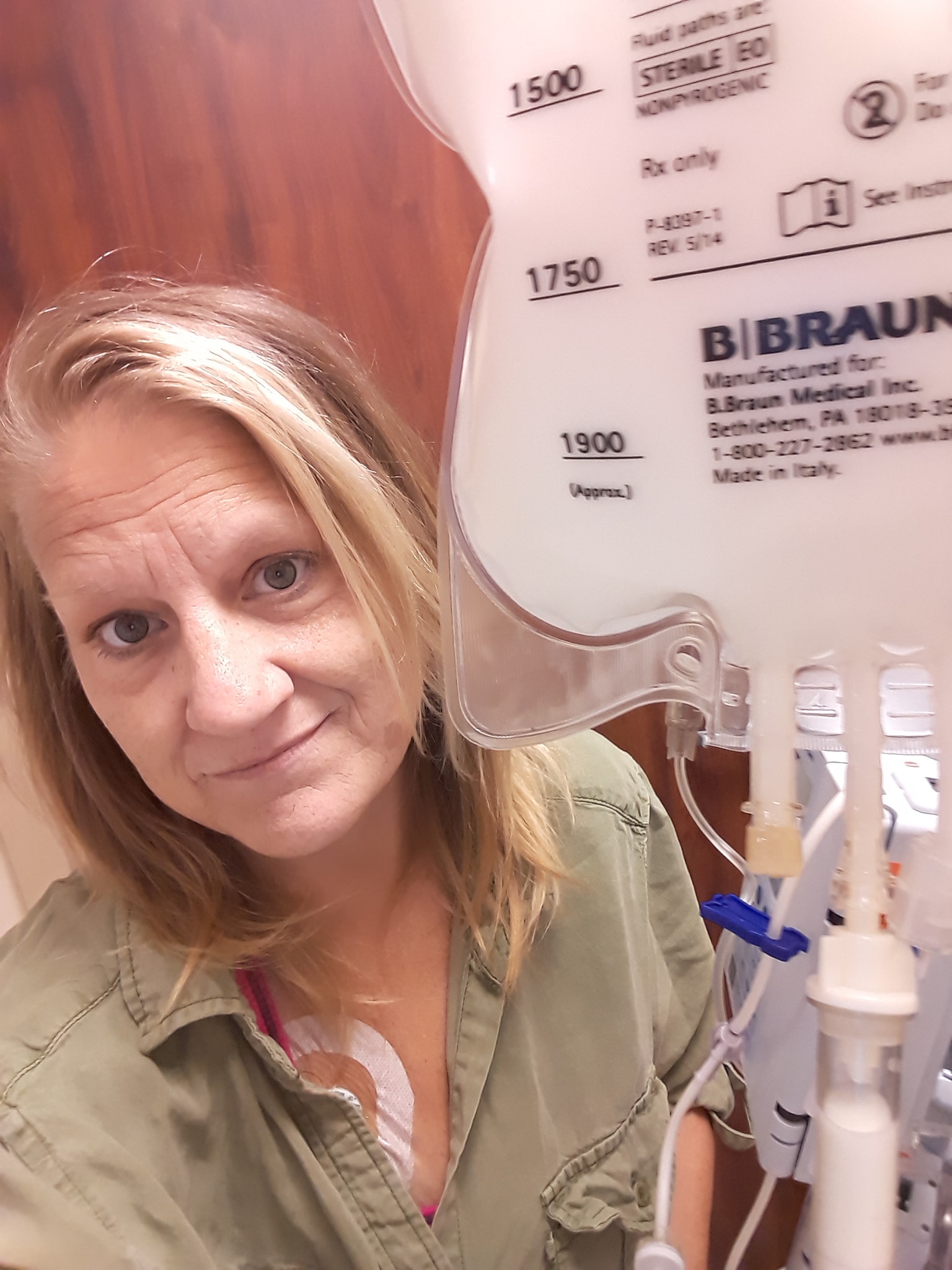
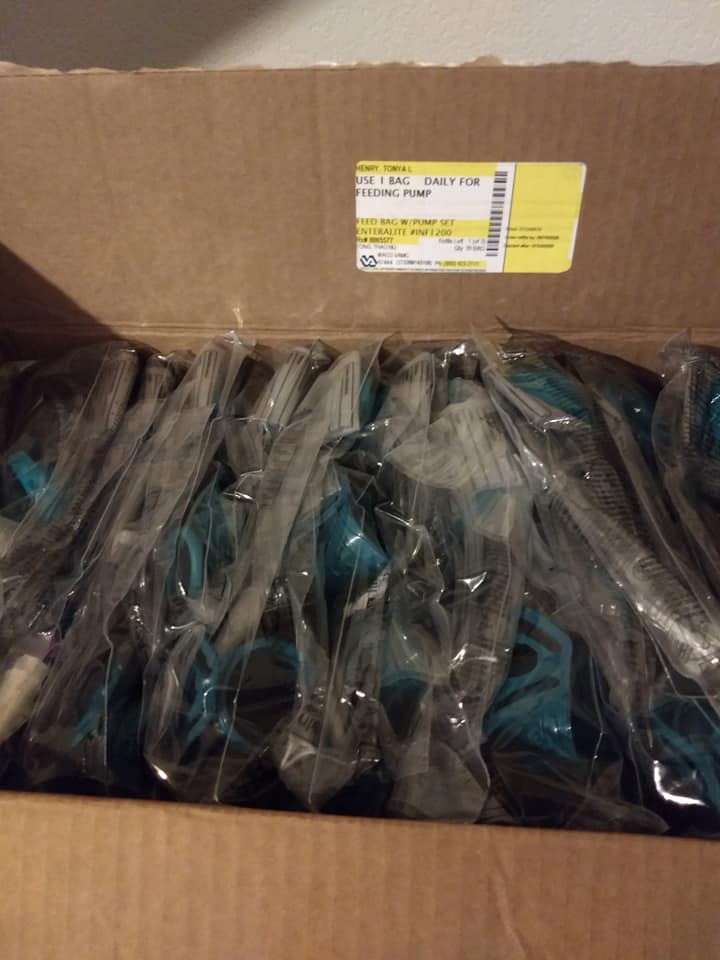
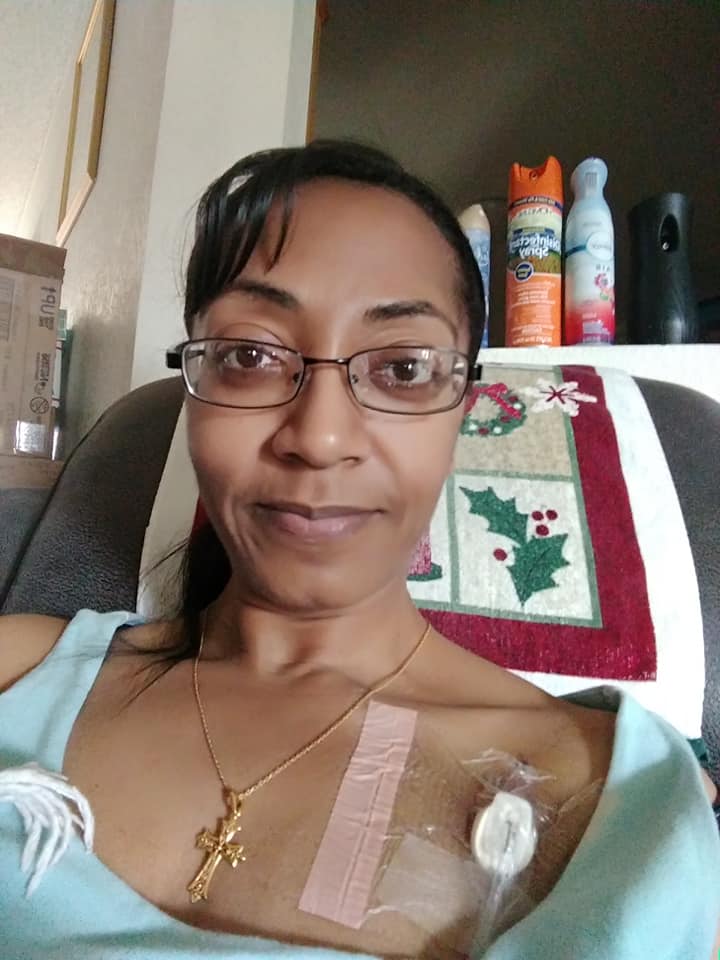
August is Gastroparesis Awareness Month. To help spread the word, I’m going to tell you my story. When I was 19 (1999) I started having stomach issues. I had an endoscopy/colonoscopy done. I was told I have IBS. Over the years, I have learned to deal with that. It caused a few problems but was otherwise manageable.

On Mothers Day in 2012 I had severe pain in my abdomen. When I finally got to the doctor, she said it was an ulcer. No exam. No tests. So I dealt with it. I managed. A year later, after seeing a new doctor, I was able to get another endoscopy/colonoscopy done. I had not one but seven ulcers all at the top of my stomach. I watched what I ate and managed. The doctor put me on prescription antacids to help. I continued to have severe pains when I ate and for hours afterwards. The doctors never did much.

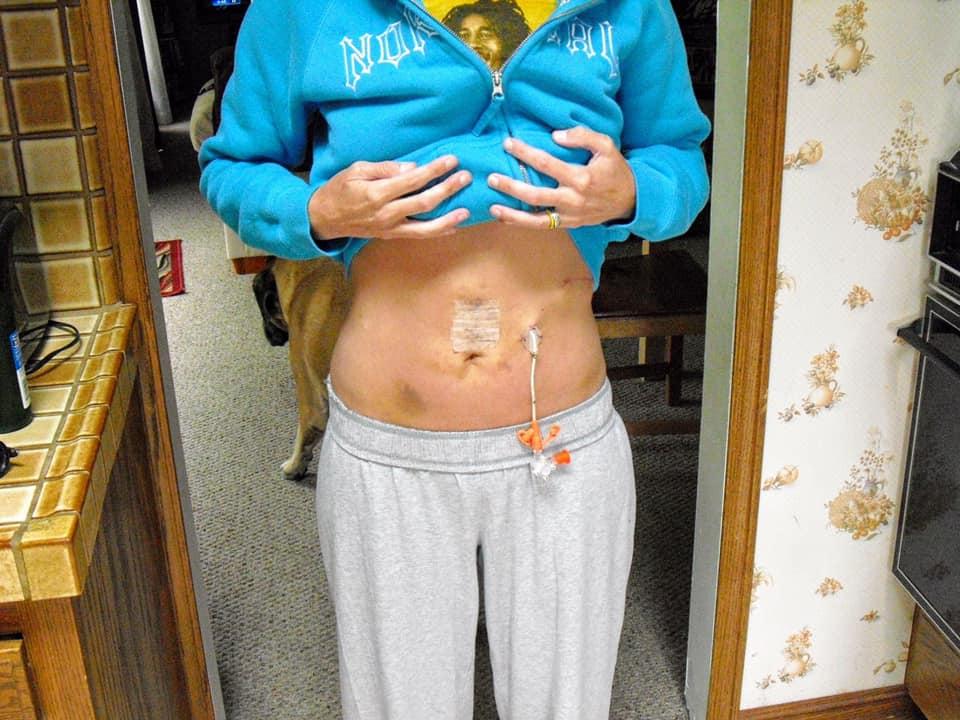
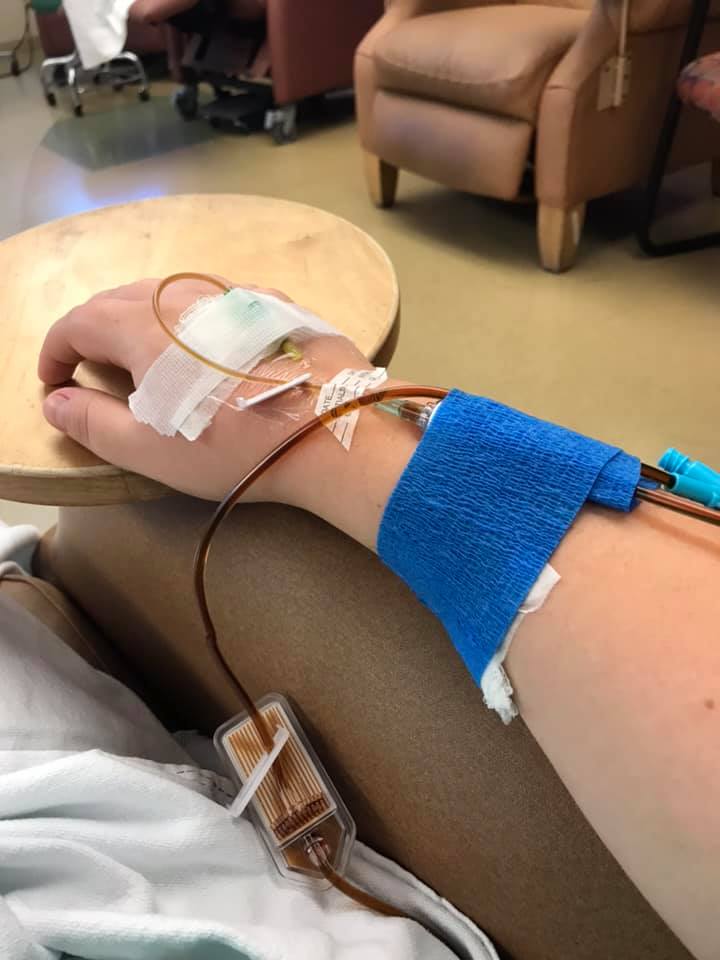
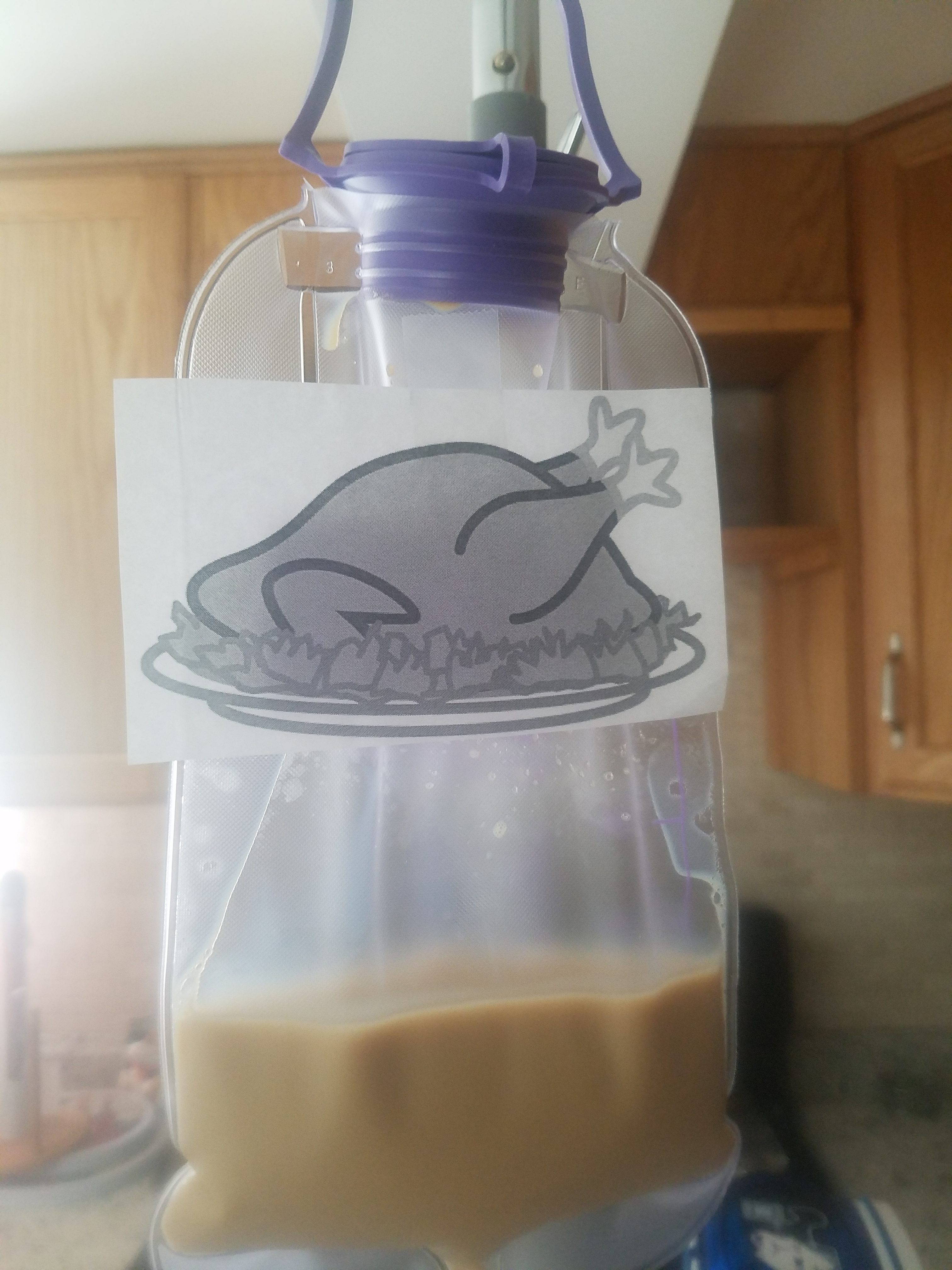
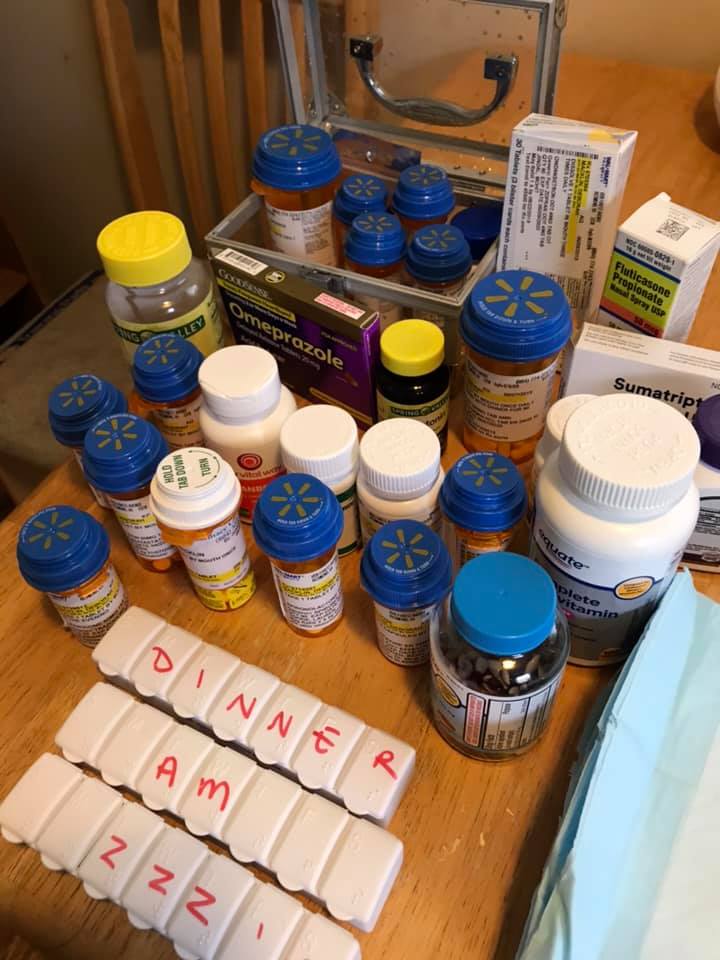
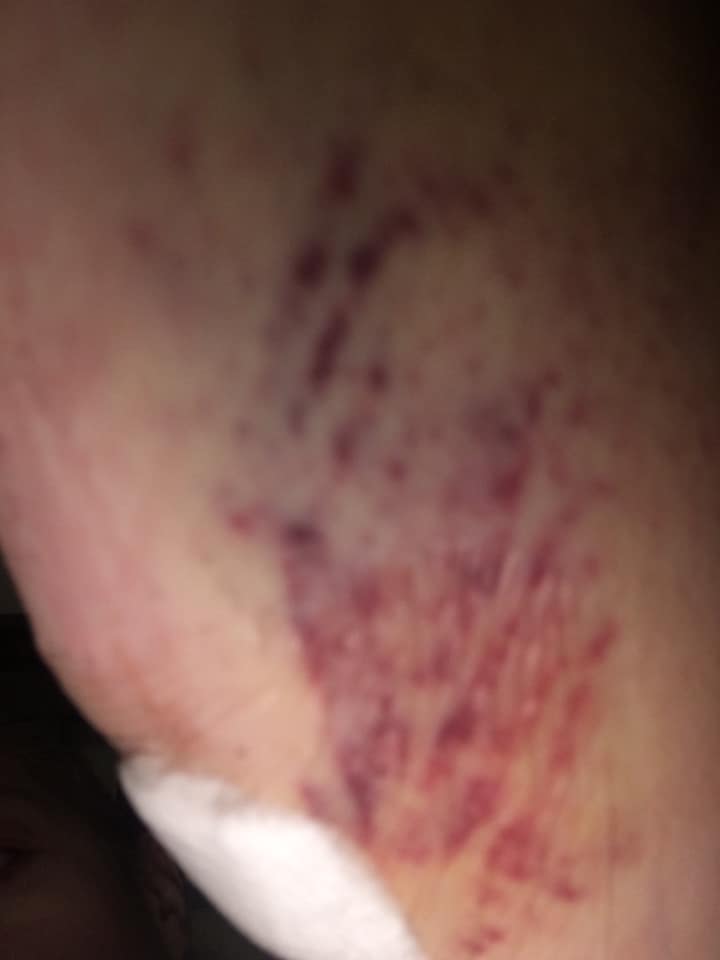
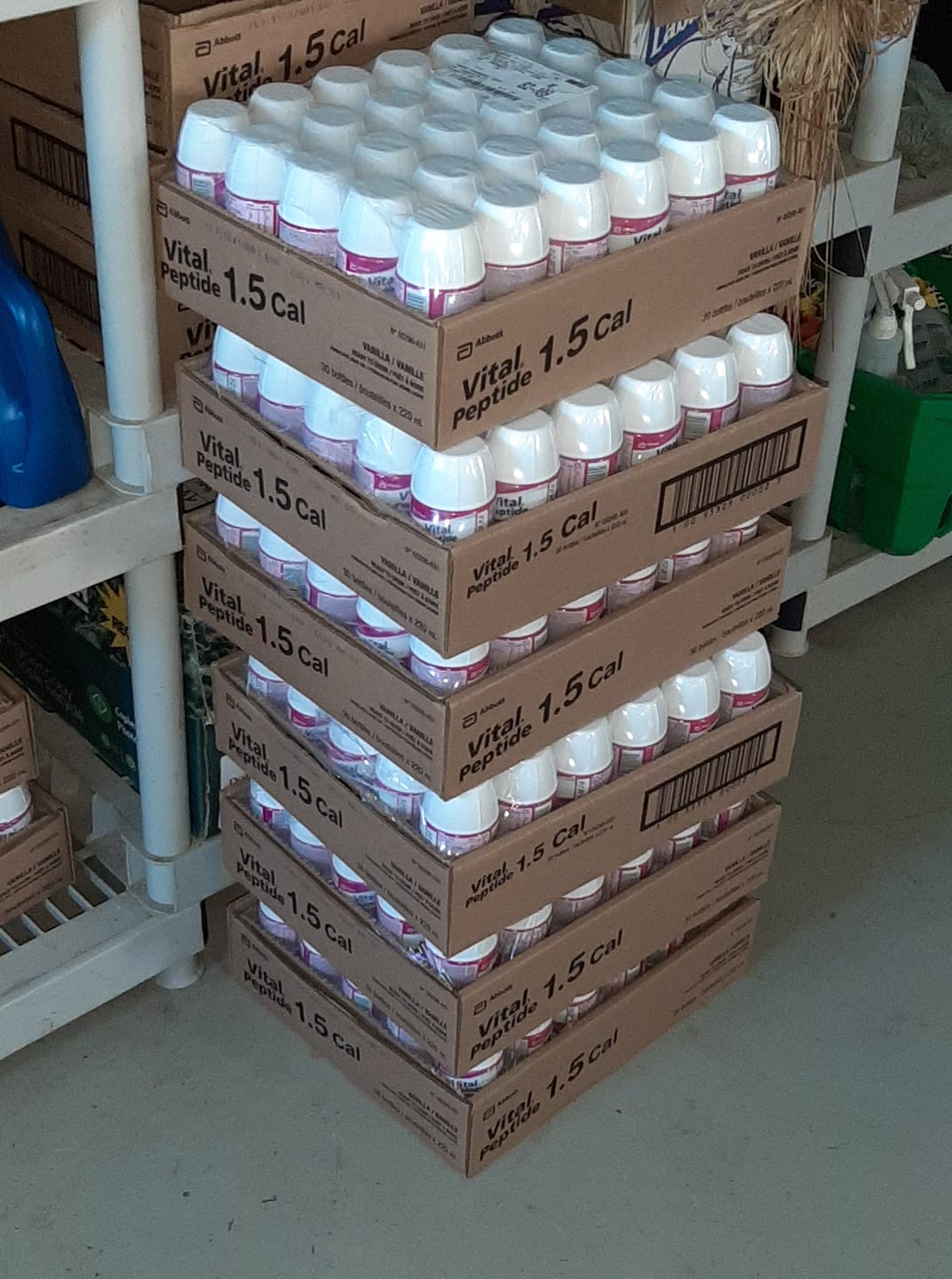
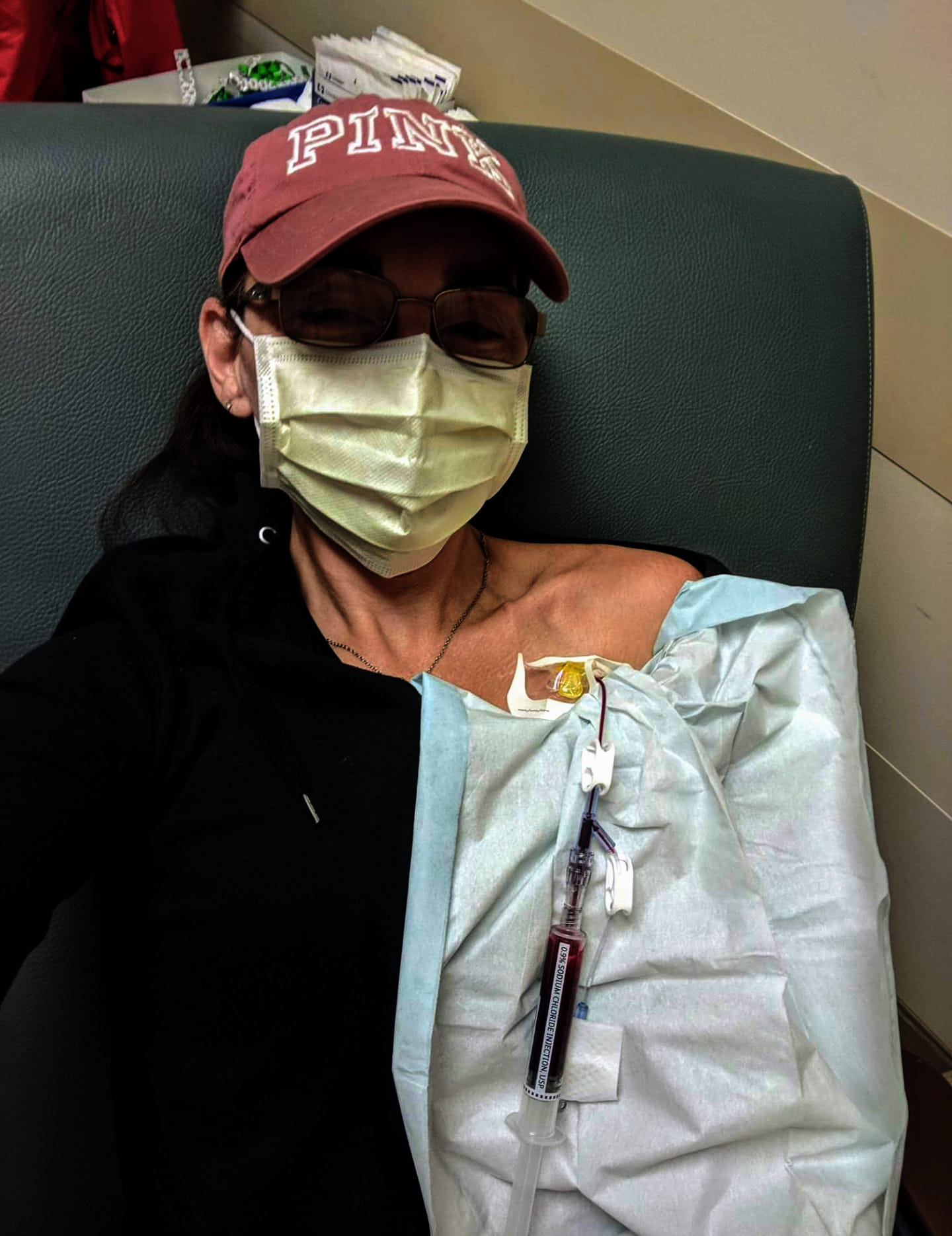
Finally the pain got so bad that in 2018 the doctor sent me to a GI specialist to get me some help and yet another endoscopy/colonoscopy followed by a gastric emptying study (GES) and blood work. This time I got several diagnosis. IBS, ulcers, an elongated colon, GERD, and Gastroparesis. I had never heard of that one, so I did some research. Or tried to. There really isn’t much information out there. They gave me some papers with a diet. Over half the foods cause me severe pain. No vegetables unless it’s baby food. No fried foods. Mostly poultry, potatoes, rice, and pasta. Even then, sometimes I’ll be in bed for days with stomach cramps, vomiting, constipation, diarrhea, headaches from losing liquids, and generally feeling like I’ve been beat to a pulp.

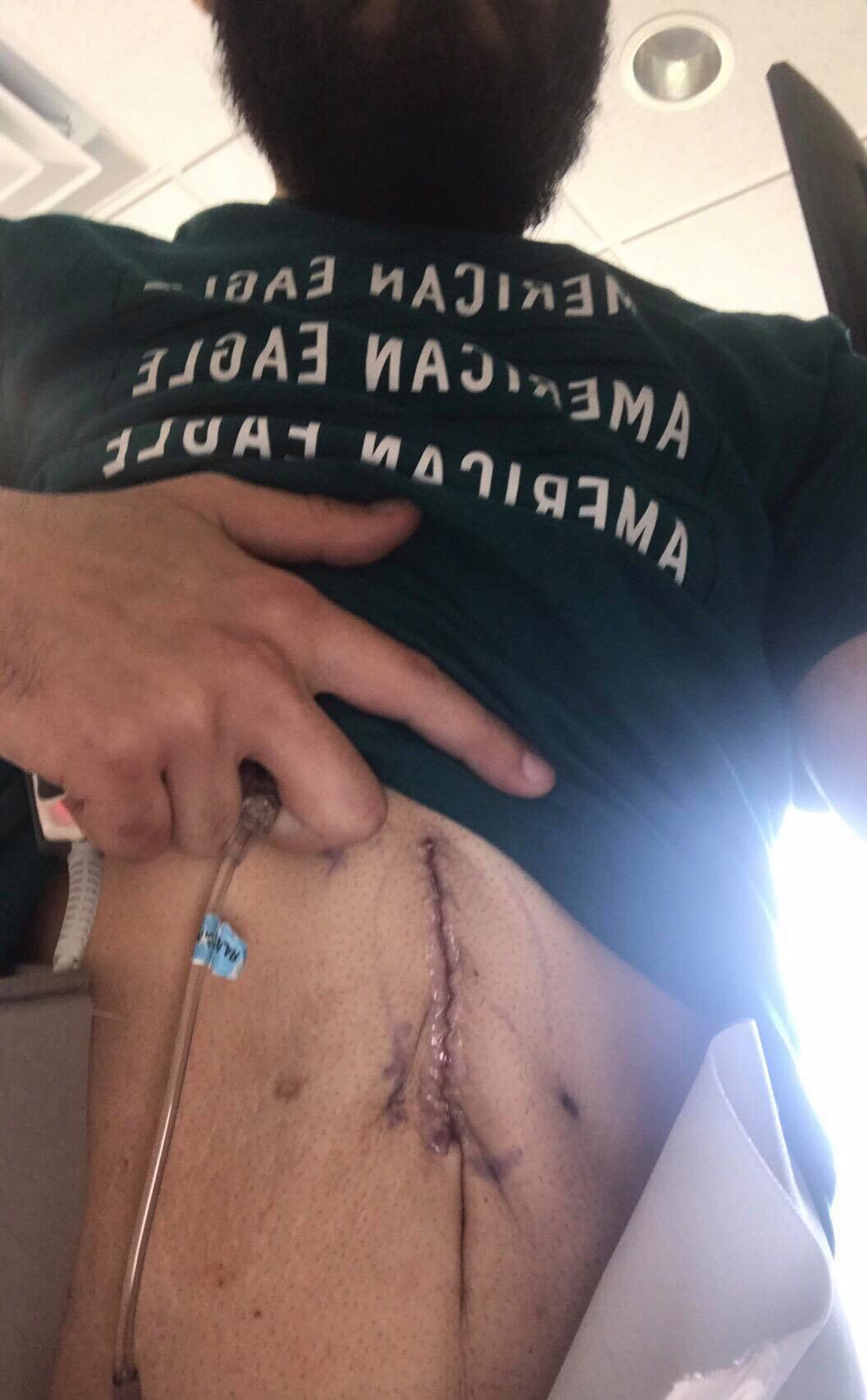
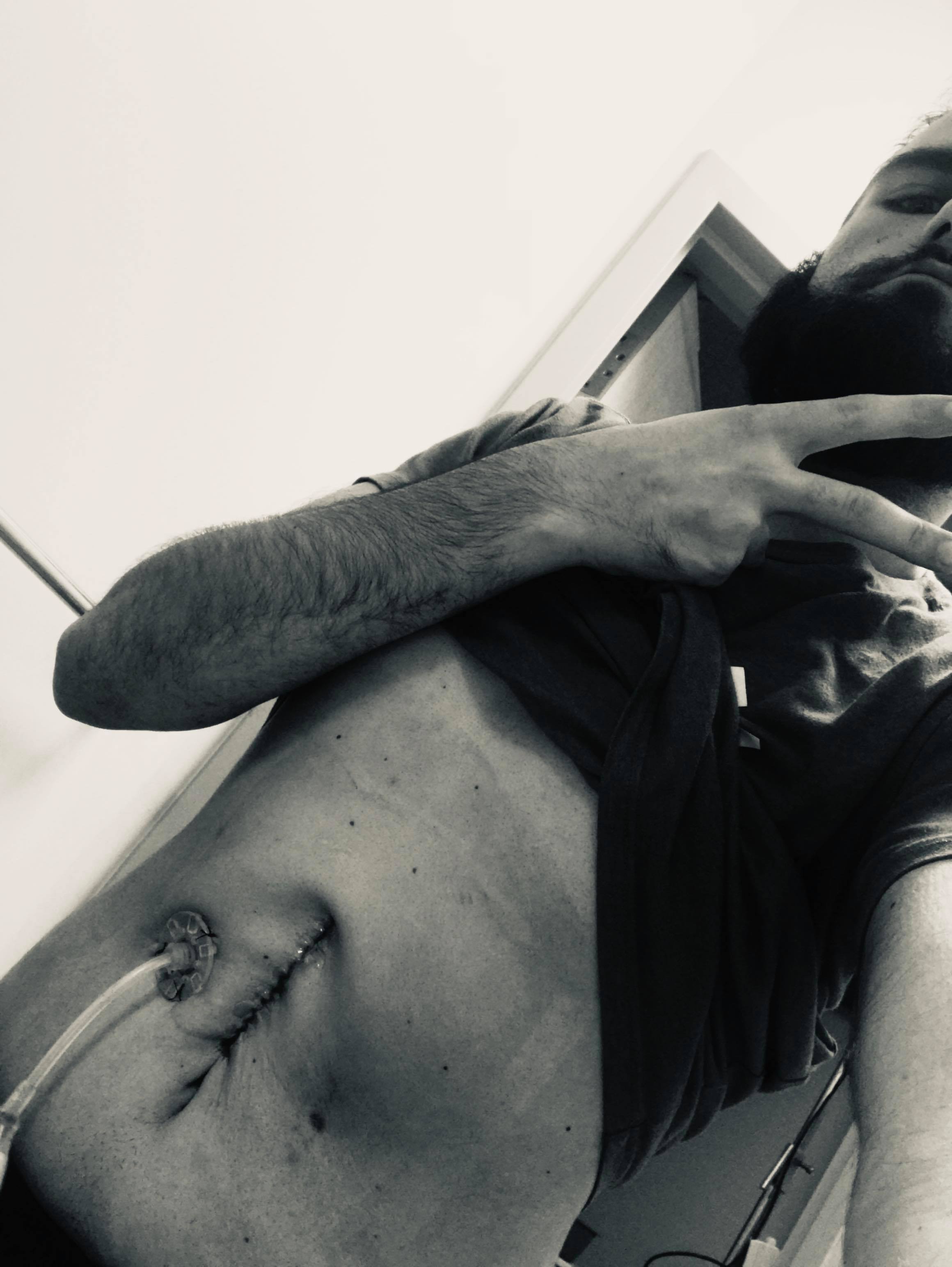
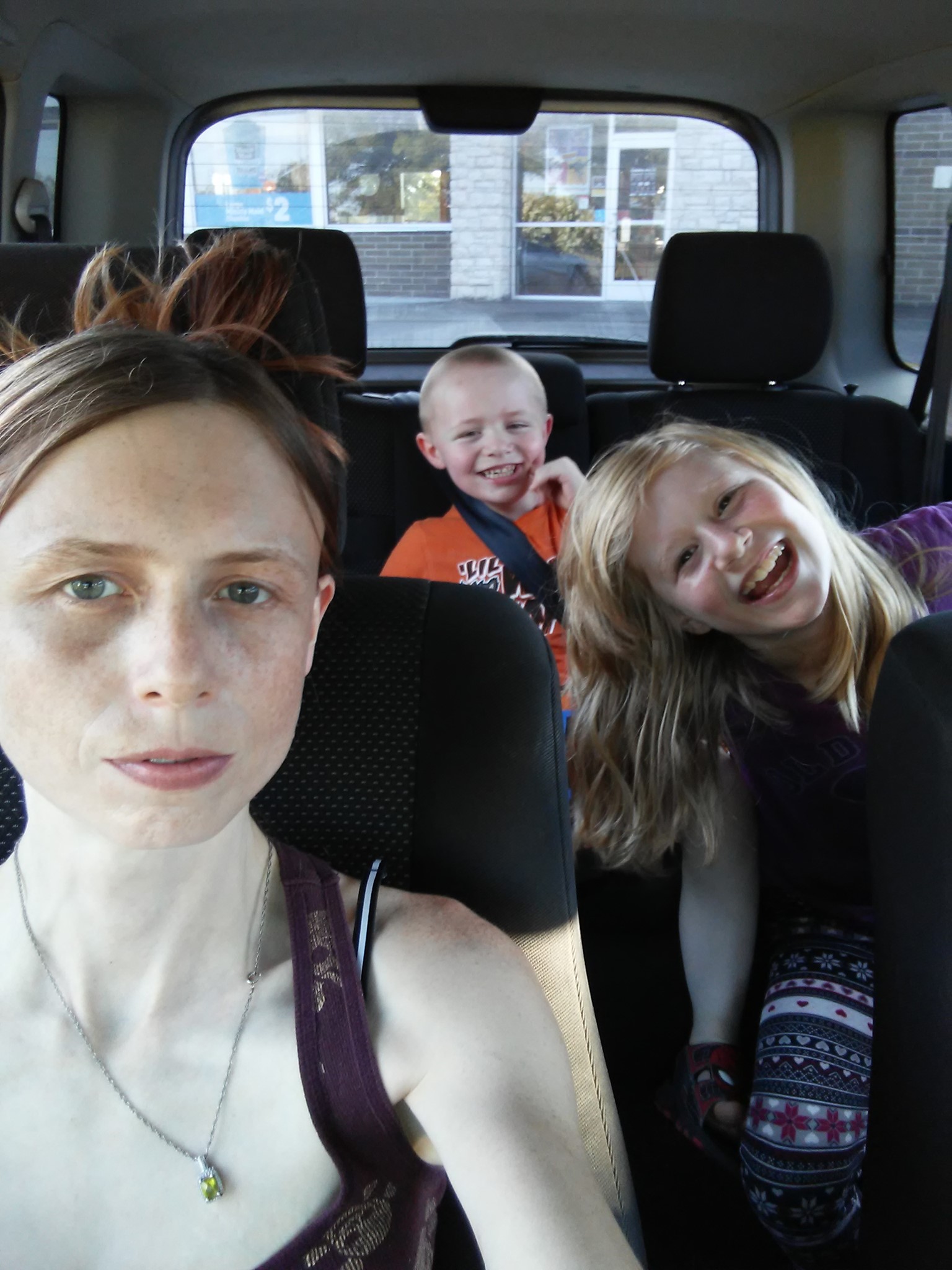
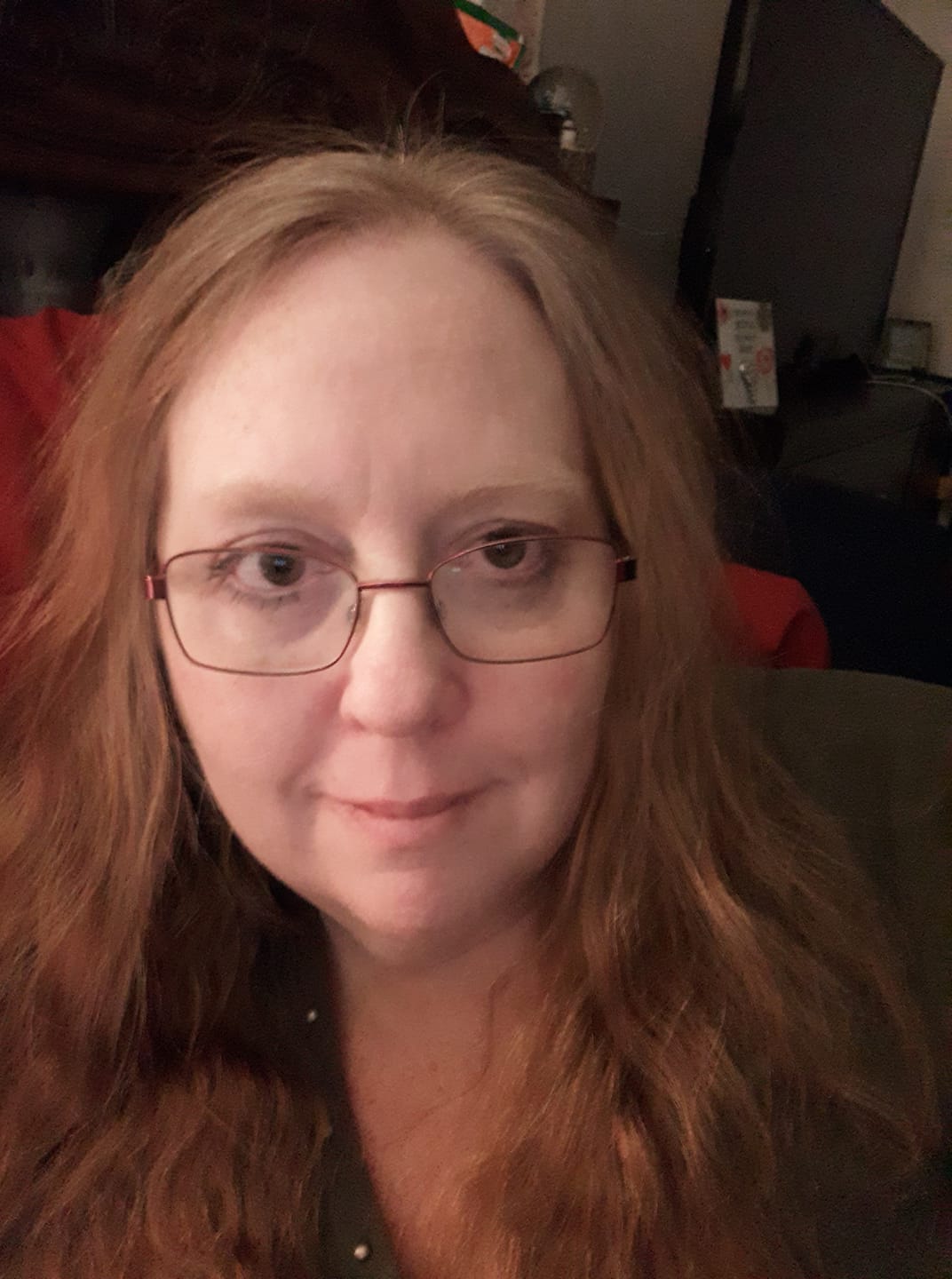
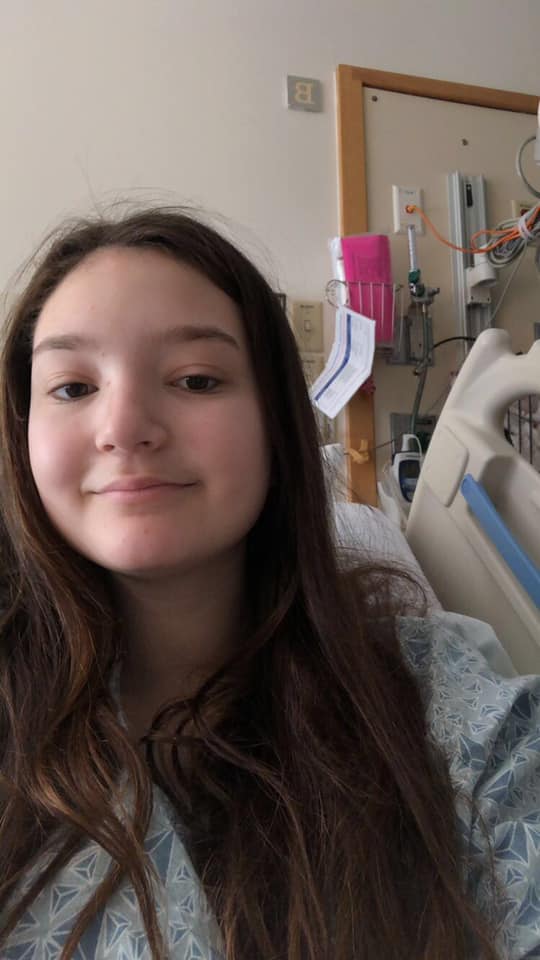
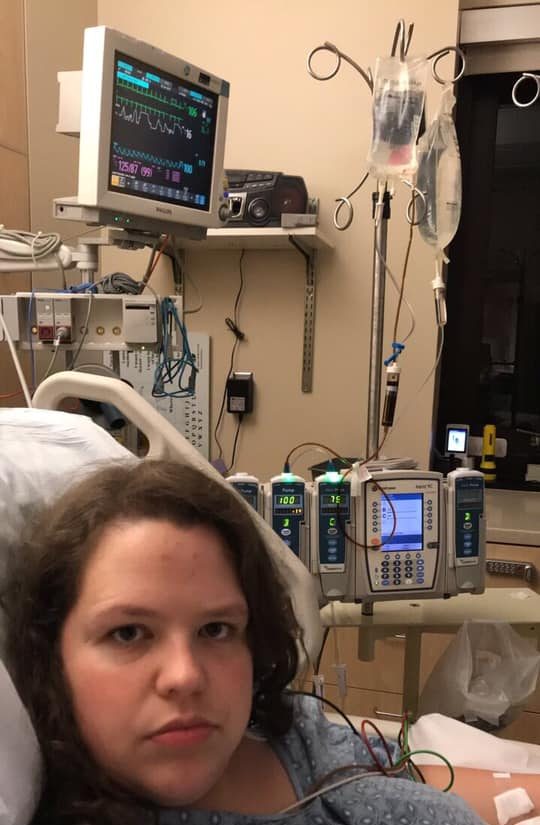
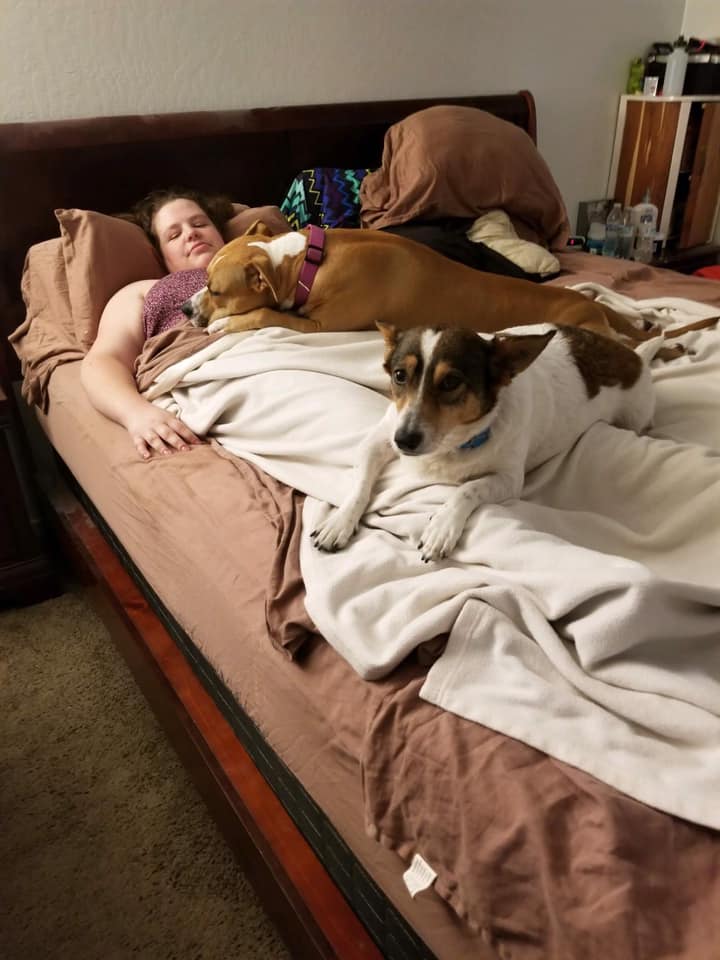
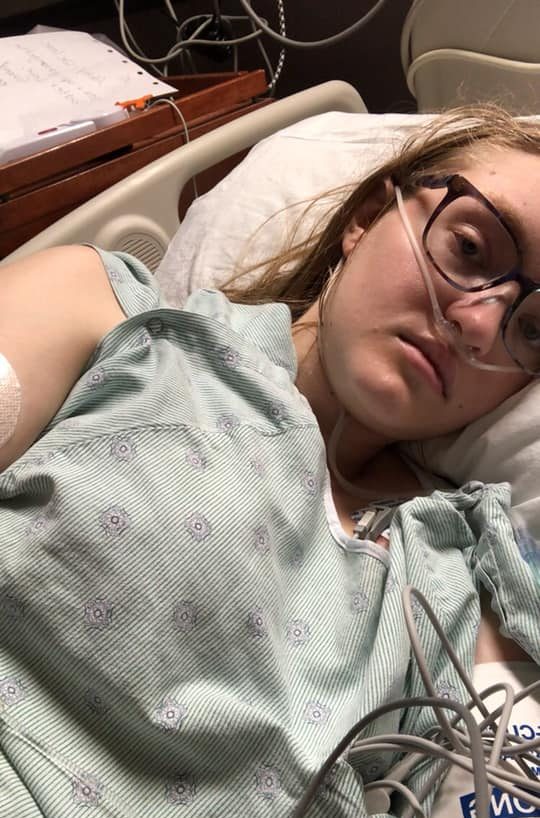
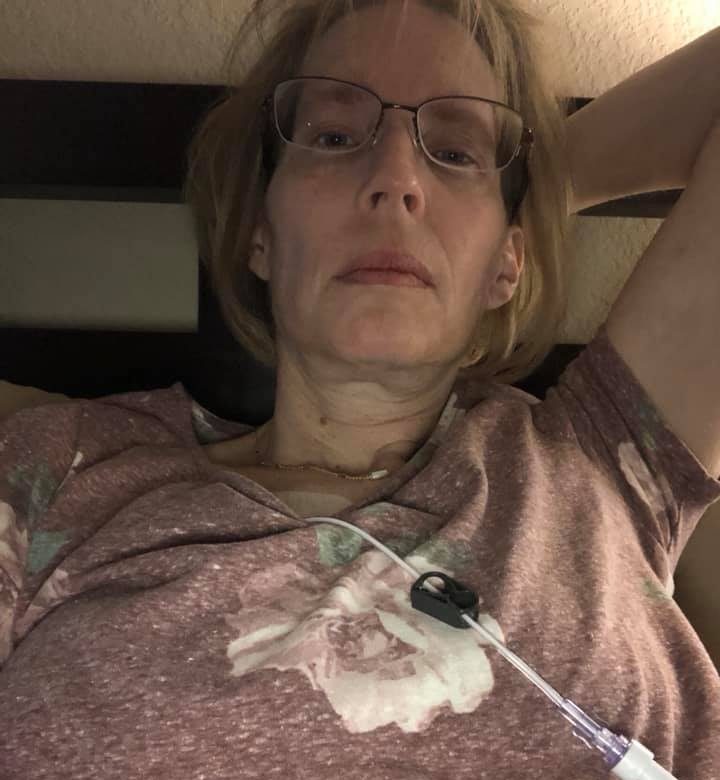
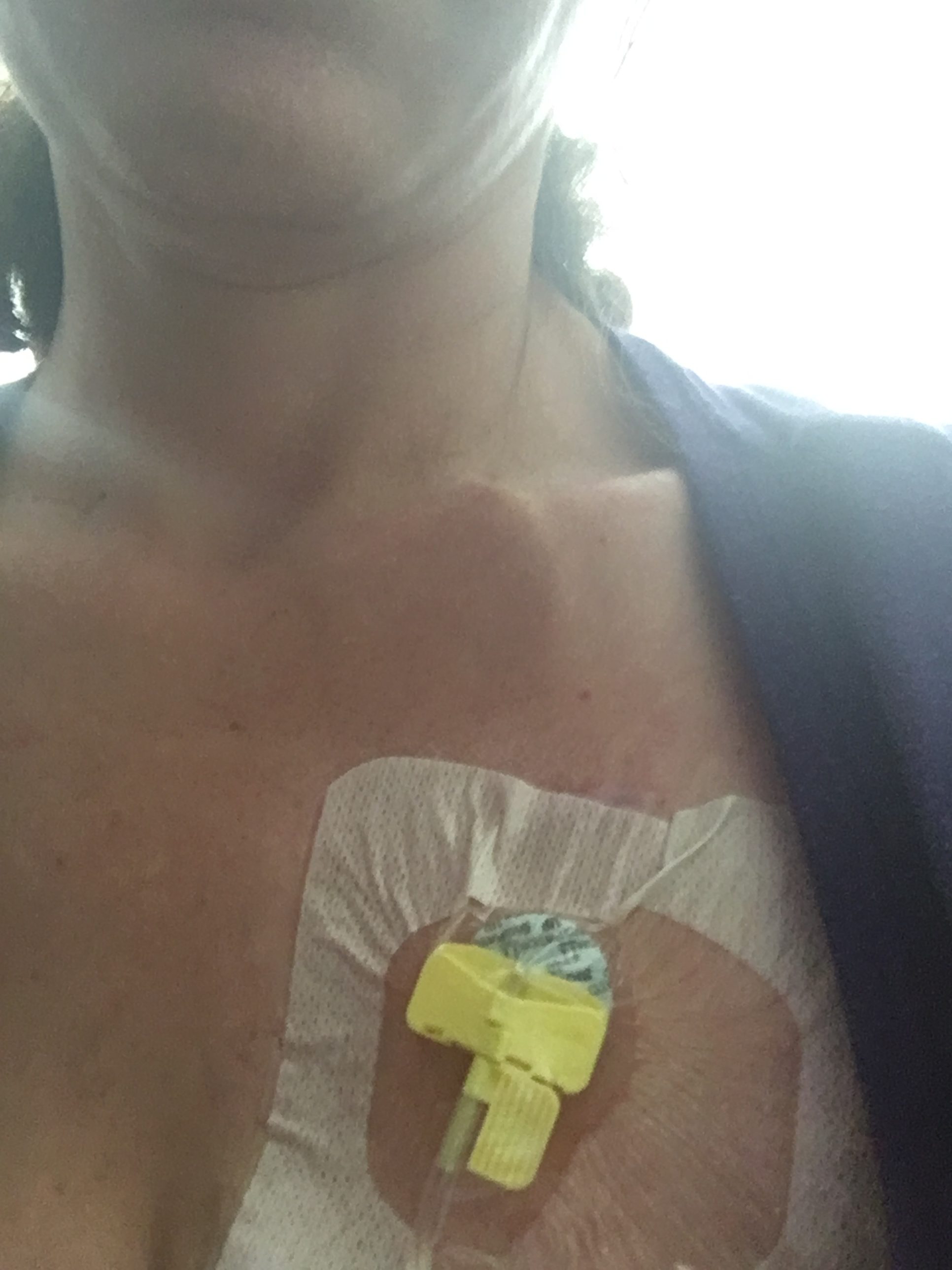
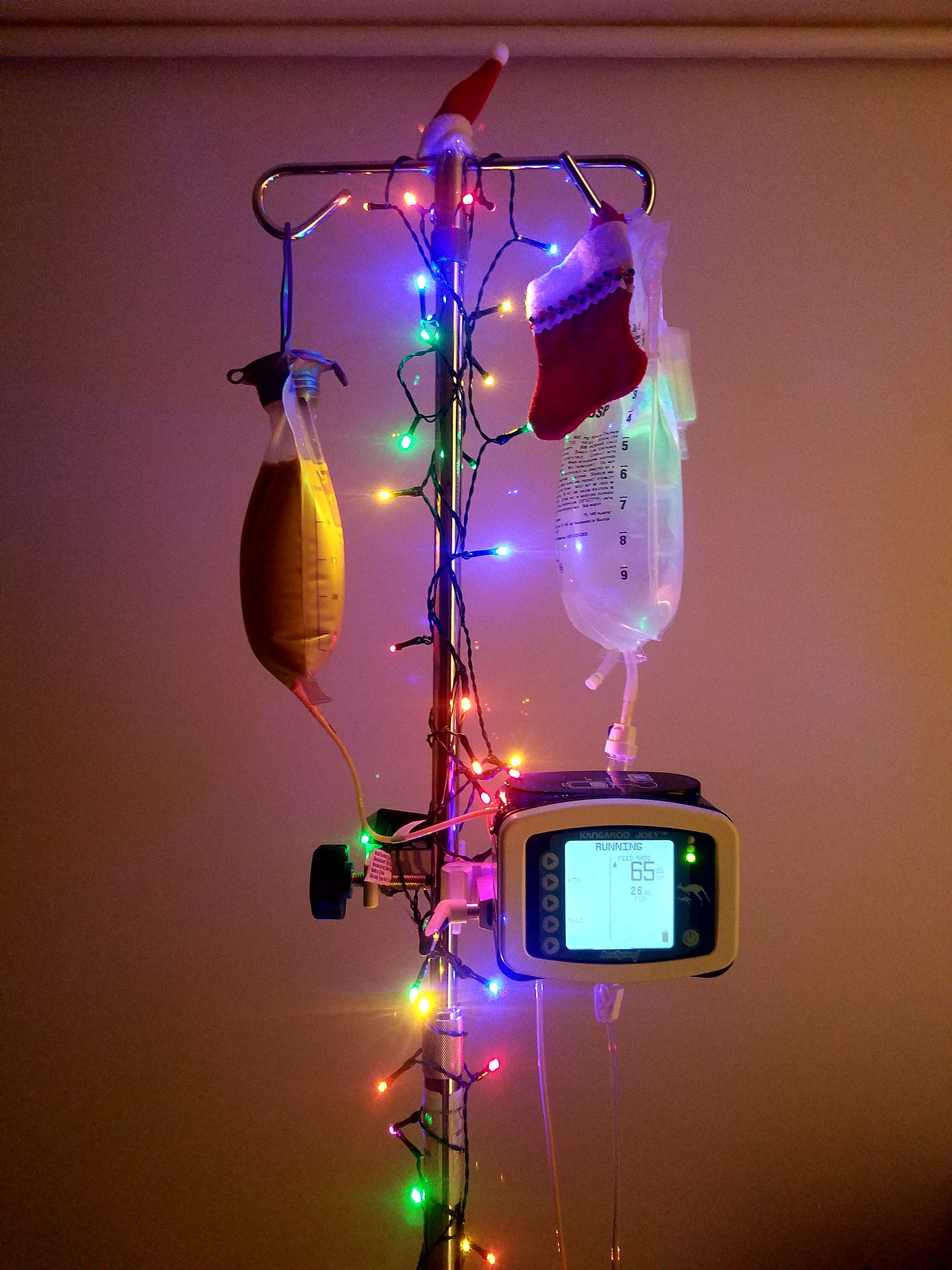
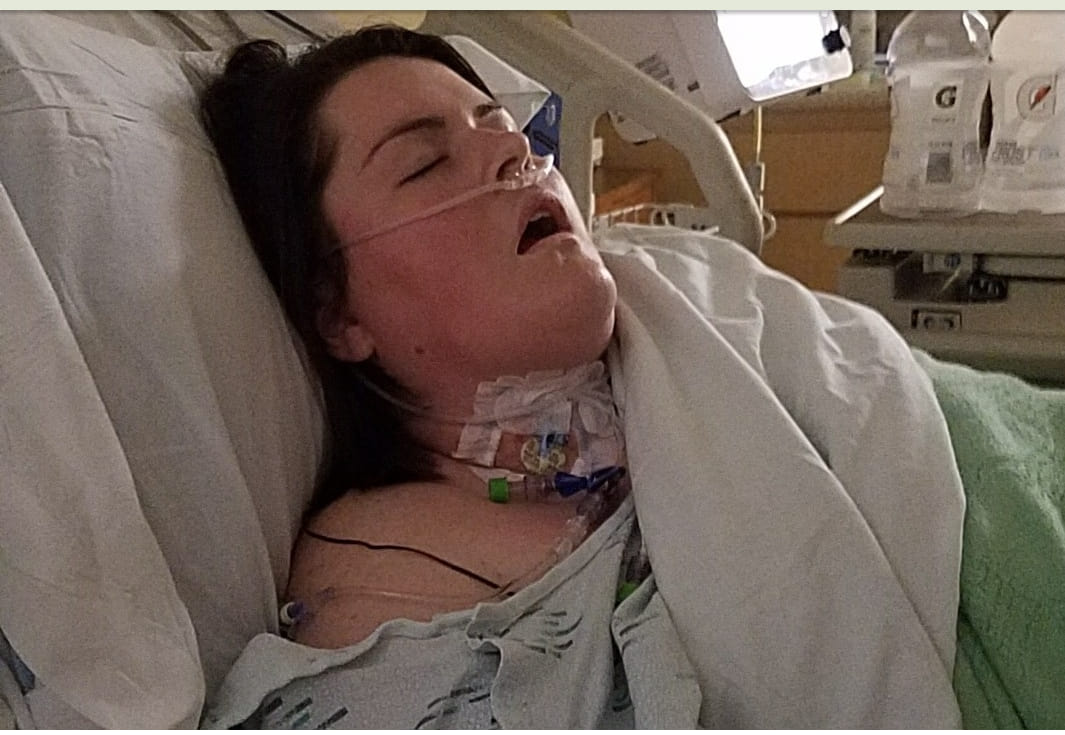
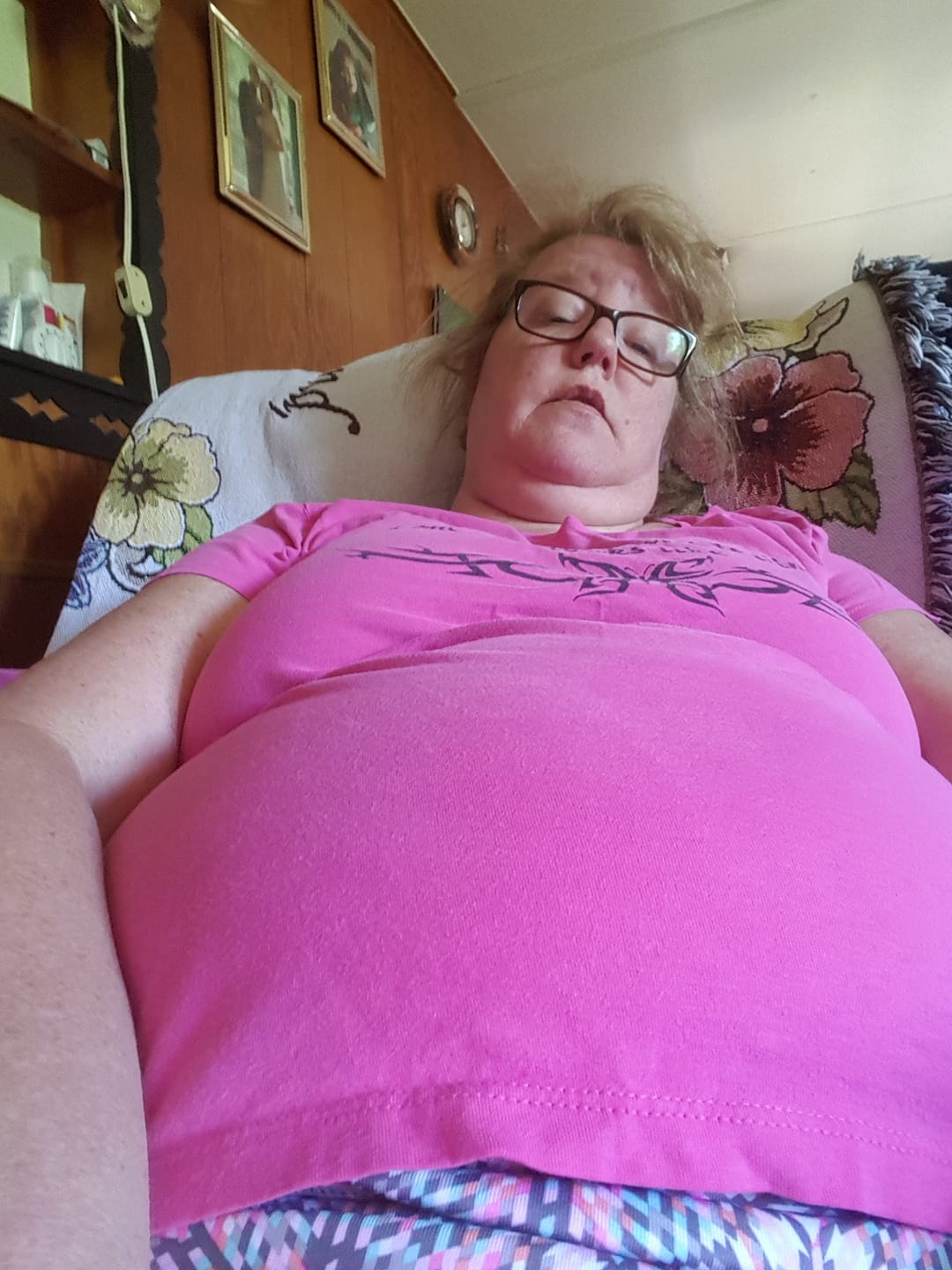
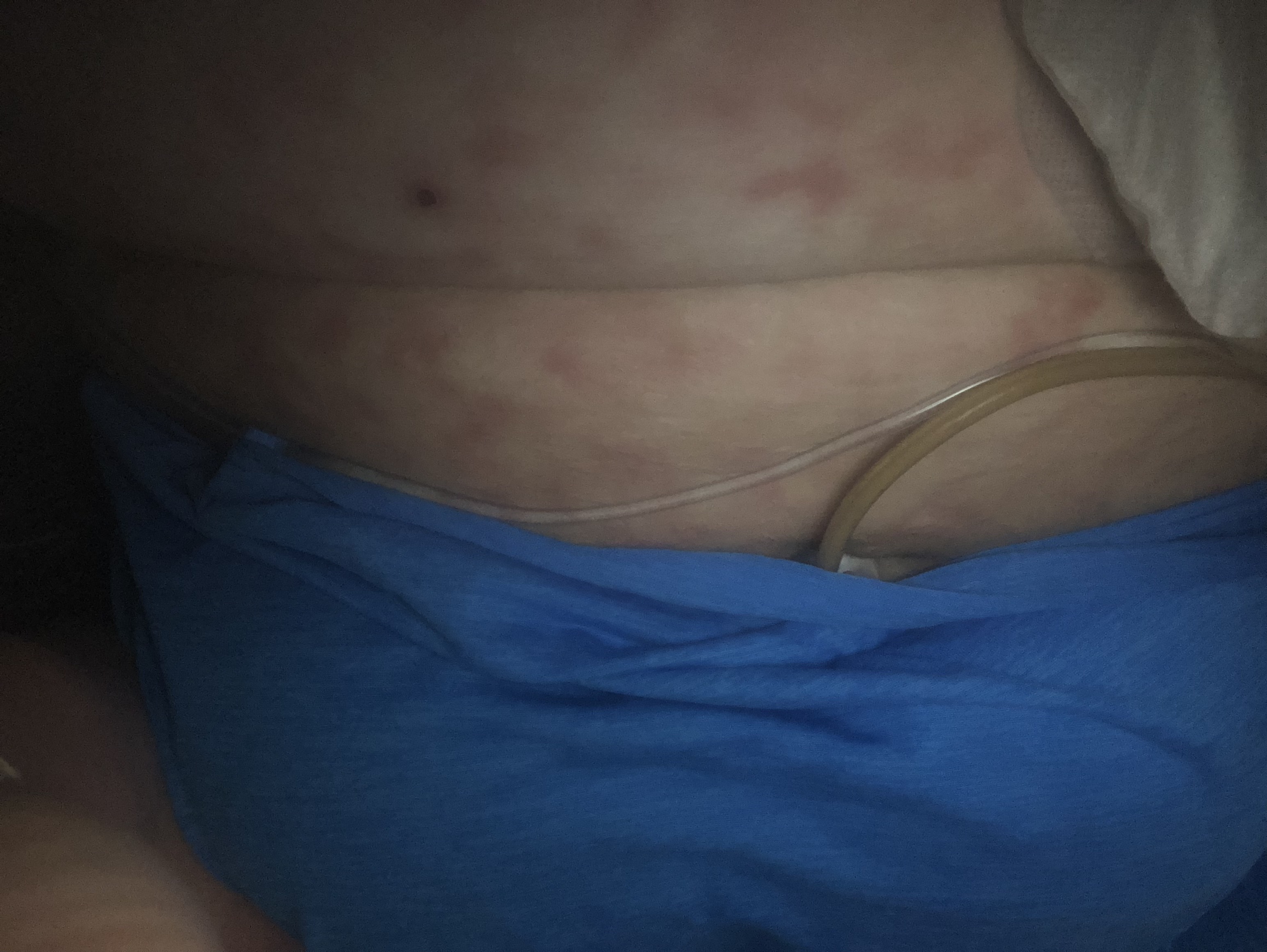
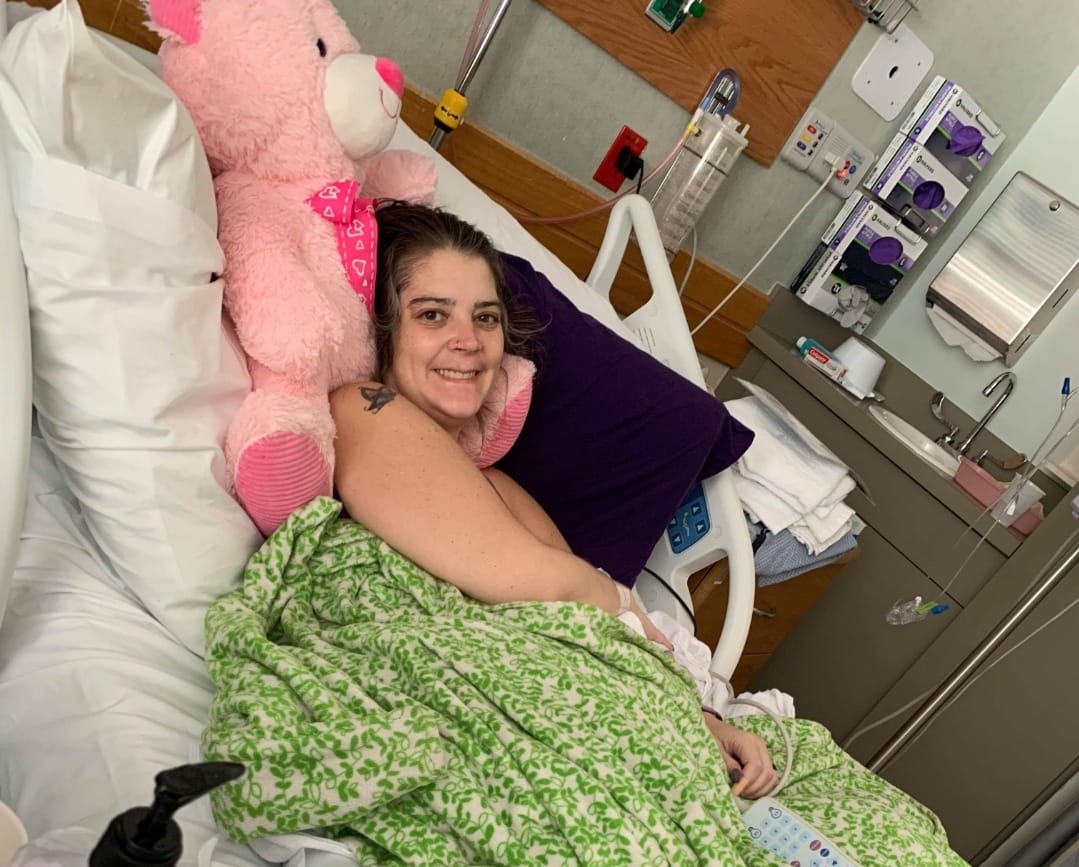
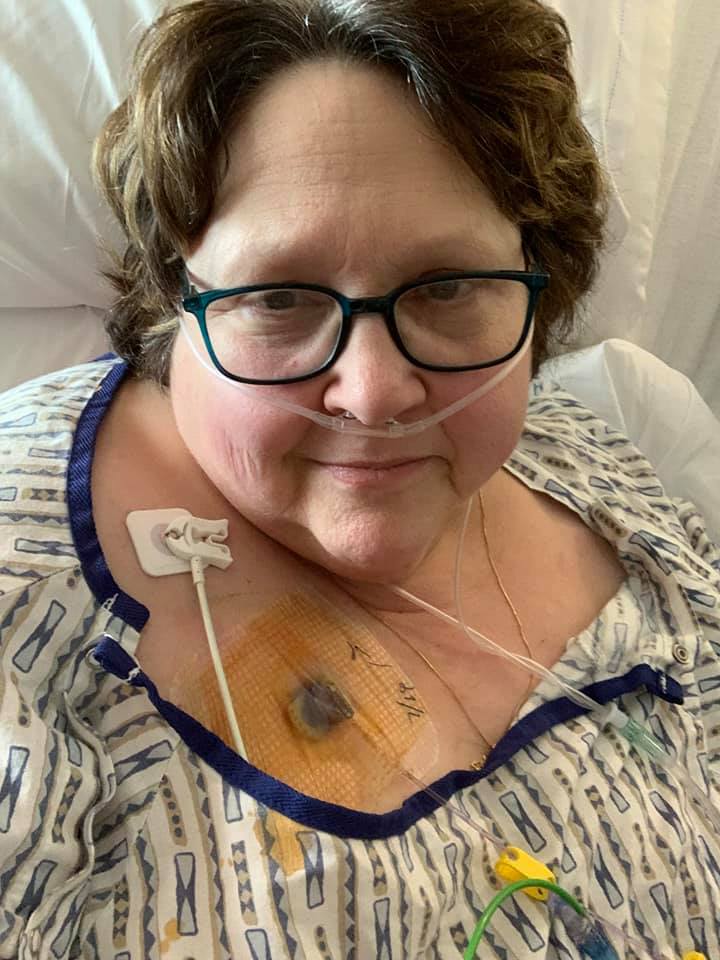
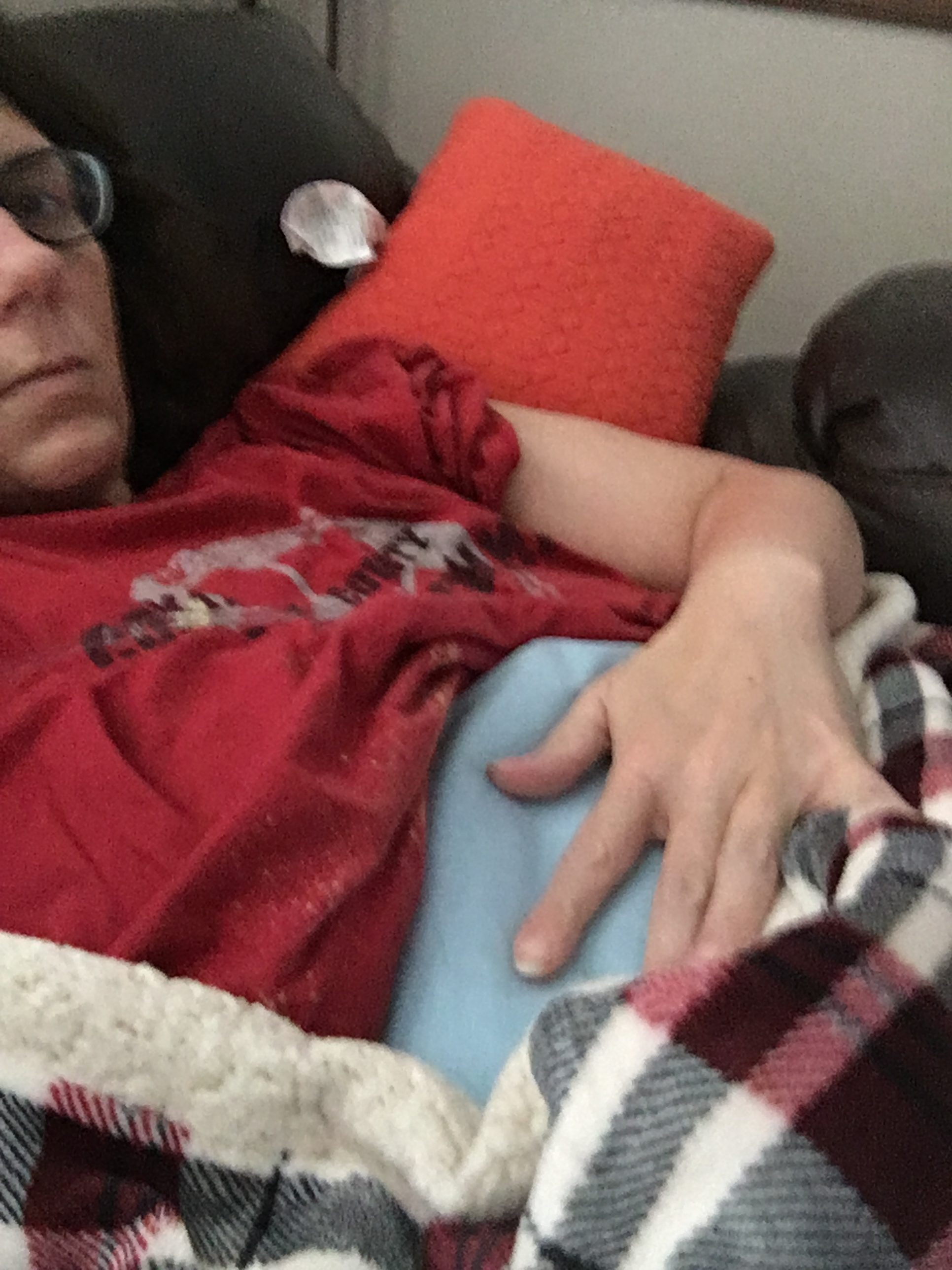
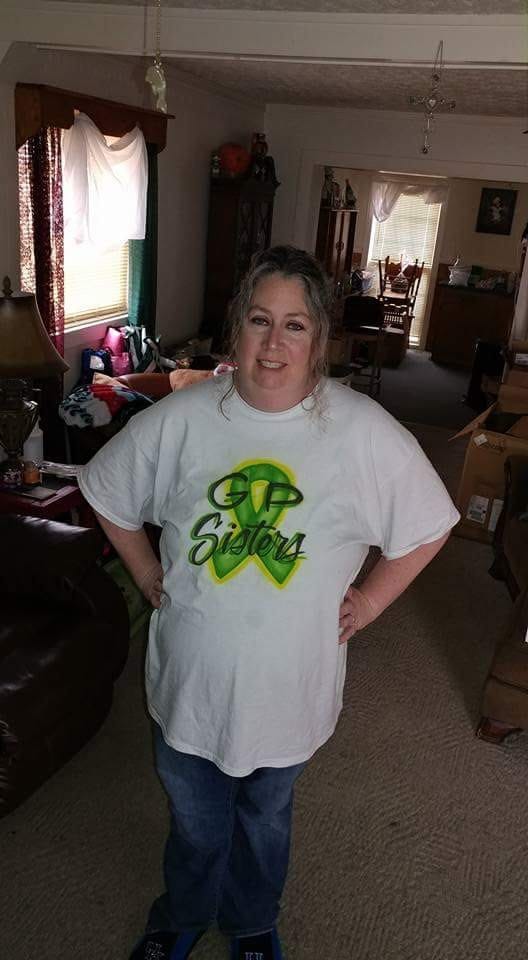
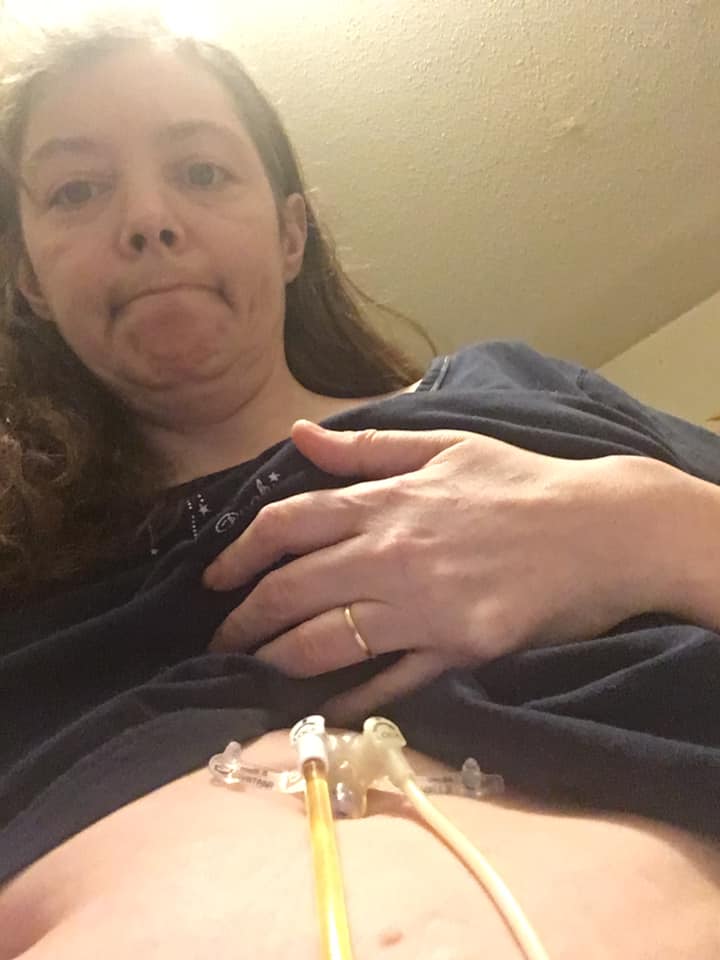
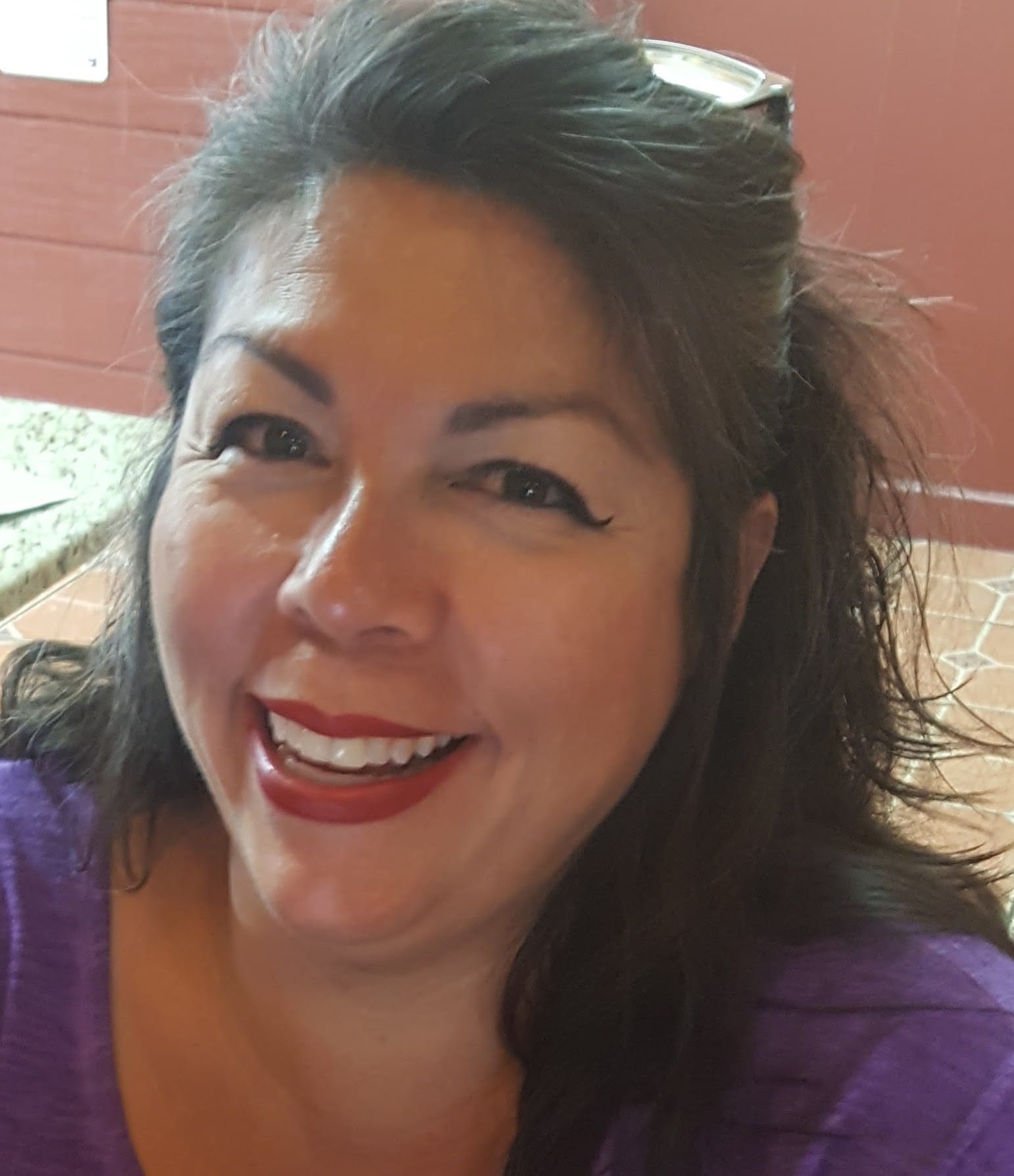
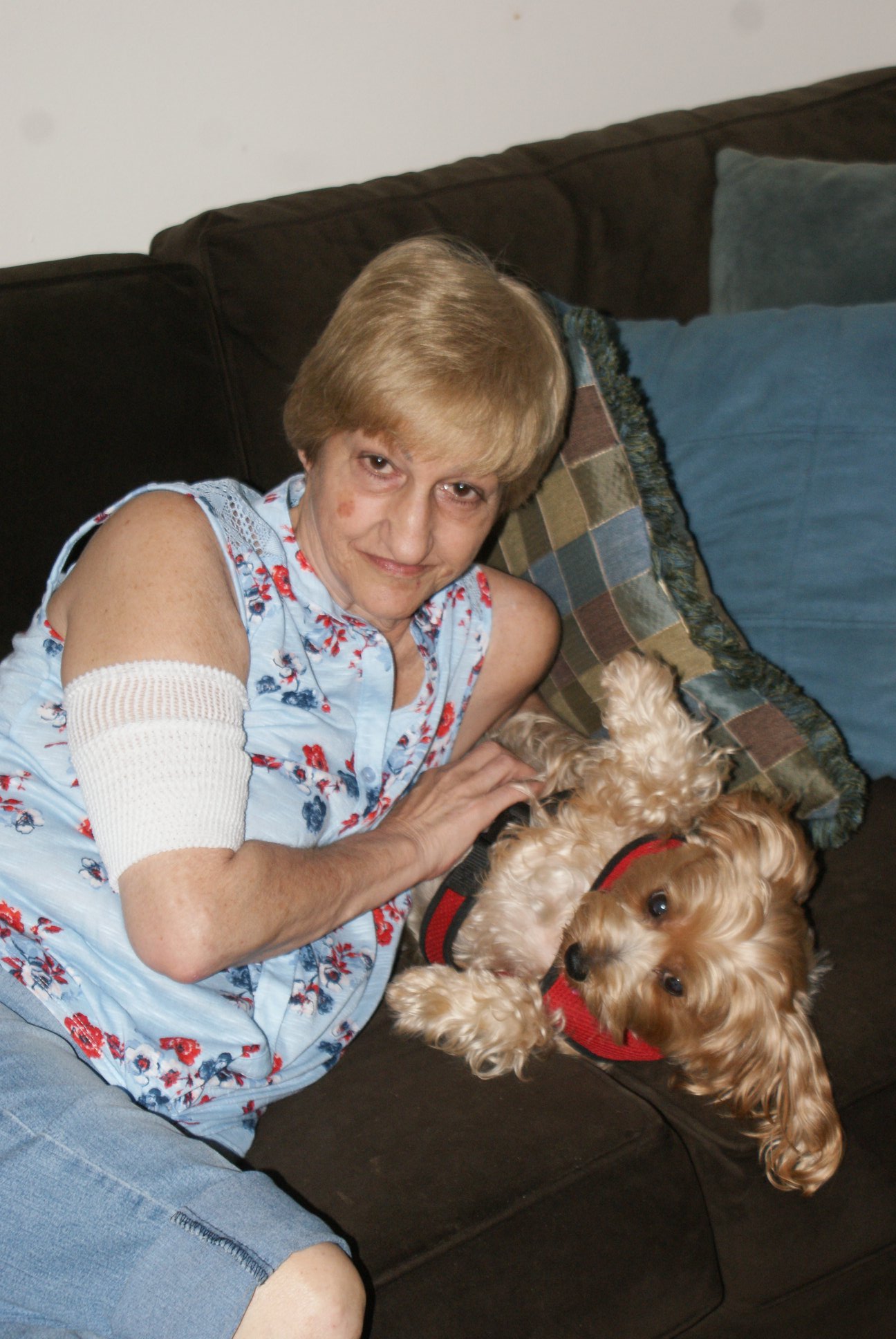
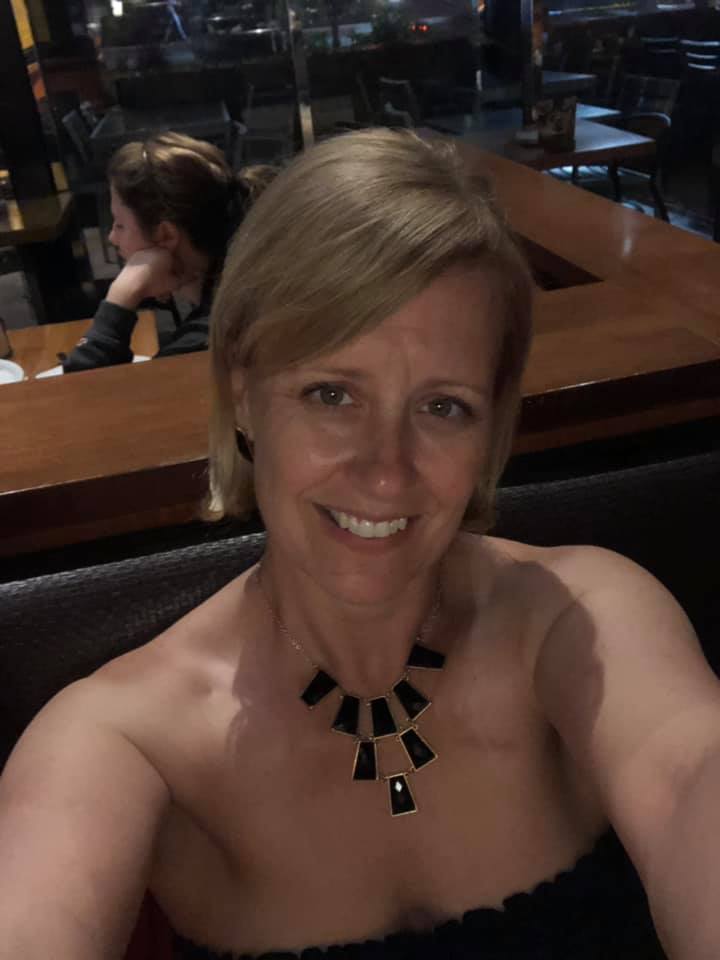
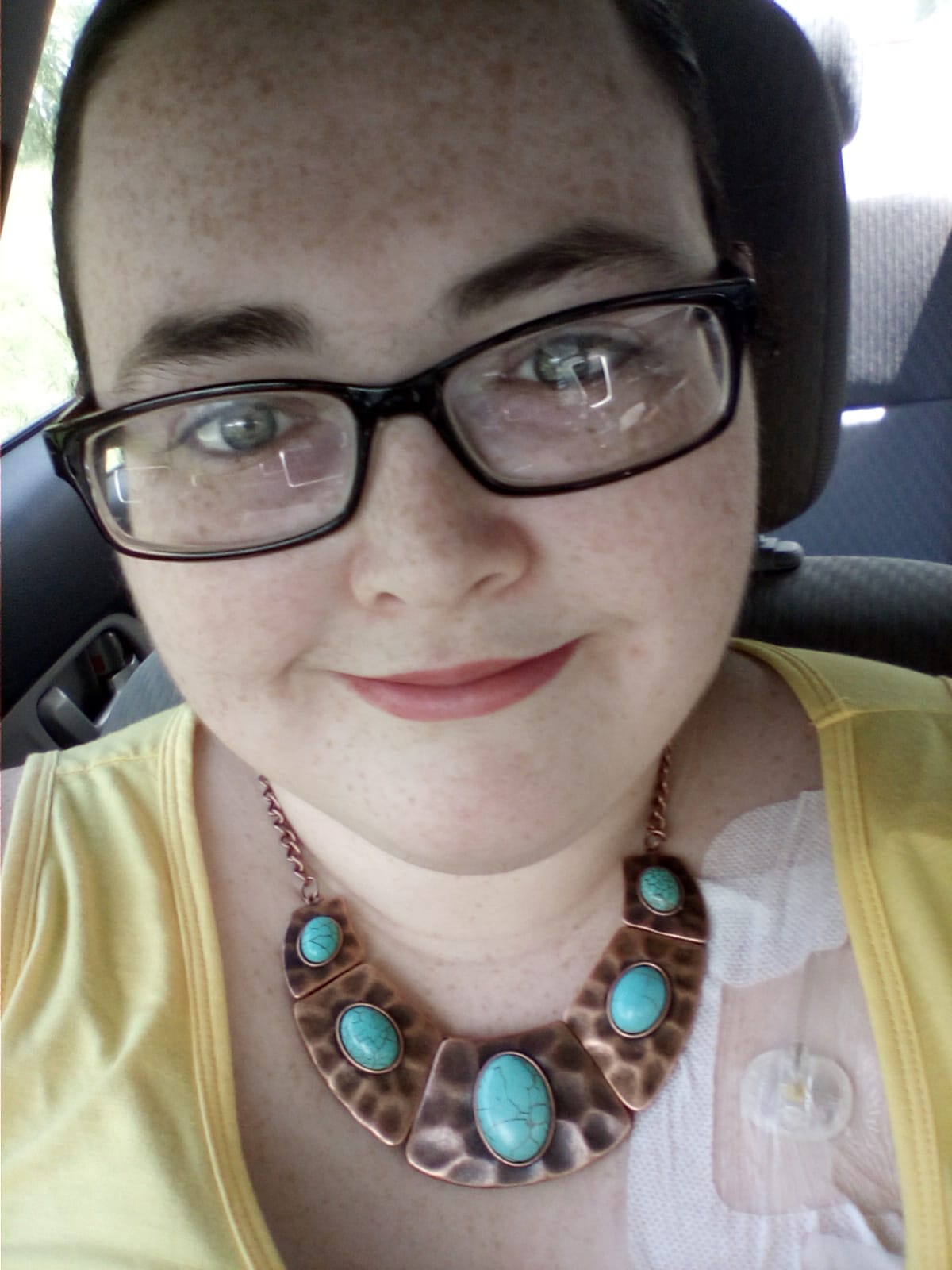
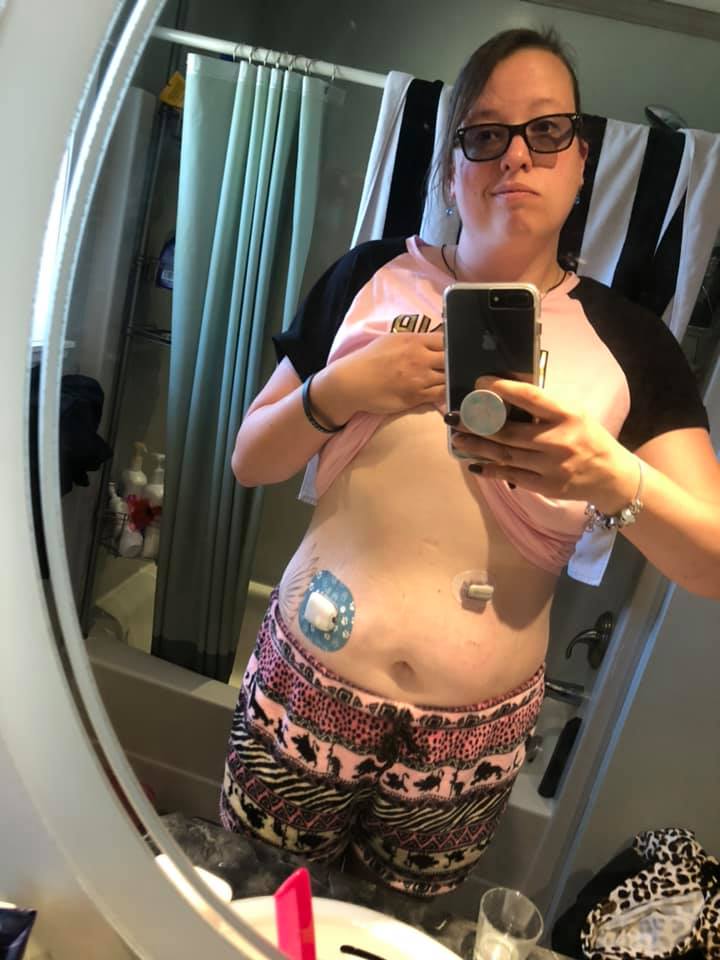
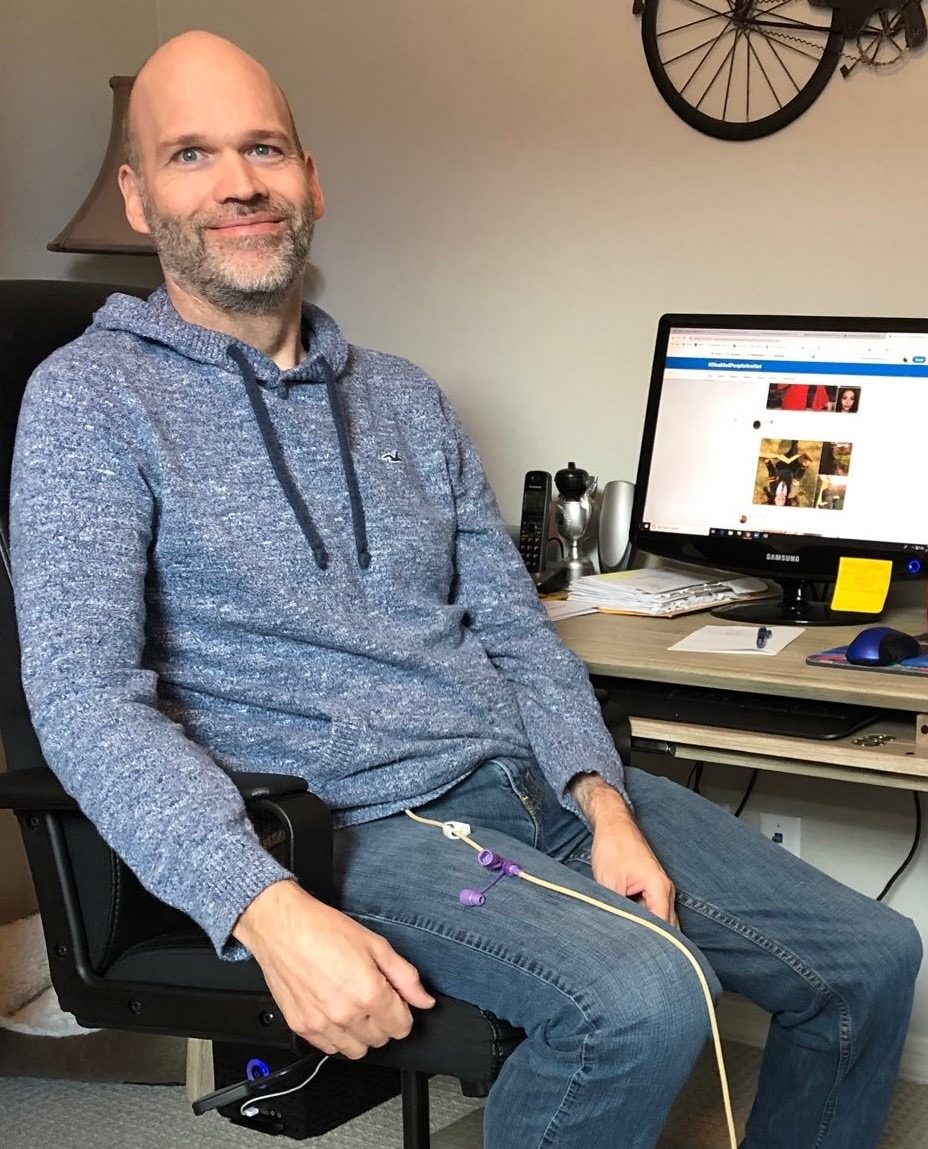
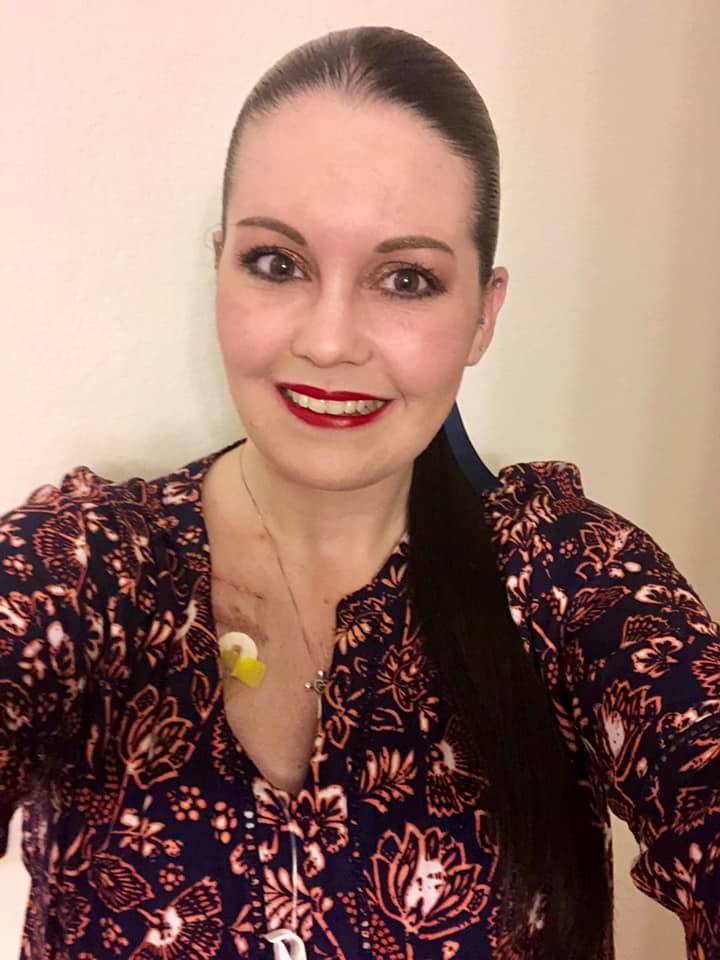
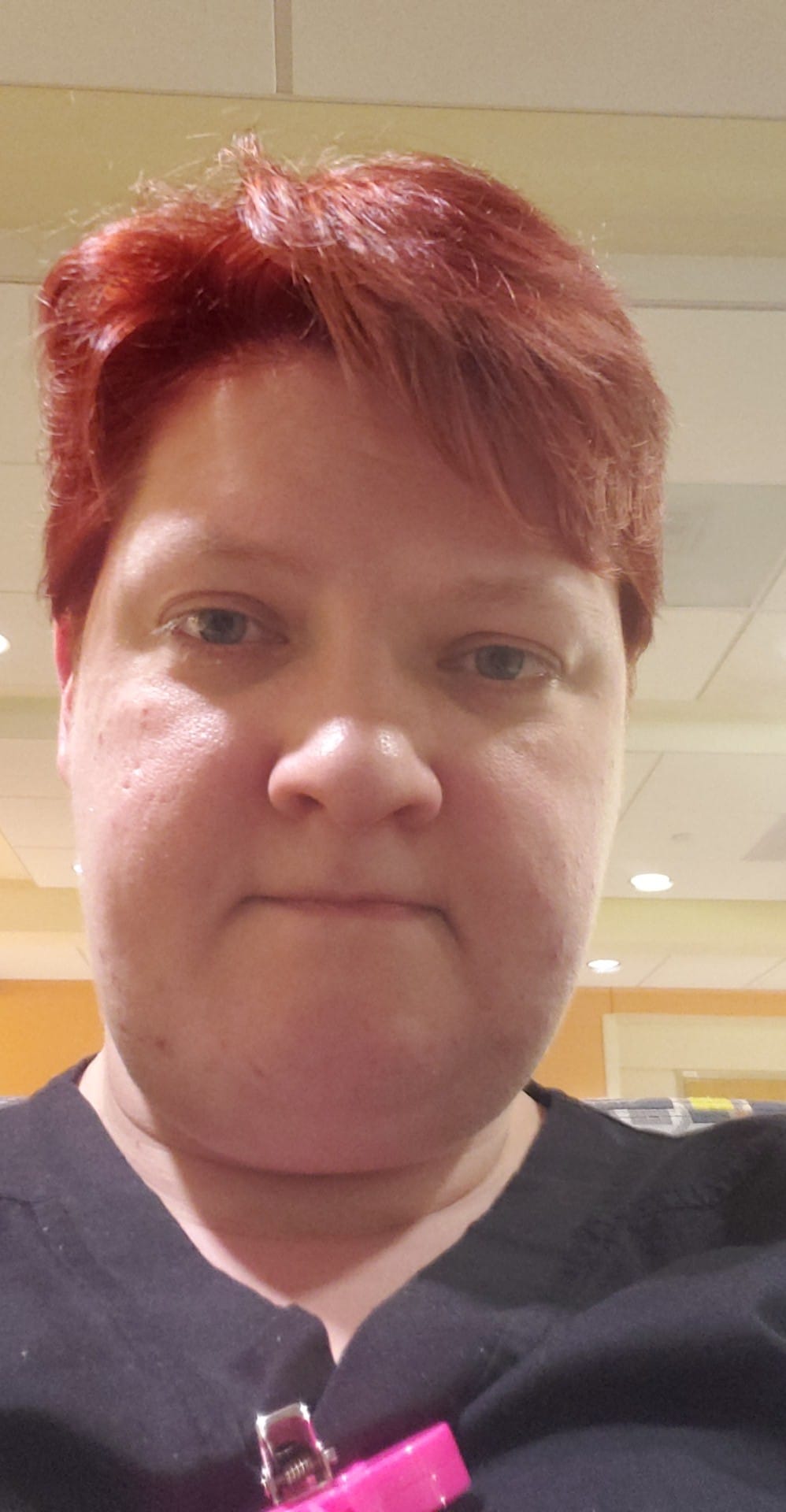
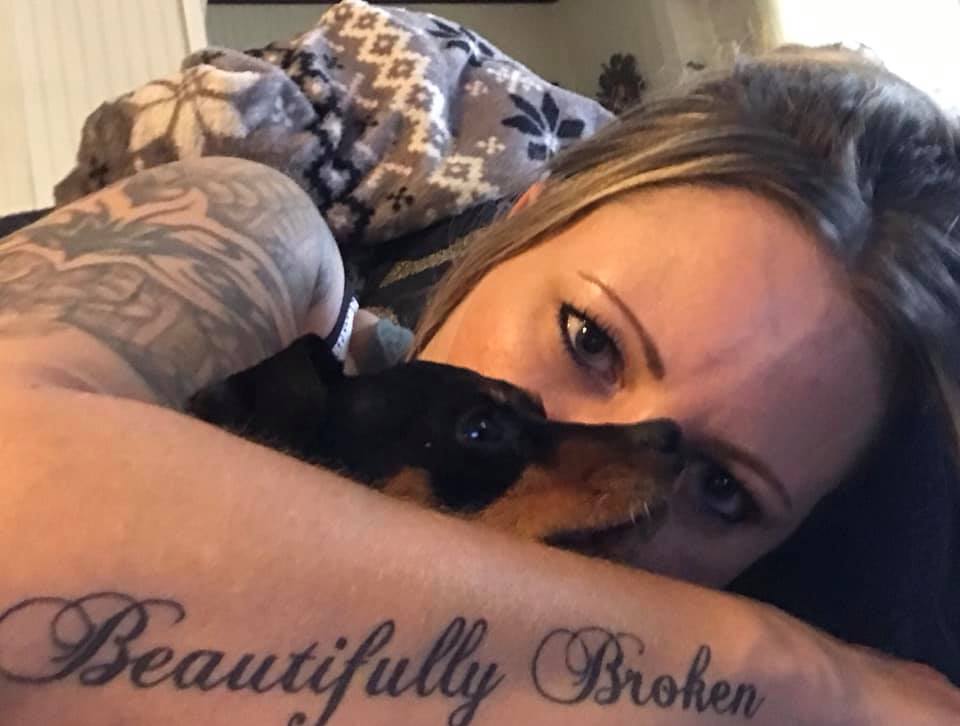
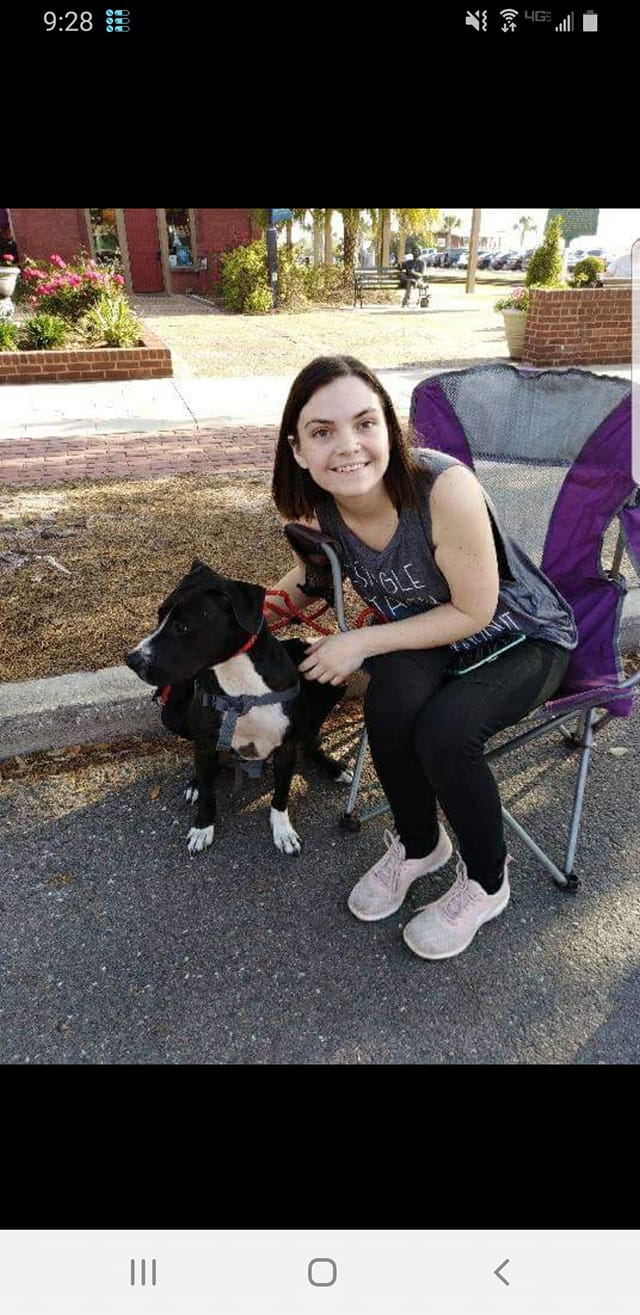
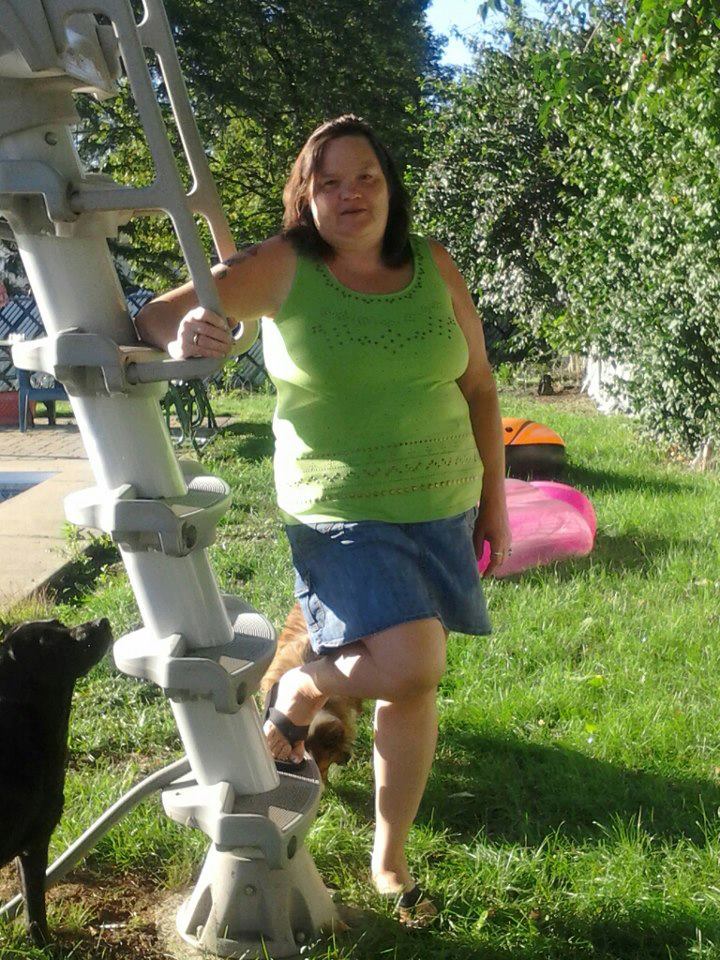
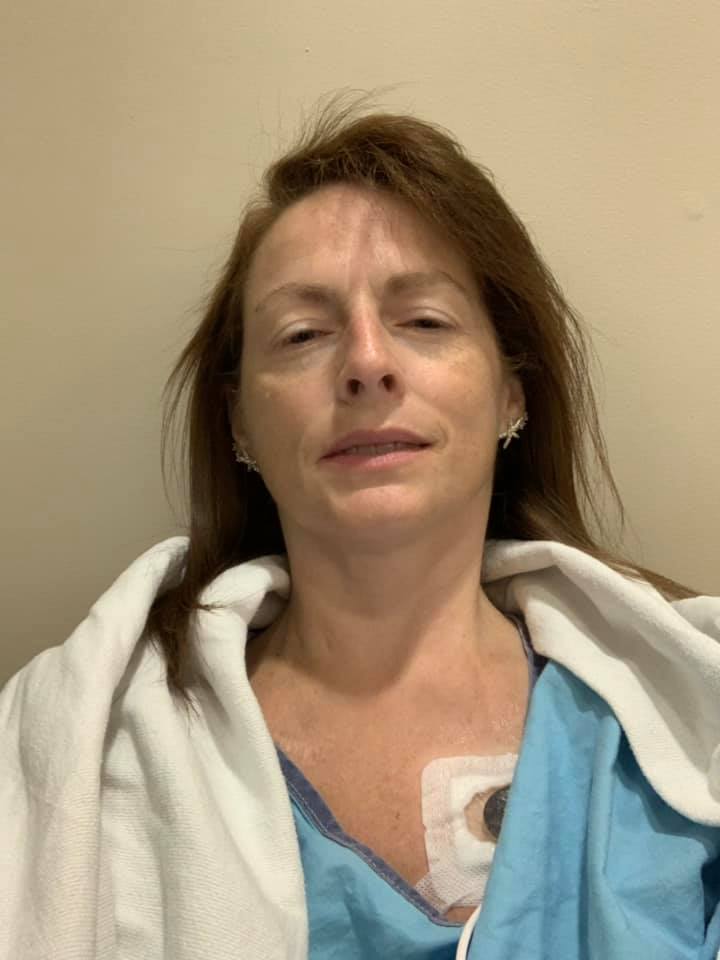
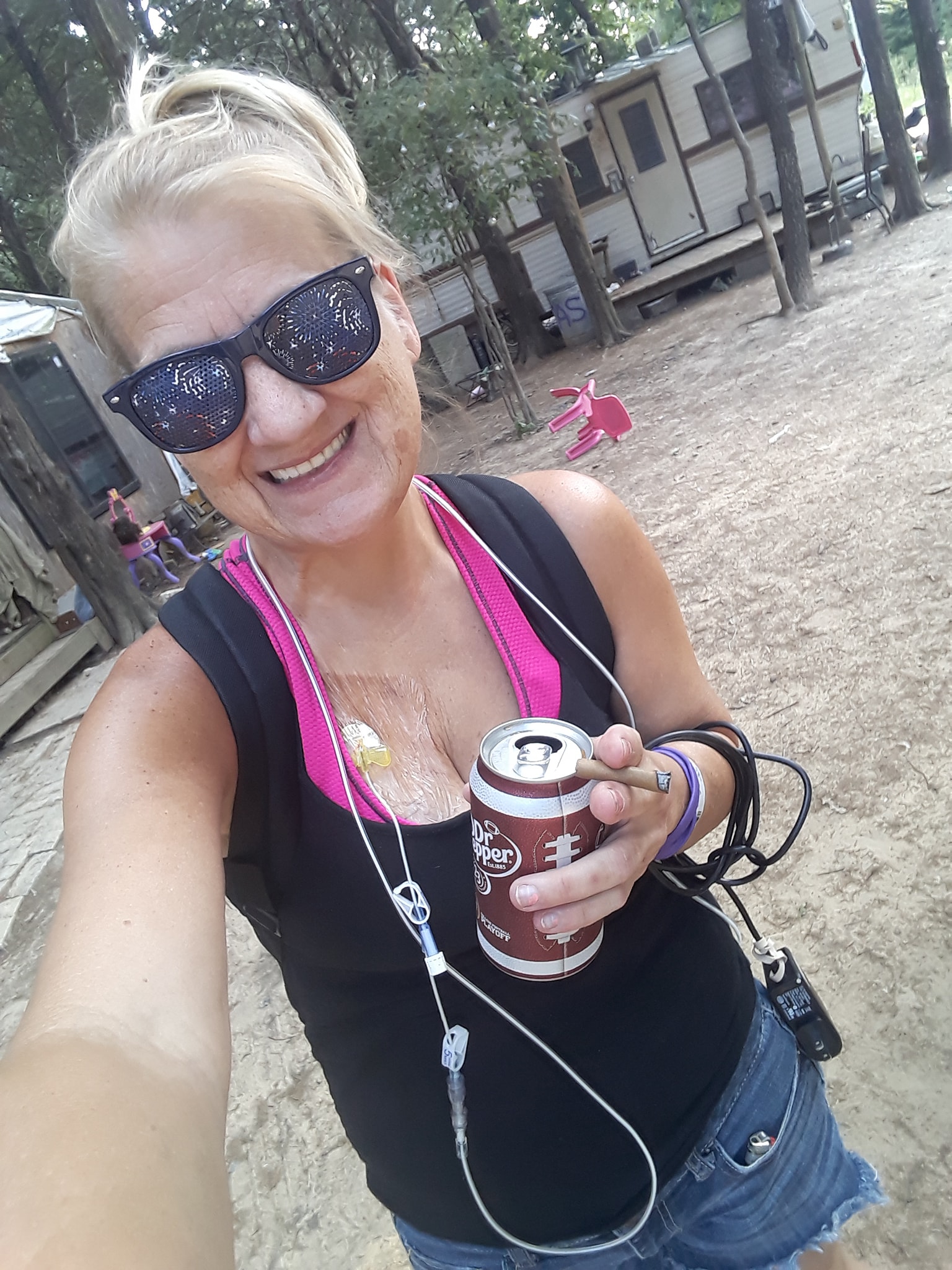
I look fine. People think I AM fine. Nobody wants to hear about it. Nobody helps. Nobody cares. 4% of the population has this illness. Only 4%. So many people have died from it. There is no cure. There isn’t much research. Doctors don’t know what it is and don’t want to learn how to treat you. You’re considered a hypochondriac. In reality you’re exhausted, alone, depressed, and hungry. The fear of eating is so real. It’s not an eating disorder.

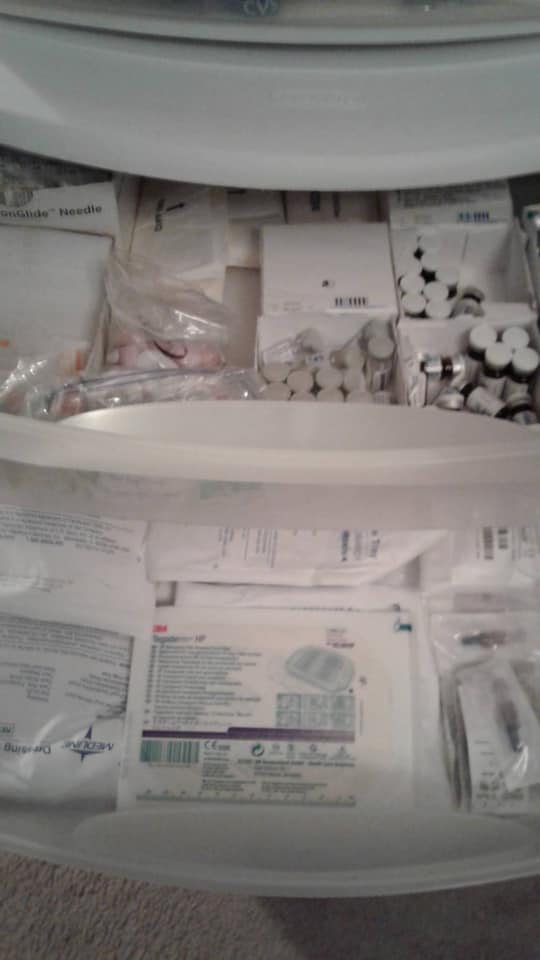
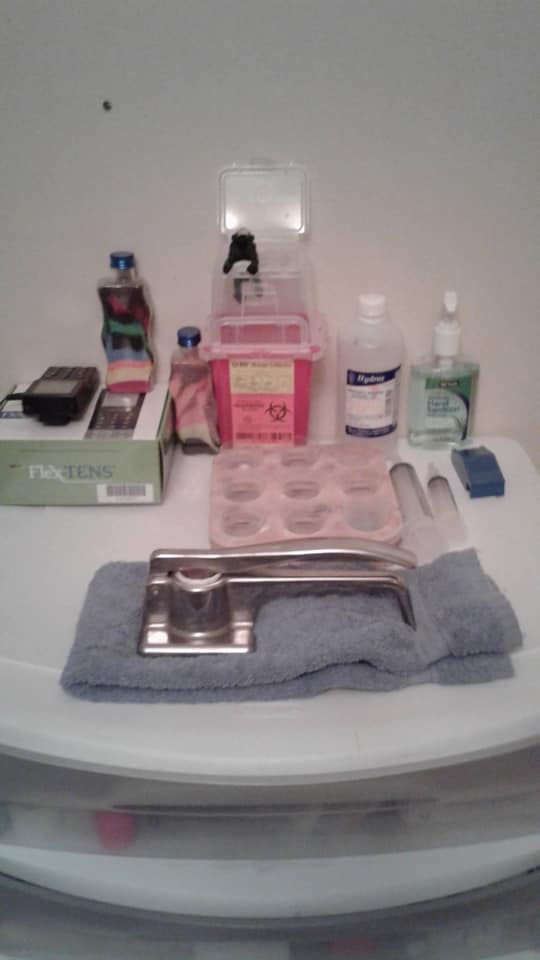
Gastroparesis means your stomach is paralyzed. It CAN’T digest food. You may have good days where you can eat normal foods, but they don’t last long. Sometimes you can eat a certain food but other times that same food will cause excruciating pain. You never know how you will feel. The only medications that are FDA approved have too many side effects or quit working within a few months. Insurance doesn’t pay for treatment. And even though you spend most of your time in bed hurting and unable to eat, disability is almost impossible to get.

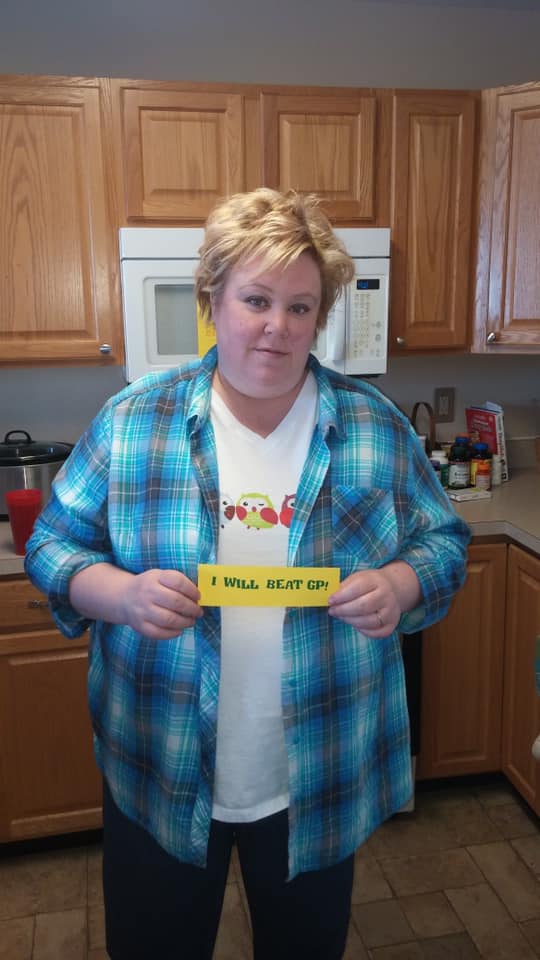
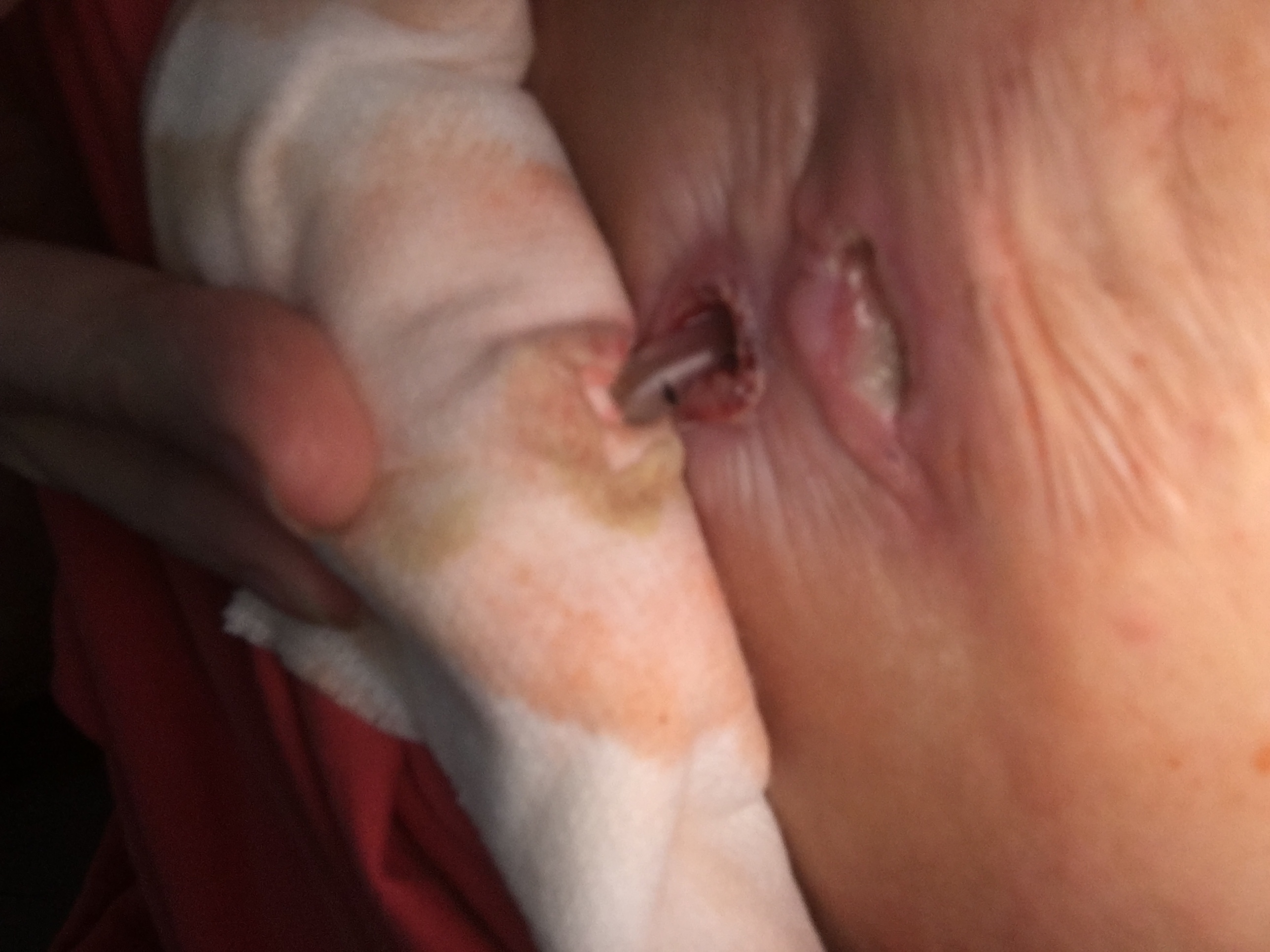
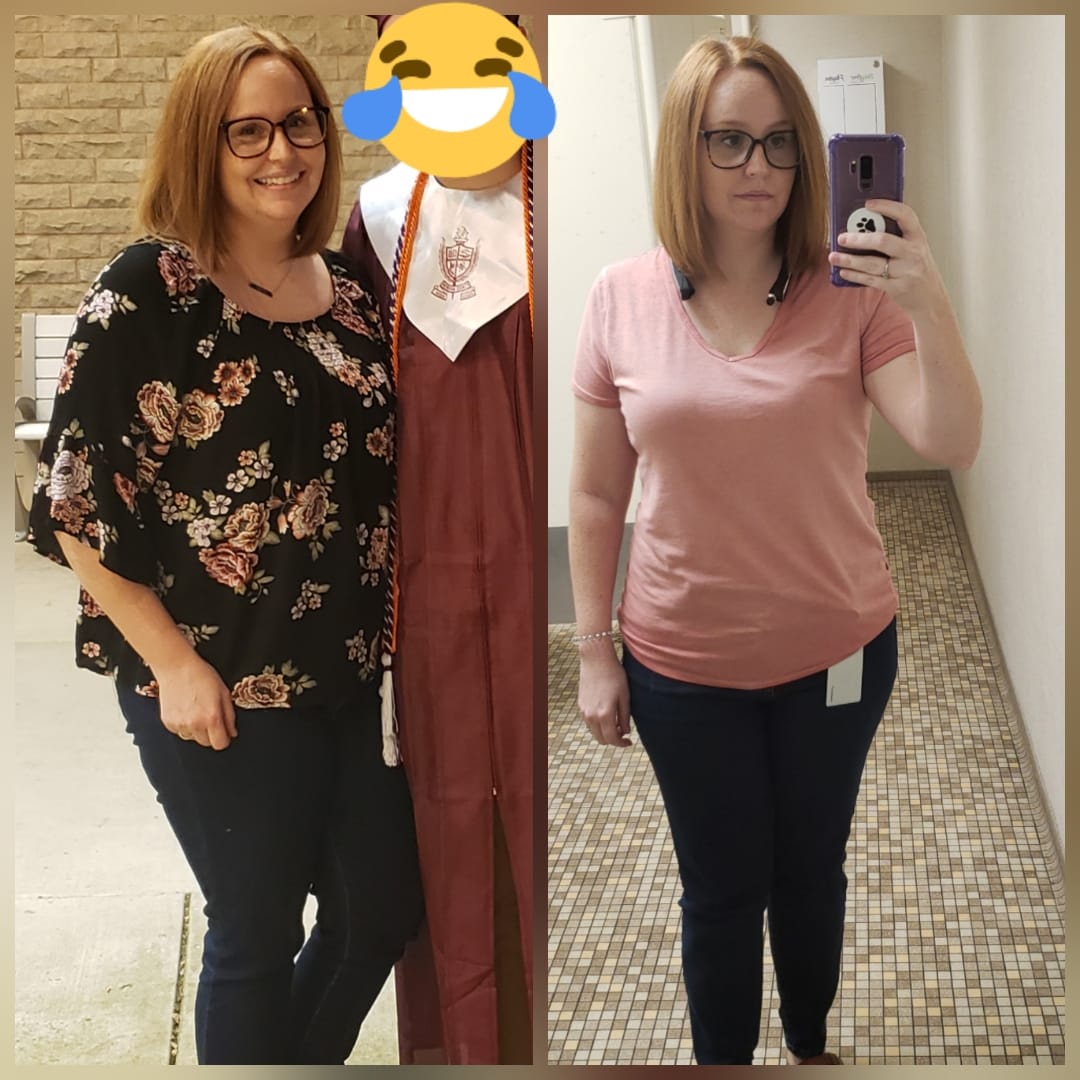
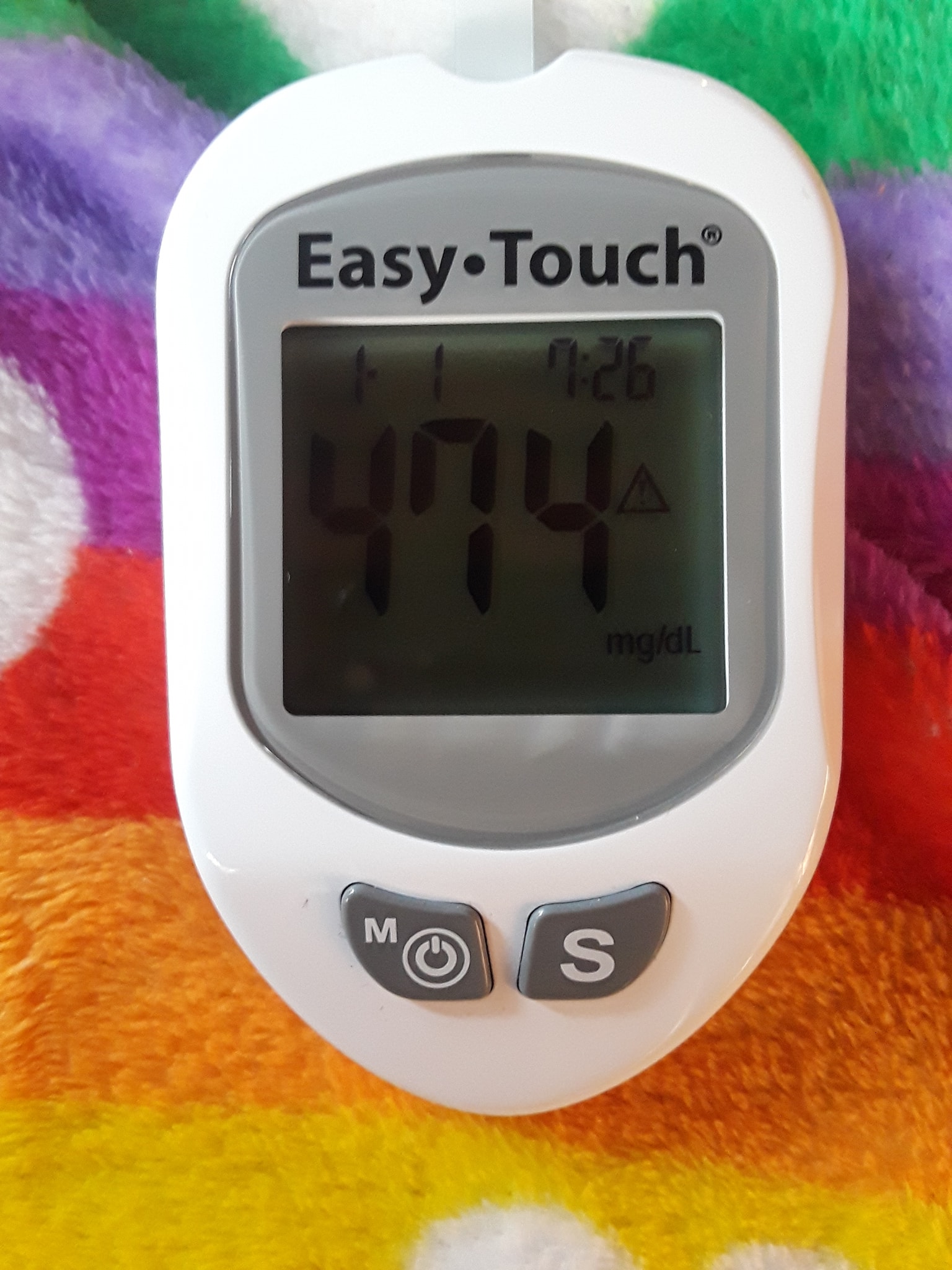
Another common misconception is that if you’re not losing weight then you’re not sick. This is such a lie. You’re body can go into starvation mode and instead of using the nutrients that you do get, it stores them. So you actually gain weight instead of losing. Those of us with GP have had to form groups on Facebook and websites to do our own research and support each other because nobody else will. I’ve been diagnosed with GP for a year. Even family and friends don’t support me. I’m expected to live my life like everybody else when in reality I’m in pain and probably throwing up when they’re not looking. I may complain to those closest to me (my kids and my husband) but I don’t tell them everything. I work. I clean house. I cook when I can. I pay bills. I try to do things with them when I can. But inside I’m hurting, screaming, crying, and praying that some doctor somewhere will find a way to help me live through this.

So for all of us who have this, please help raise awareness. Please spread the word. Someone you love may have this and be afraid to tell you for fear you won’t understand. That friend or family member that you never see may be trying to explain this and don’t know how. Or they may be misdiagnosed and not know what’s really wrong. Be there for them. Be there for us! Love us even though we can’t do what you do. Love us even though we aren’t who we want to be…. a healthy person. Gastroparesis is real! Help us spread the word!

Loading spinner

Proclamations and Certificates of Recognition

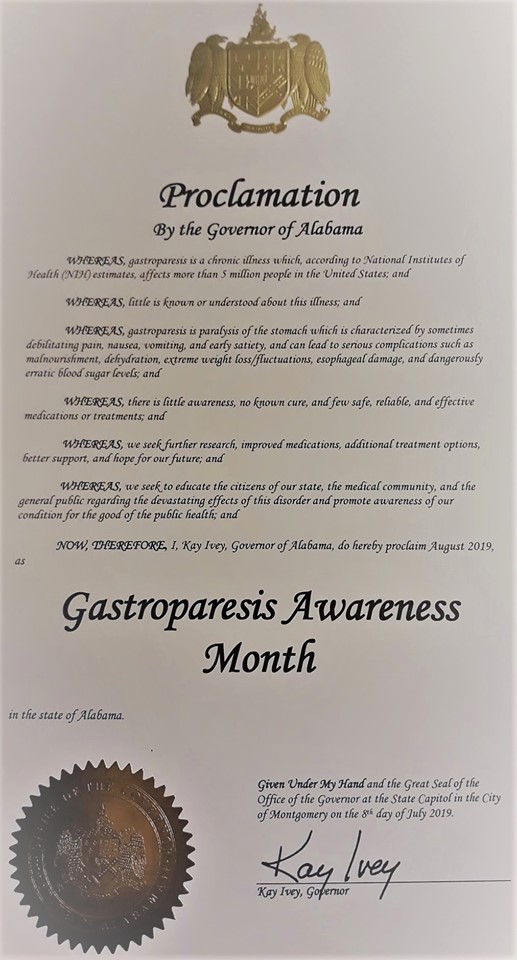
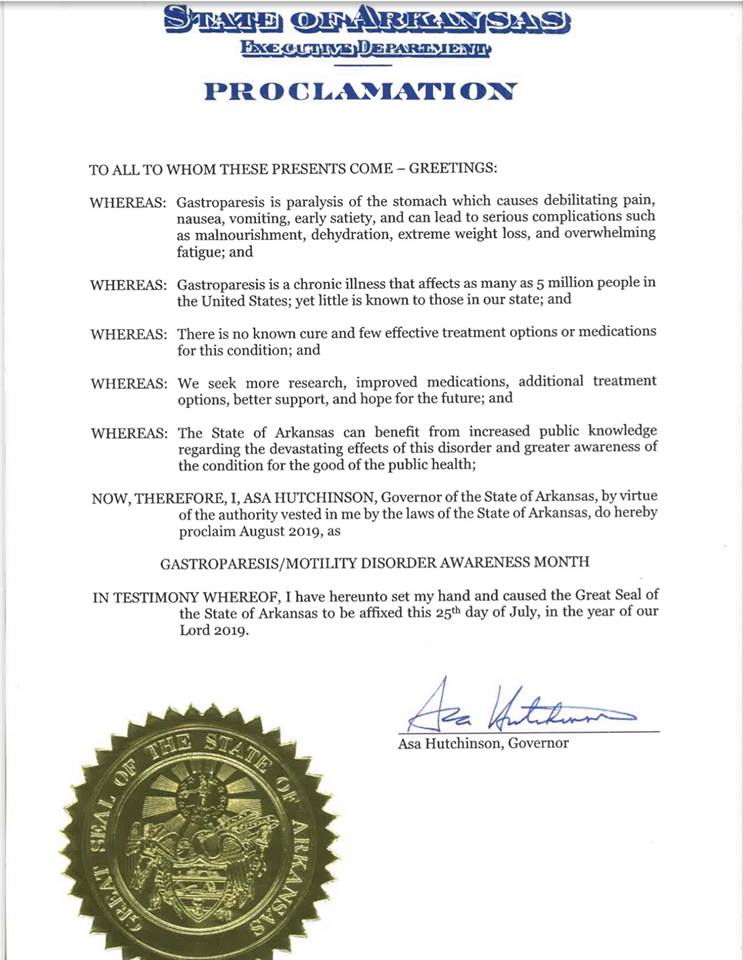
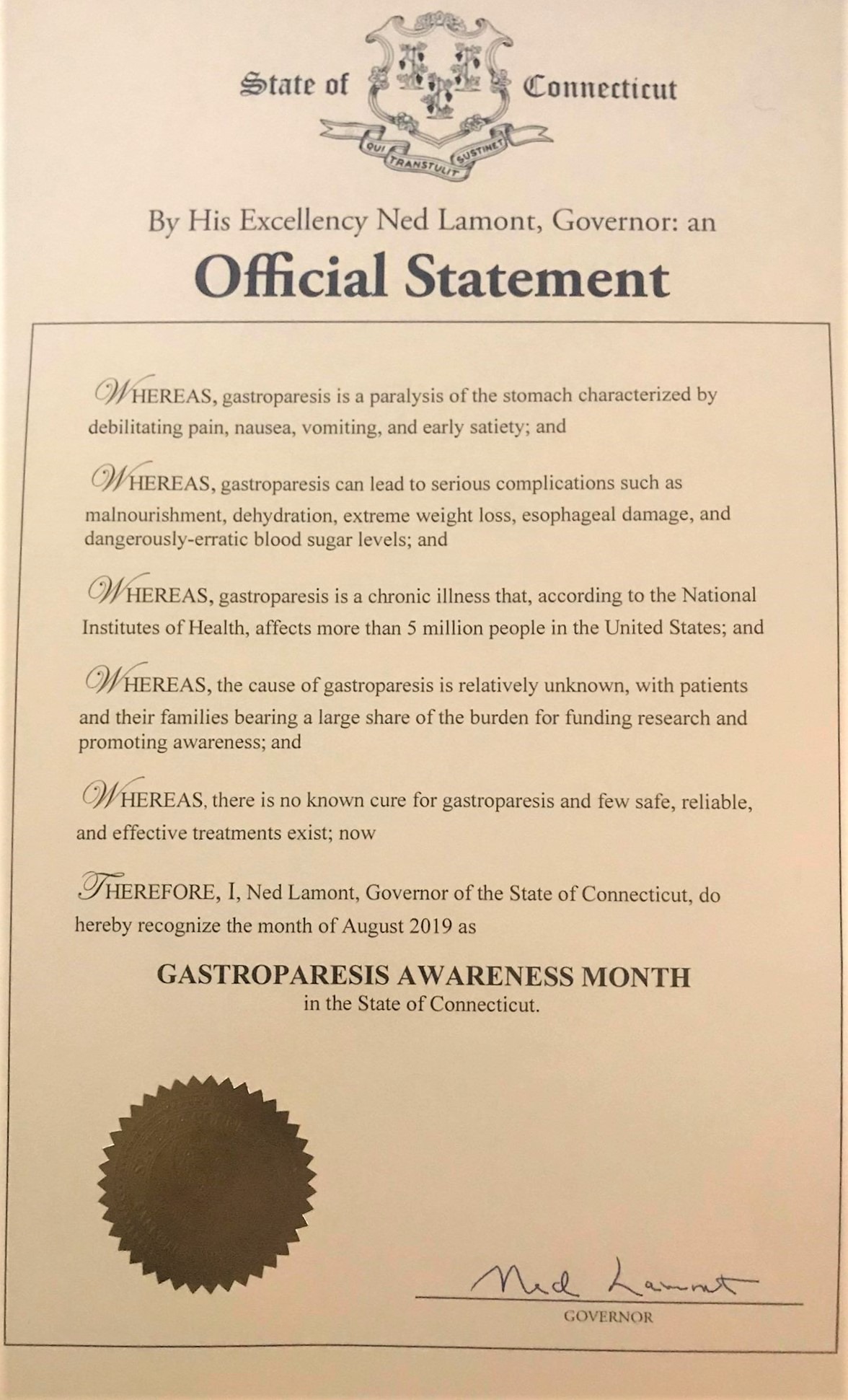
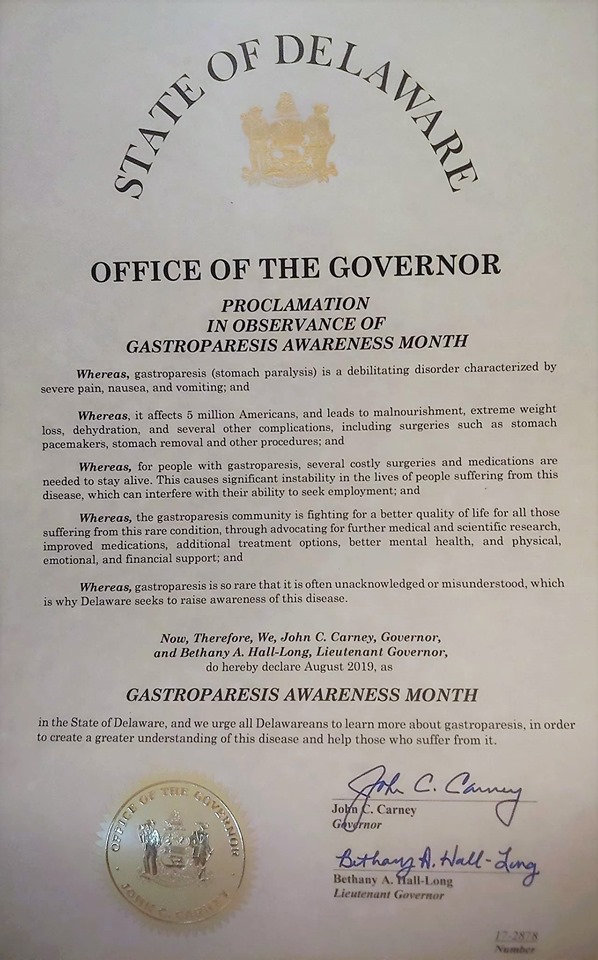
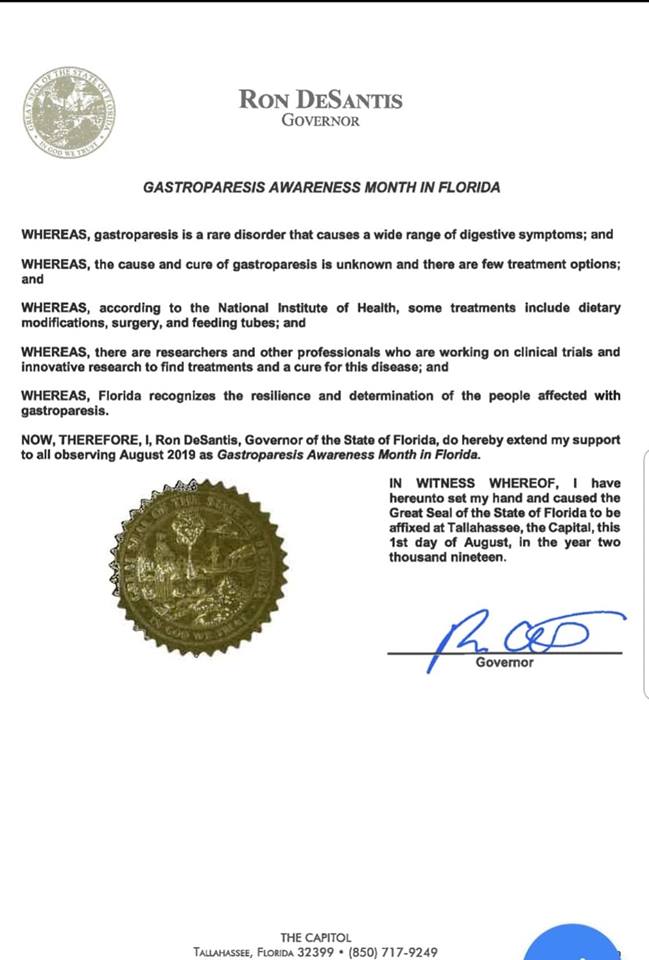
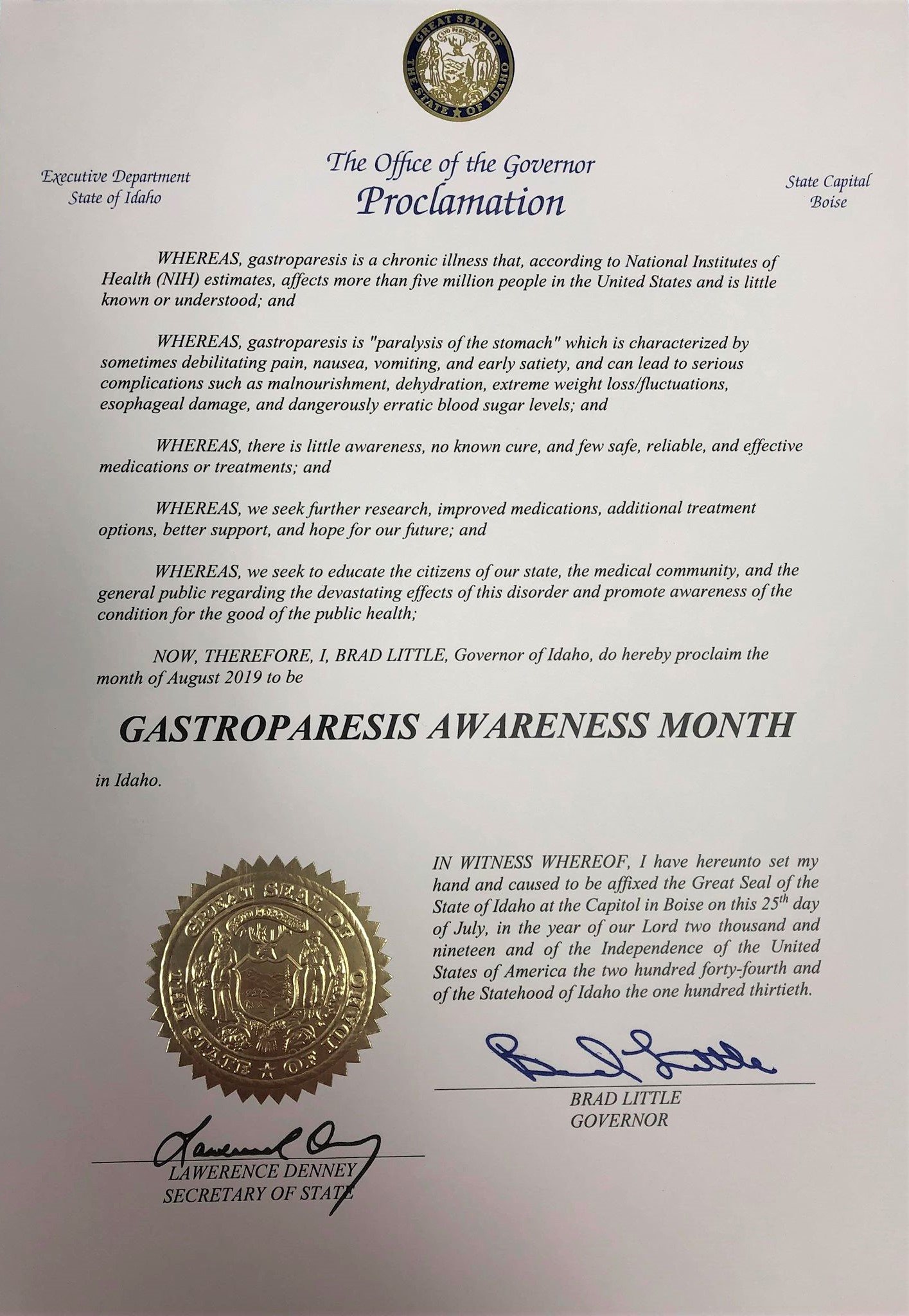
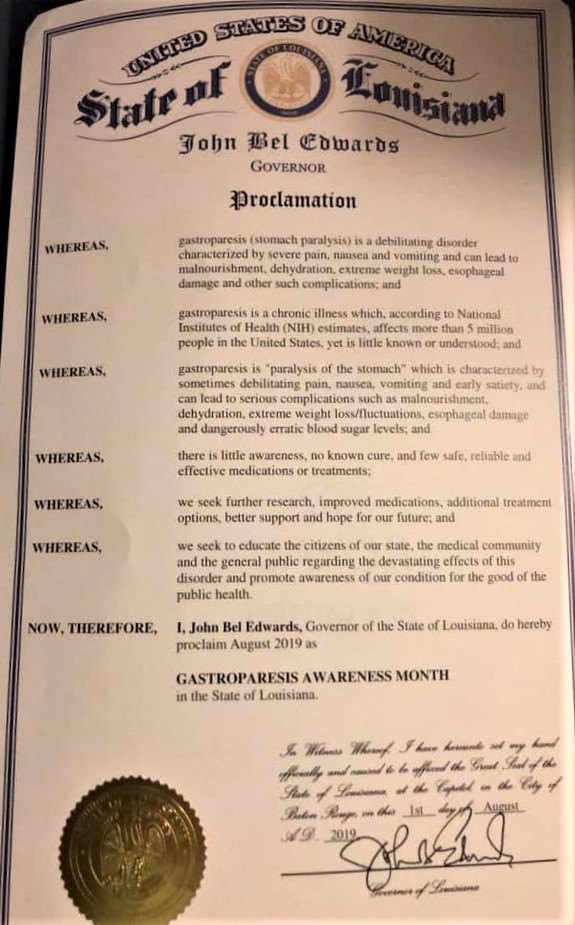
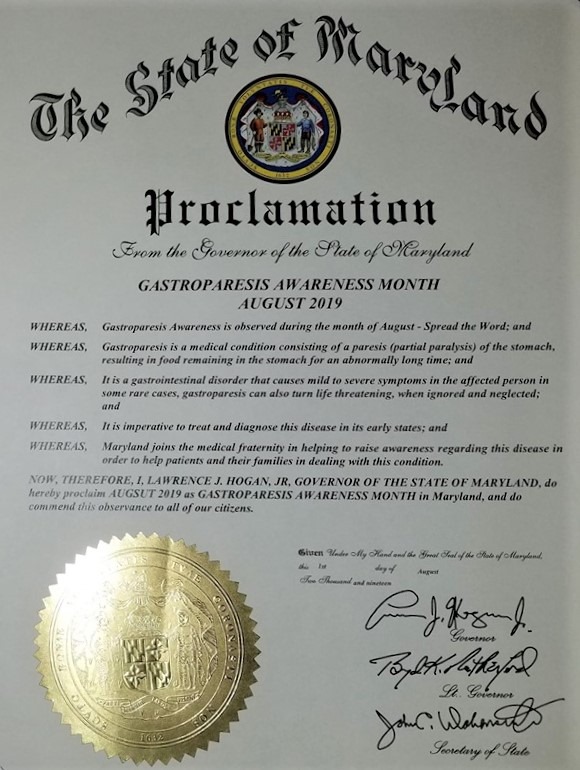
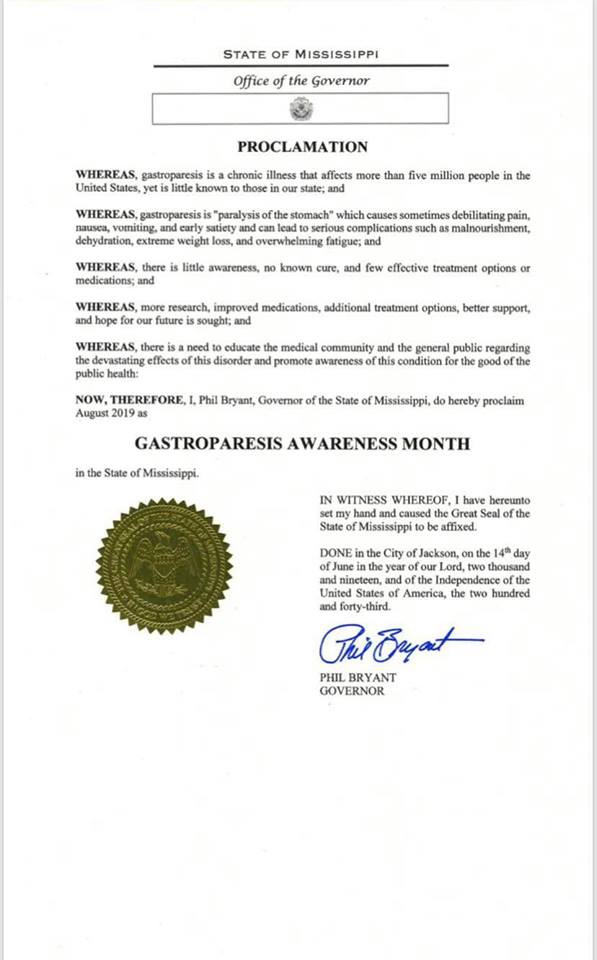
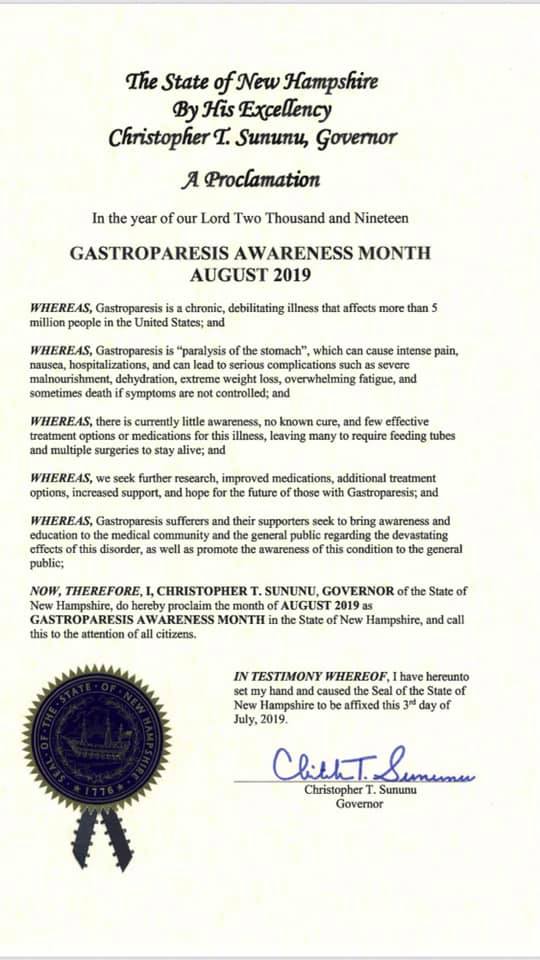
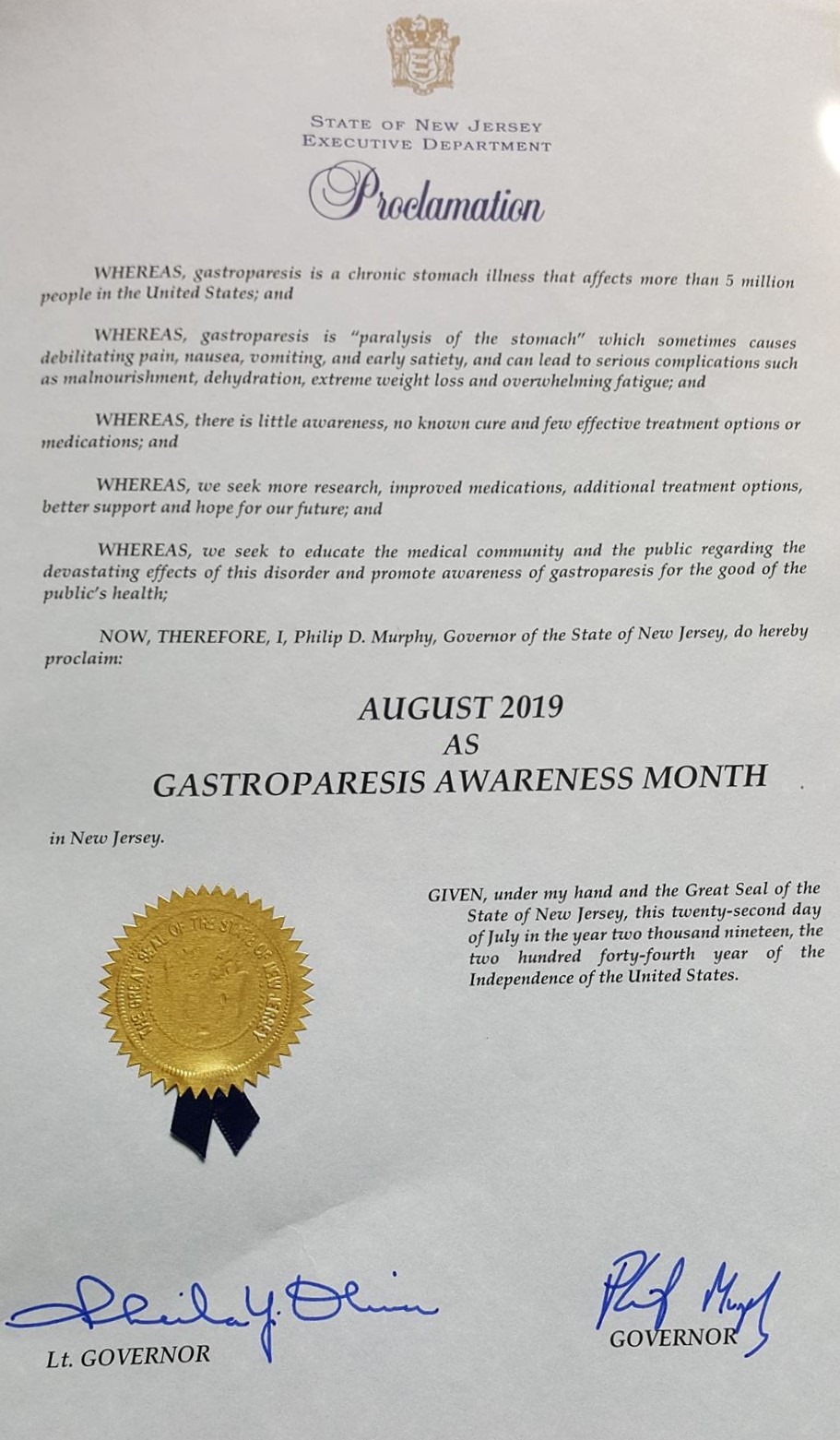
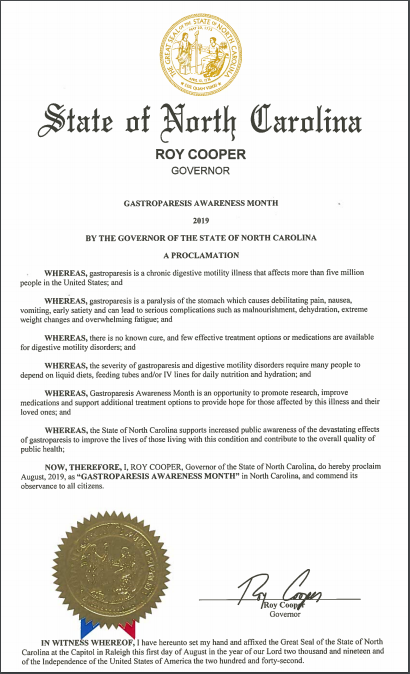
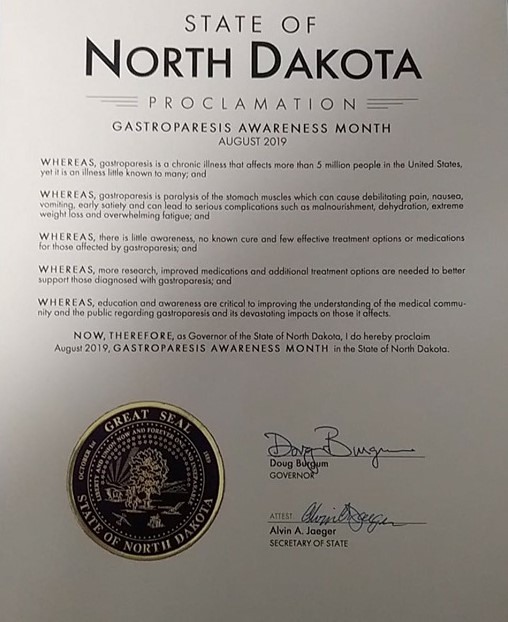
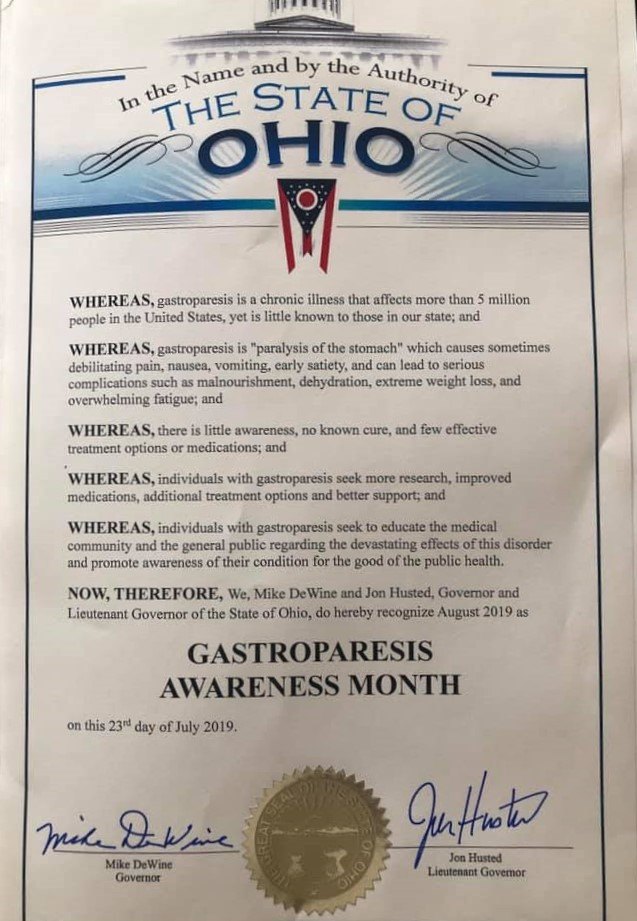
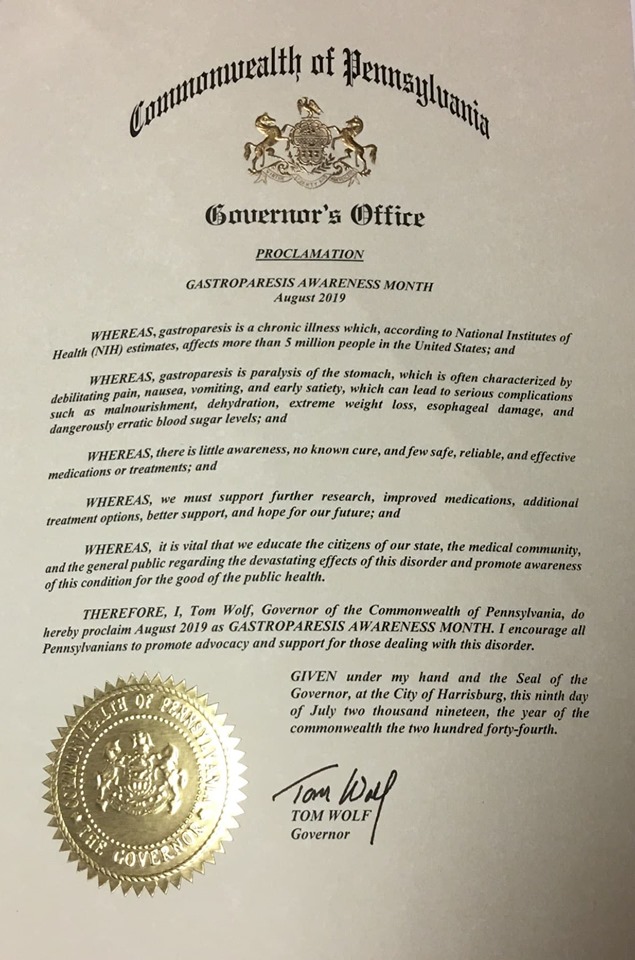
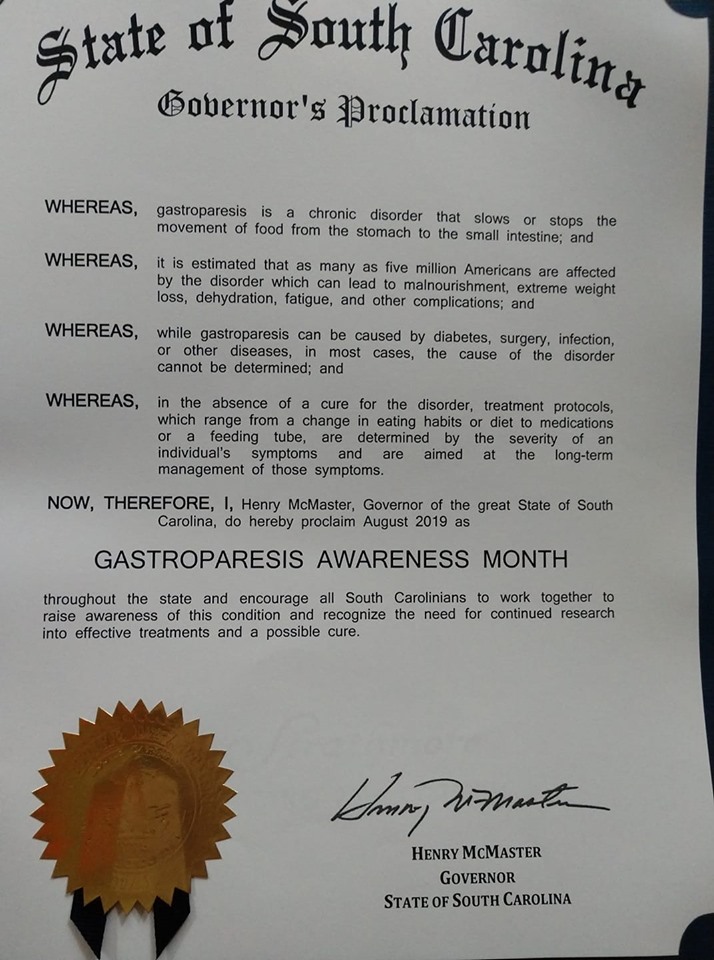
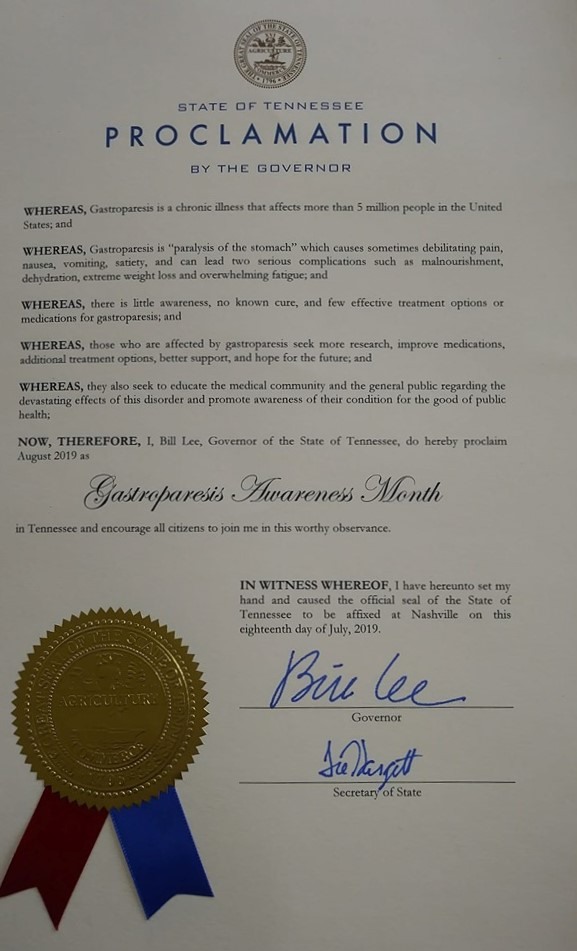
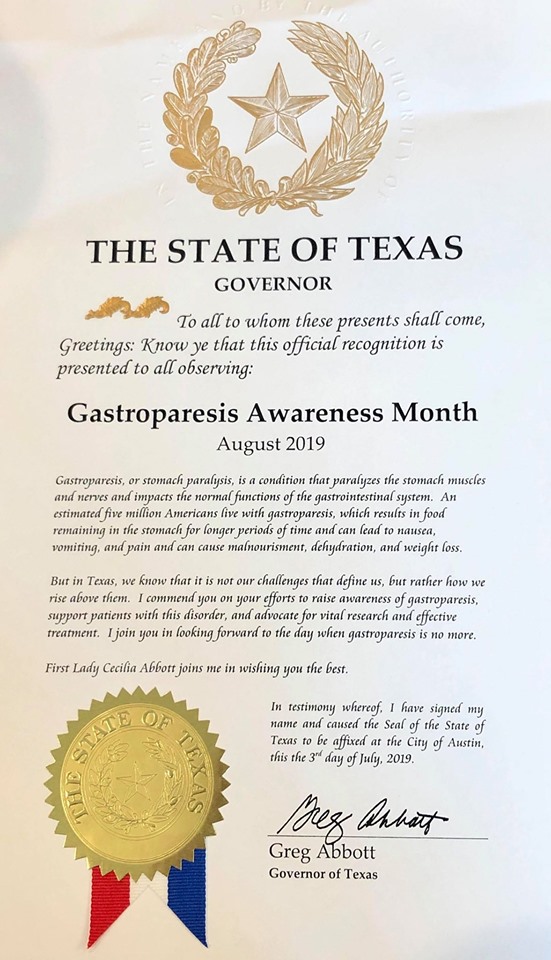
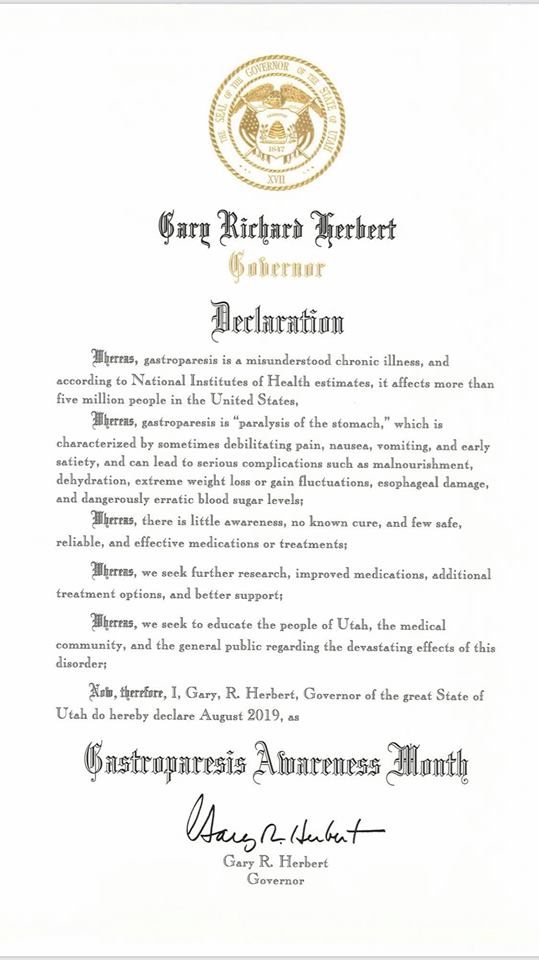
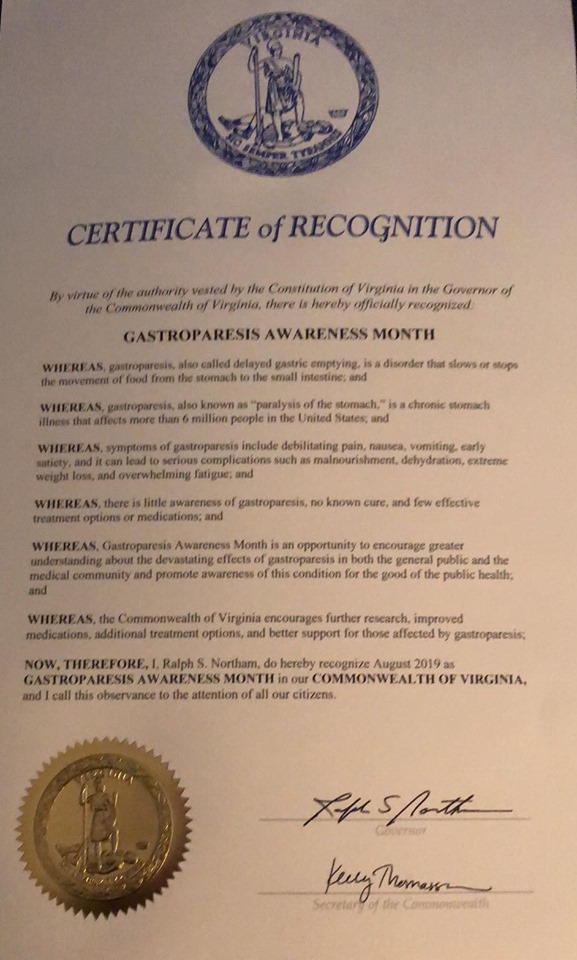
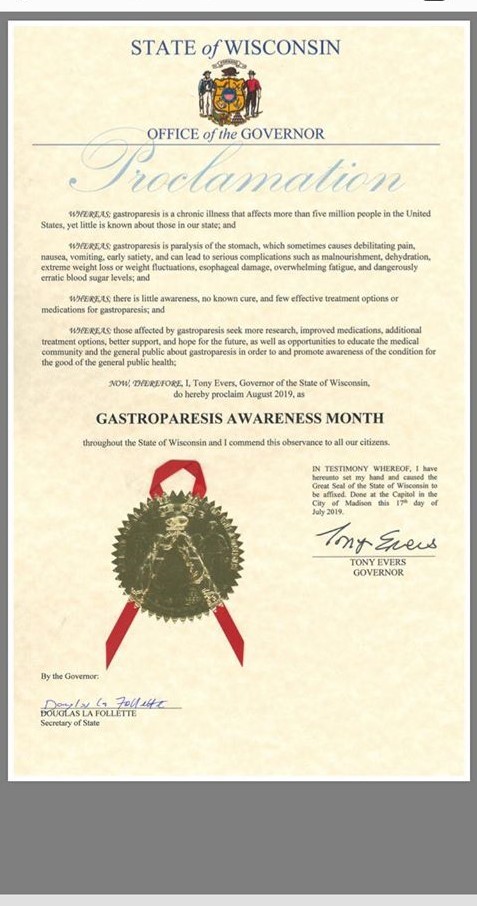
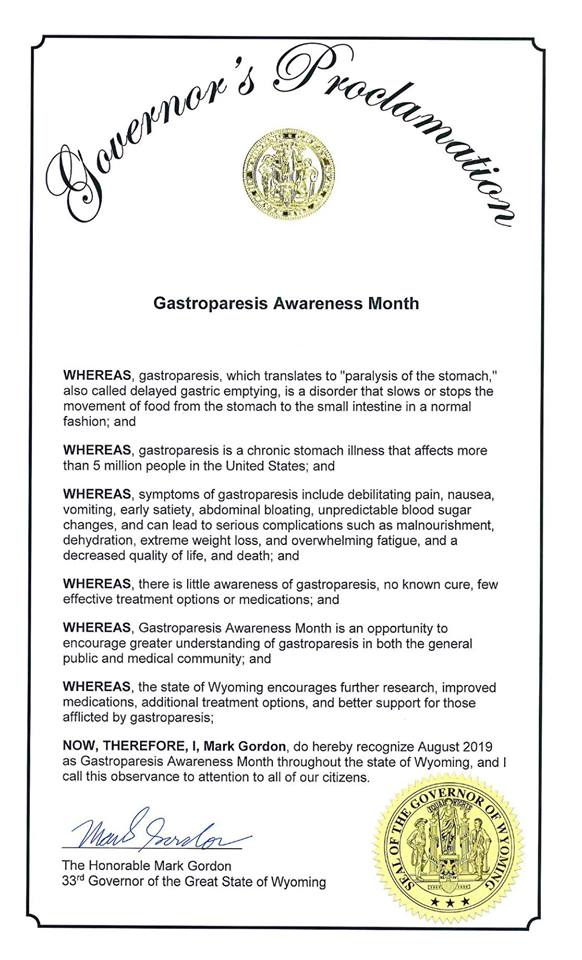
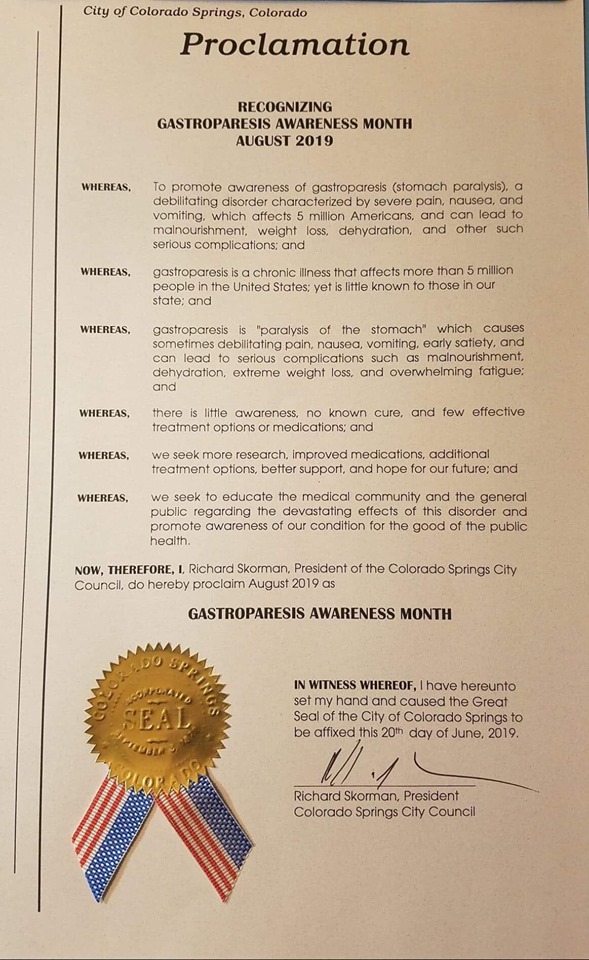
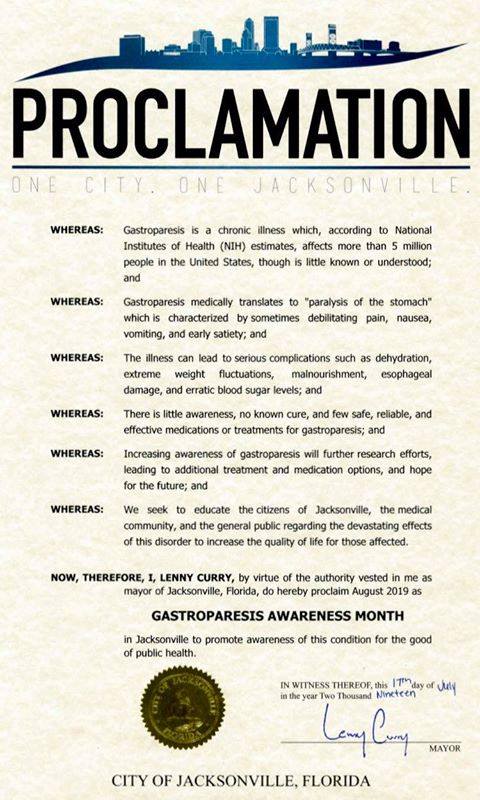
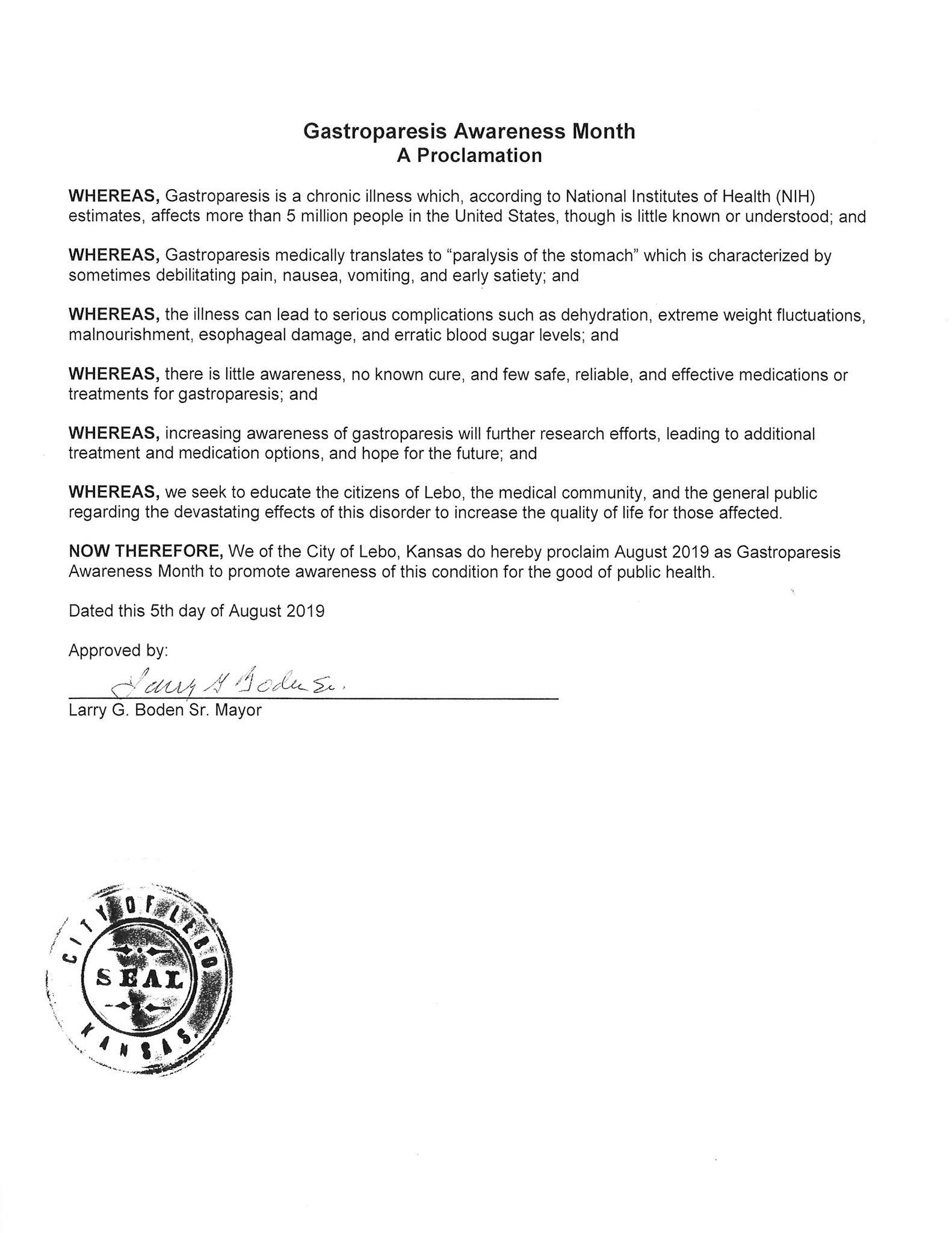
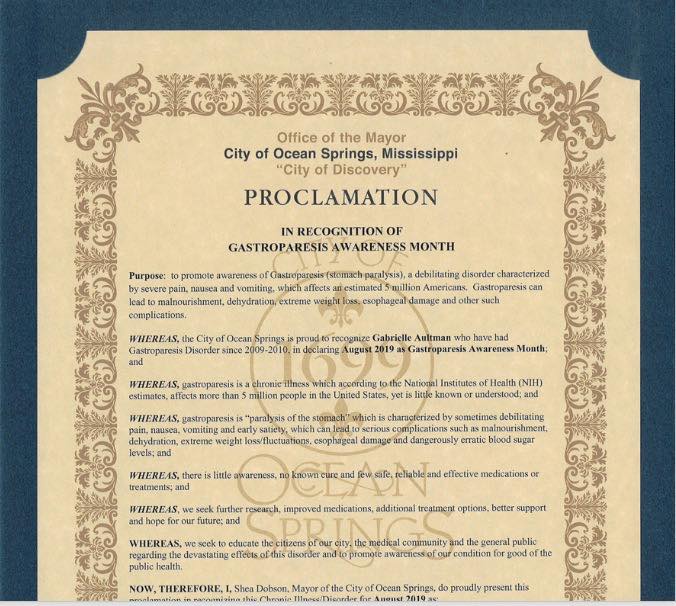
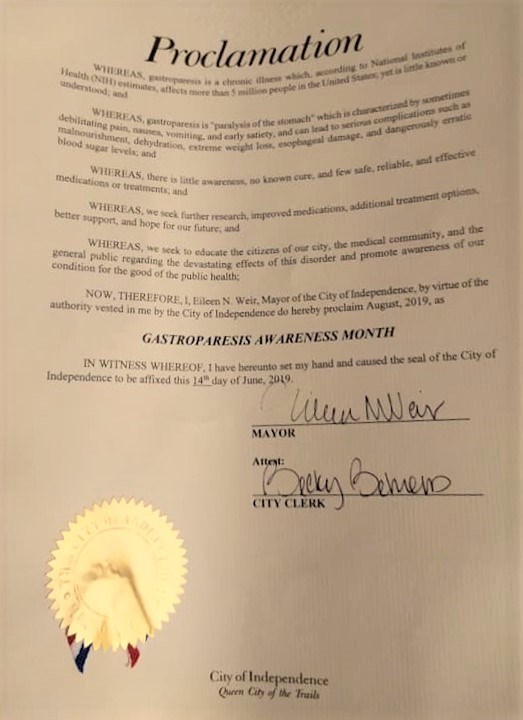
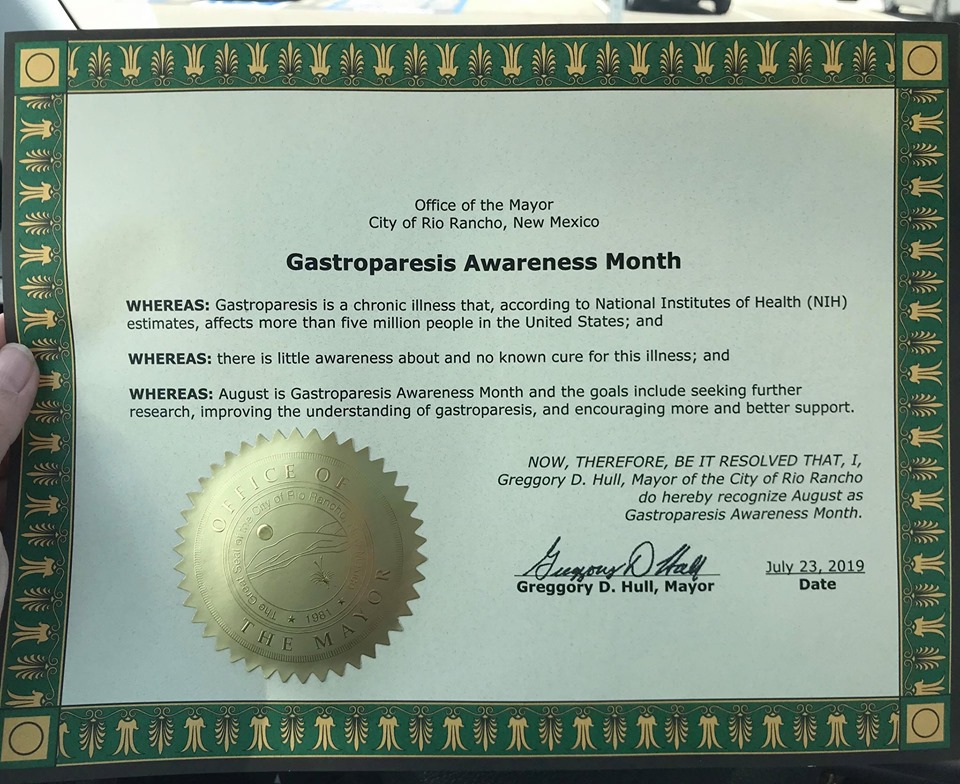
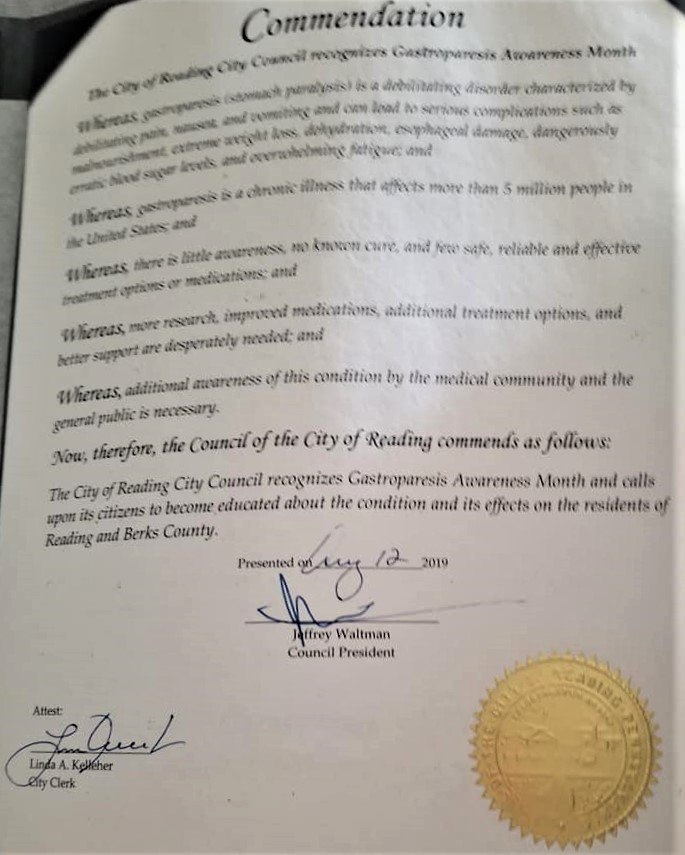
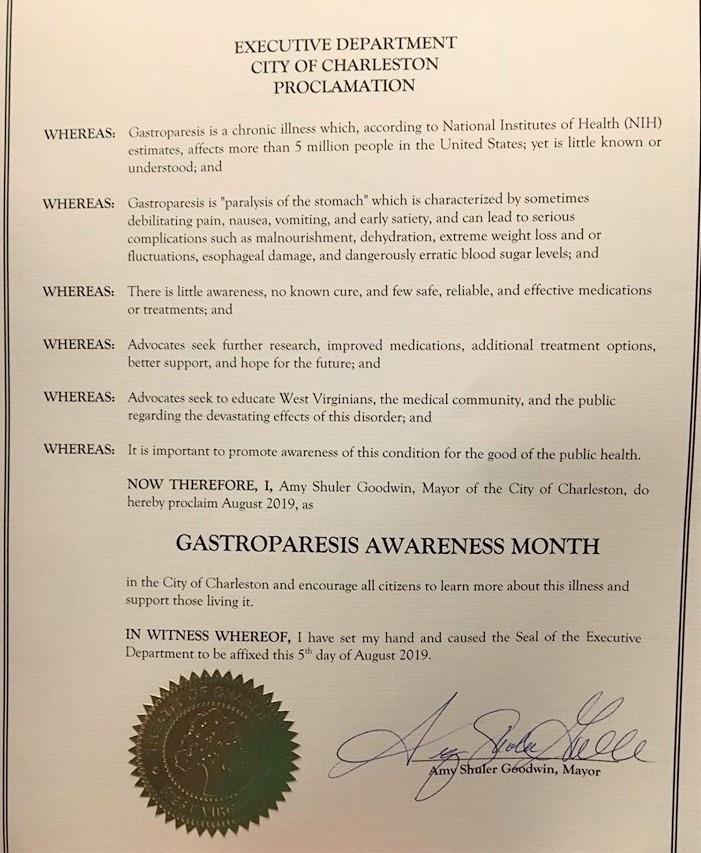
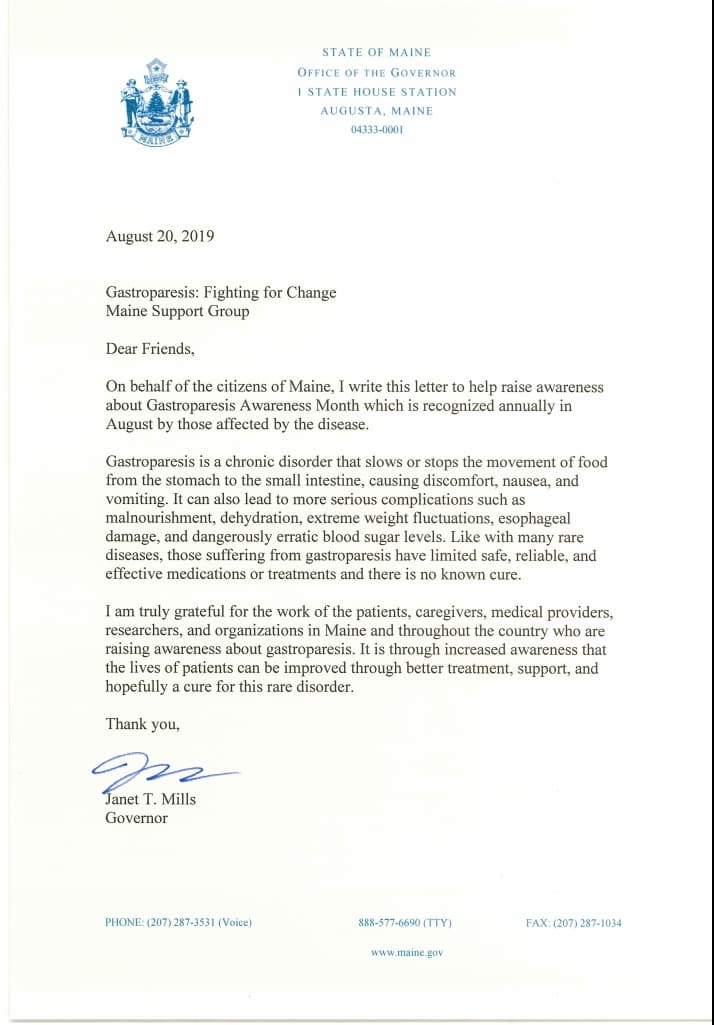
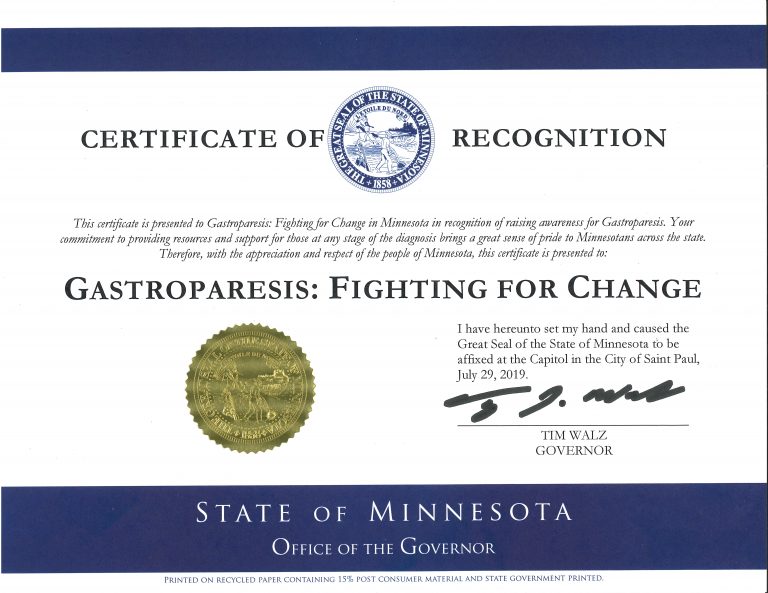
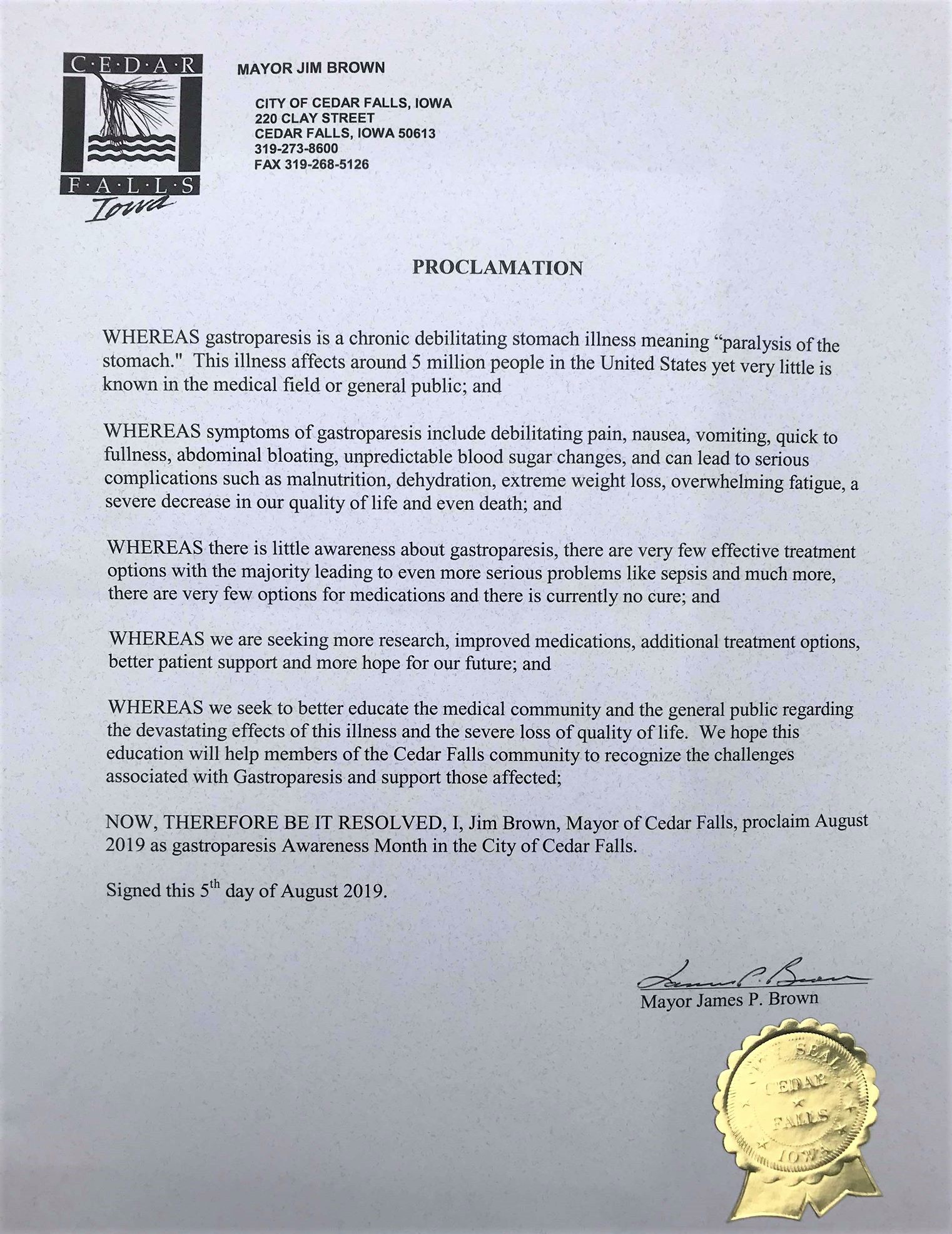
Each year, the Gastroparesis community reaches out to their elected officials requesting August be declared Gastroparesis Awareness Month.  We are so grateful to the community members who ask for the proclamations as well as to the elected officials who granted the requests.  Below are the ones we have received for 2019.


State Proclamations

City and County Proclamations

Certificates of Recognition

Loading spinner

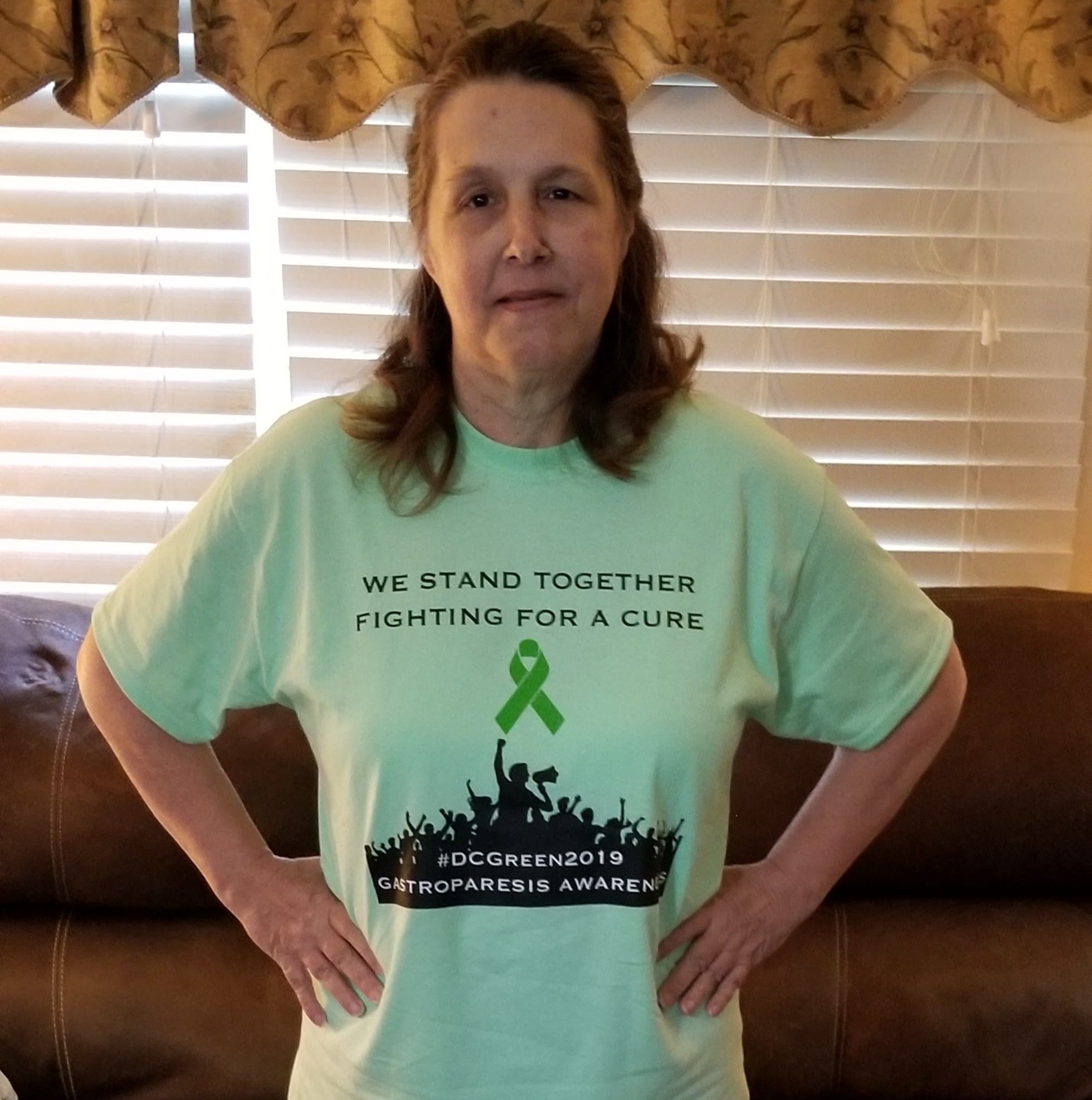
#DCGreen2019

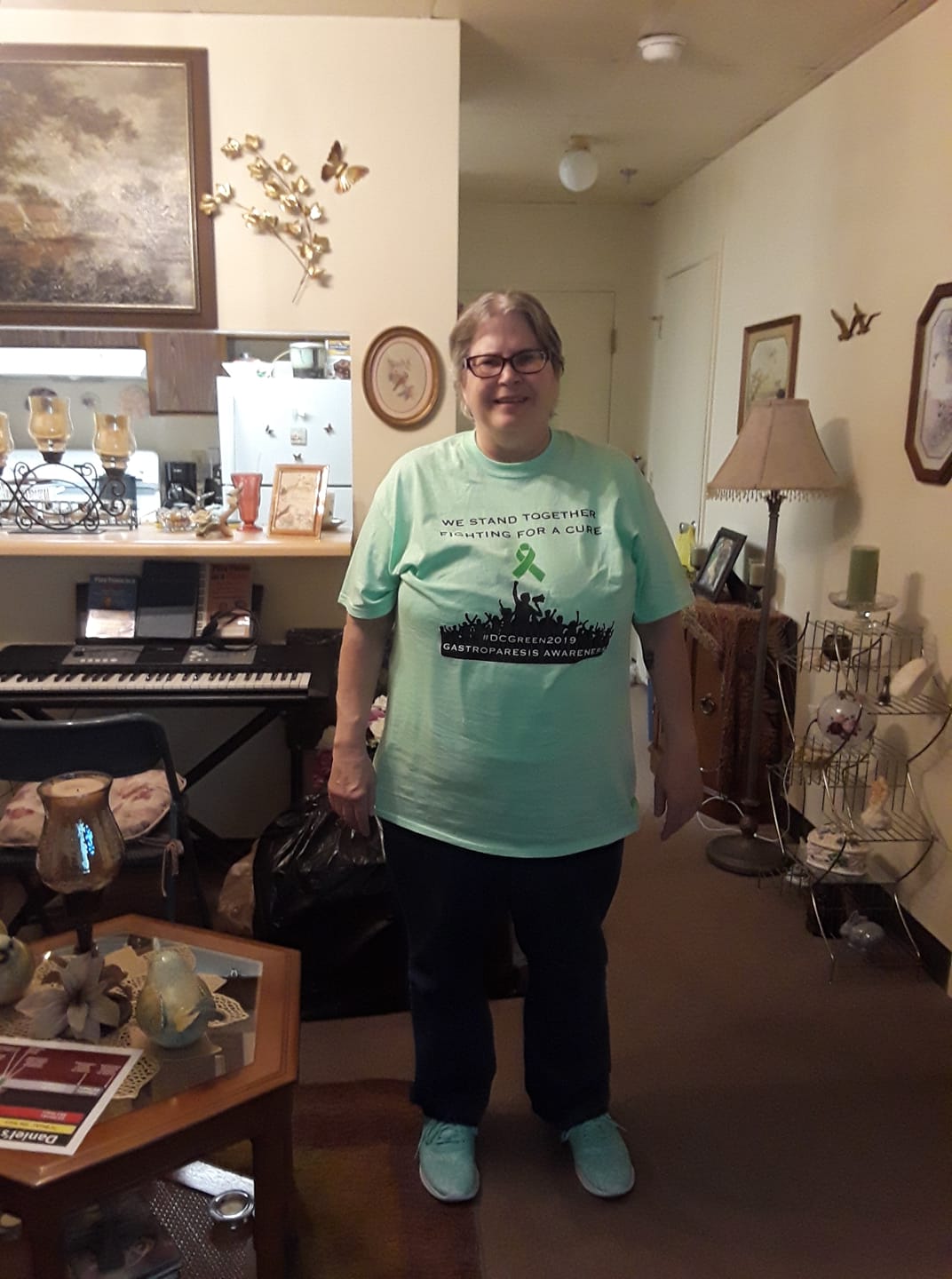
On June 24, 2019 the Gastroparesis community held a rally in Washington, DC.

People came from all over the country to unify their voices, fighting for change, during this two day event.  At home, were thousands of supporters who joined via a virtual rally and live feeds from the in-person rally.  It was an incredible, empowering experience followed by legislative meetings with the House and Senate the next day.

The big push was for awareness and to garner support for the Functional Gastrointestinal and Motility Disorders Research Enhancement Act of 2019 (H.R. 3396).  We were met with enthusiasm by both our representatives and their staffers and left with hope that our legislators would support us in our efforts.

Though the rally highlighted many of our issues, there is still much work to be done, and this served as only the first of many community activities to come.  Our next event is  Virtual Advocacy Day, on July 23, 2019, where  we invite members and supporters of our  community to contact their legislators and once again ask for support for H.R. 3396.

Collectively, we fight for all involved in our care – loved ones, medical professionals, insurance and pharmaceutical companies, and policymakers – to work together for our good. We wish to be valued as the unique individuals we are, to be believed, and to be treated with compassion and dignity by all who touch our lives. Further, we push for those in power to respect the seriousness of our illness, acknowledge the hardships that flow from it, fund research, support education and awareness, and recognize Gastroparesis as the debilitating condition we know it can often be.

We work toward a healthcare system composed of doctors and specialists who are informed about our illness, who are near enough and plentiful enough that we need not travel long distances for treatment, and who are readily available for appointments, so our care is not delayed. We seek physicians who acknowledge our humanity and respect our individual wishes and goals, who are willing to help us understand our care options and collaborate with each other and us to find treatment plans which improve our quality of life, as we define it, rather than abandoning us because we are “too complex” and there is “nothing more” they can do.

We urge researchers and pharmaceutical companies to search diligently for innovative, safe, effective, and affordable treatments and cures – and we call for adequate funding of such pursuits. We implore the FDA to streamline processes and expedite new drug approvals, and we ask our insurance companies to cover treatments which we know from personal experience help with our symptoms. We fight to be free to make our own choices and to weigh the risks of medications and therapies for ourselves.

We beseech our loved ones to look upon us with compassion and treat us gently, to believe this illness impacts our lives in meaningful and significant ways, and to respect and accommodate our very real physical limitations. We ask for their kindness, patience, and support, for their listening ears and accepting hearts, and for their assistance in spreading awareness.

We demand nothing short of a world in which all involved in our care are educated about our illness, comprehend its impact on our lives, offer support, respect our right to self-determination, aid in spreading awareness of our disease, and assist us in getting the help we so desperately need. We hunger for the day where we are no longer overlooked, unknown, taken for granted, mocked, or mistreated, but, rather, where we are heard, cared for, and valued by all those who hold the power to spread our message and transform our care.


We in the Gastroparesis community face daunting challenges, but we are not without hope, passion, ability, or recourse! We encourage providers, patients, patient groups, family and friends, and the public to educate others about this life-altering chronic illness, as we stand up, speak out, and fight to raise awareness in our quest for better treatments and, ultimately, a cure.
Loading spinner

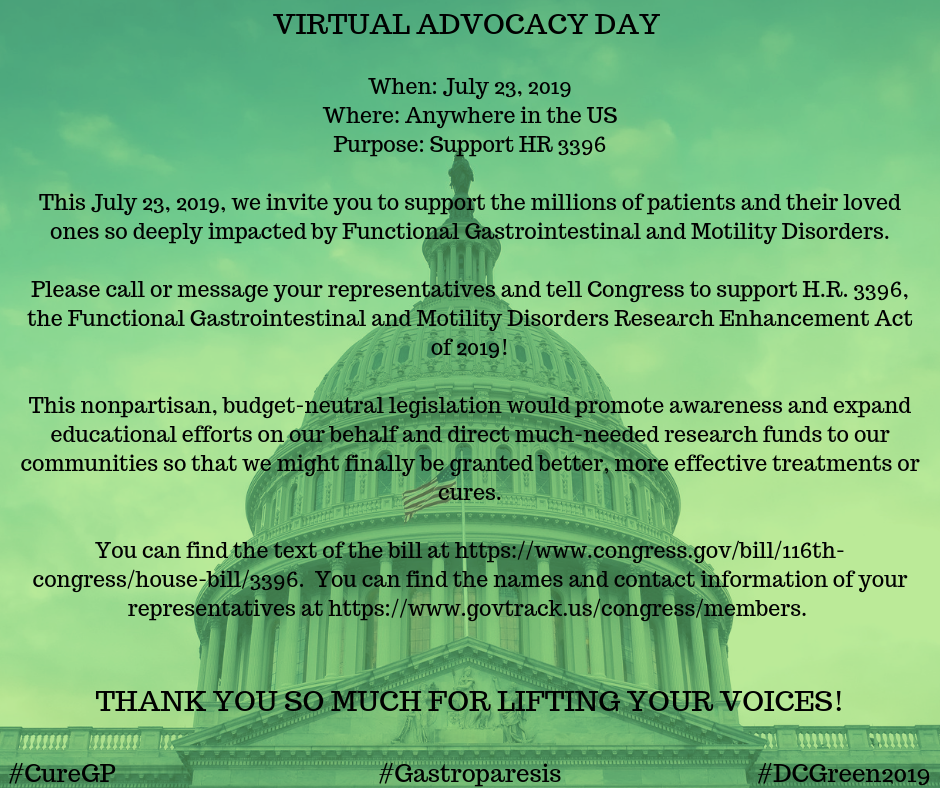
Virtual Advocacy Day

Virtual Advocacy Day

When: July 23, 2019

Where: Anywhere in the US

Purpose: Support HR 3396

As a follow-up to our DC rally & IFFGD Hill Day, the #Gastroparesiscommunity will be hosting a VIRTUAL ADVOCACY DAY on July 23, 2019, in support of H.R. 3396. Please join us as we stand up, speak out, & demand change!

Additional information below and at https://melissarvh.blogspot.com/…/07/virtual-advocacy-day.h…


#DCGreen2019 #CureGP

******************************************************************

This July 23, 2019, the Gastroparesis community invites you to support the millions of patients and their loved ones affected by Functional Gastrointestinal and Motility Disorders.

These disorders, which include Gastroparesis, Irritable Bowel Syndrome, Dyspepsia, GERD, and numerous other conditions, are frequently debilitating, and sometimes life-threatening, and they impact the physical, mental, emotional, social, and financial well-being of those affected. FGIMDs are chronic illnesses which impact people of all ages, genders, races, and socioeconomic backgrounds; yet there are often few (or no) effective treatments or cures, and the limited available treatment options come with serious side effects and risks.

Please contact your congressional representatives in the House and request that they cosponsor the Functional Gastrointestinal and Motility Disorders Research Enhancement Act of 2019 (H.R. 3396) and ask your senators to introduce a companion bill.

This nonpartisan, budget-neutral legislation would promote awareness and expand educational efforts on our behalf and direct much-needed research funds to our communities so that we might finally be granted better, more effective treatments or cures. You can find the text of the bill at https://www.congress.gov/bill/116th-congress/house-bill/3396


You may call, write, or e-mail your representatives. You can find the names and contact information of your representatives at https://www.govtrack.us/congress/members


Please consider the following talking points when contacting your representatives:

  • Identify yourself as a constituent and be direct about the purpose of your call/letter/e-mail. Ask to speak with the representative’s healthcare advisor if possible.
  • Mention the bill by name and/or number and let your representatives know its purpose.
  • Briefly tell your personal story.
  • Mention that FGIMDs affect millions of patients and their loved ones.
  • Explain that the bill would direct potentially life-saving research funds to these communities in the hopes of finding effective treatments and cures and create “Centers of Excellence” designed to educate and promote awareness of these devastating illnesses.
  • Point out that the legislation is budget-neutral (or does not incur additional costs or deficits).
  • Thank your representative for his/her time and consideration and make certain you have left your contact information in case you can provide additional input.

If your representative would like to pursue co-sponsorship, you can direct your representative to contact Mr. Ben Steinhafel, in Rep. James Sensenbrenner’s office, at ben.steinhafel@mail.house.gov and/or Ms. Carol Frauman, in Rep. Gwen Moore’s office, at caroline.frauman@mail.house.gov.


THANK YOU SO MUCH FOR LIFTING YOUR VOICES!


Loading spinner

#RealGP

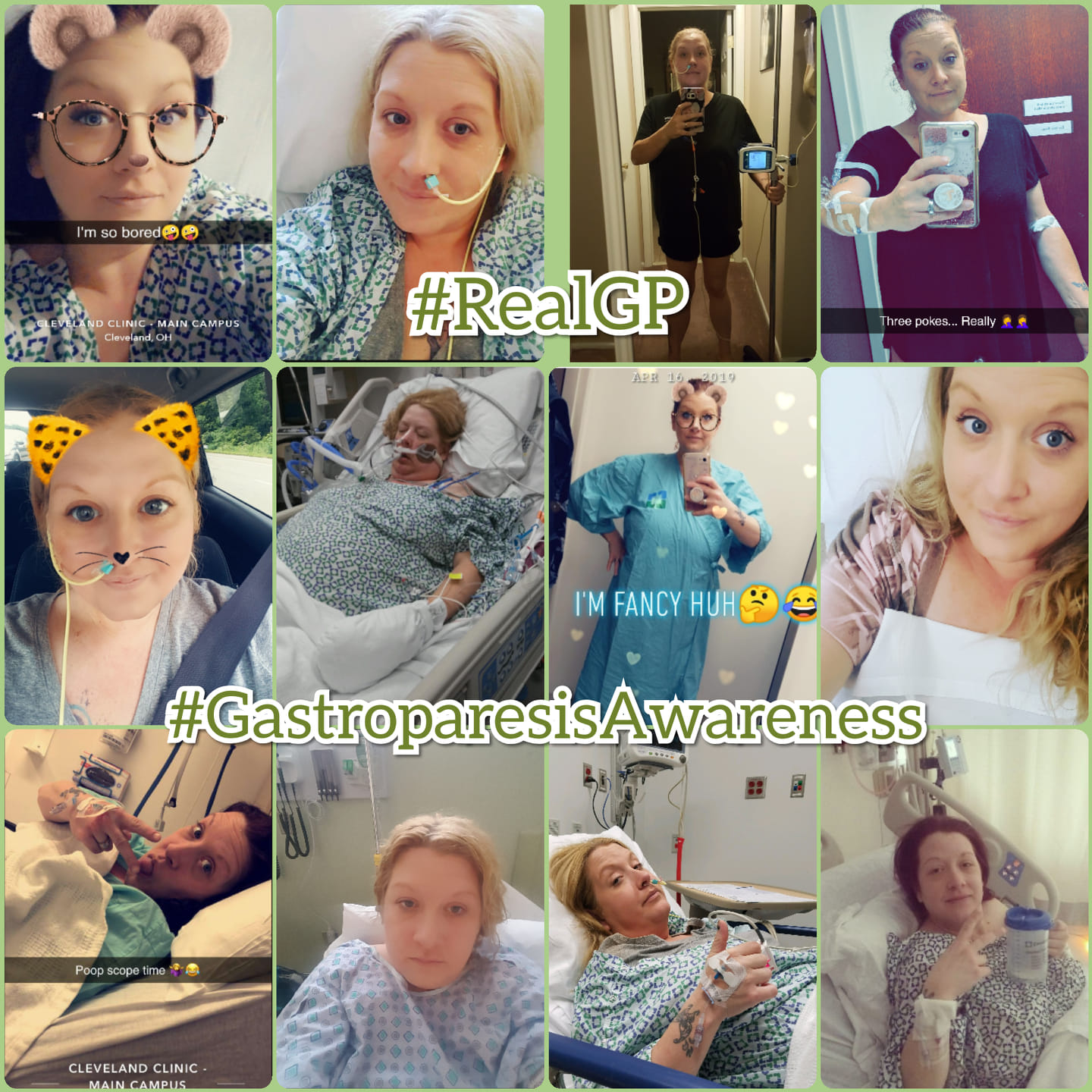
As most of you are aware, August is Gastroparesis Awareness Month, and this year, we are launching a #RealGP campaign to help highlight some of the issues in our community.
 

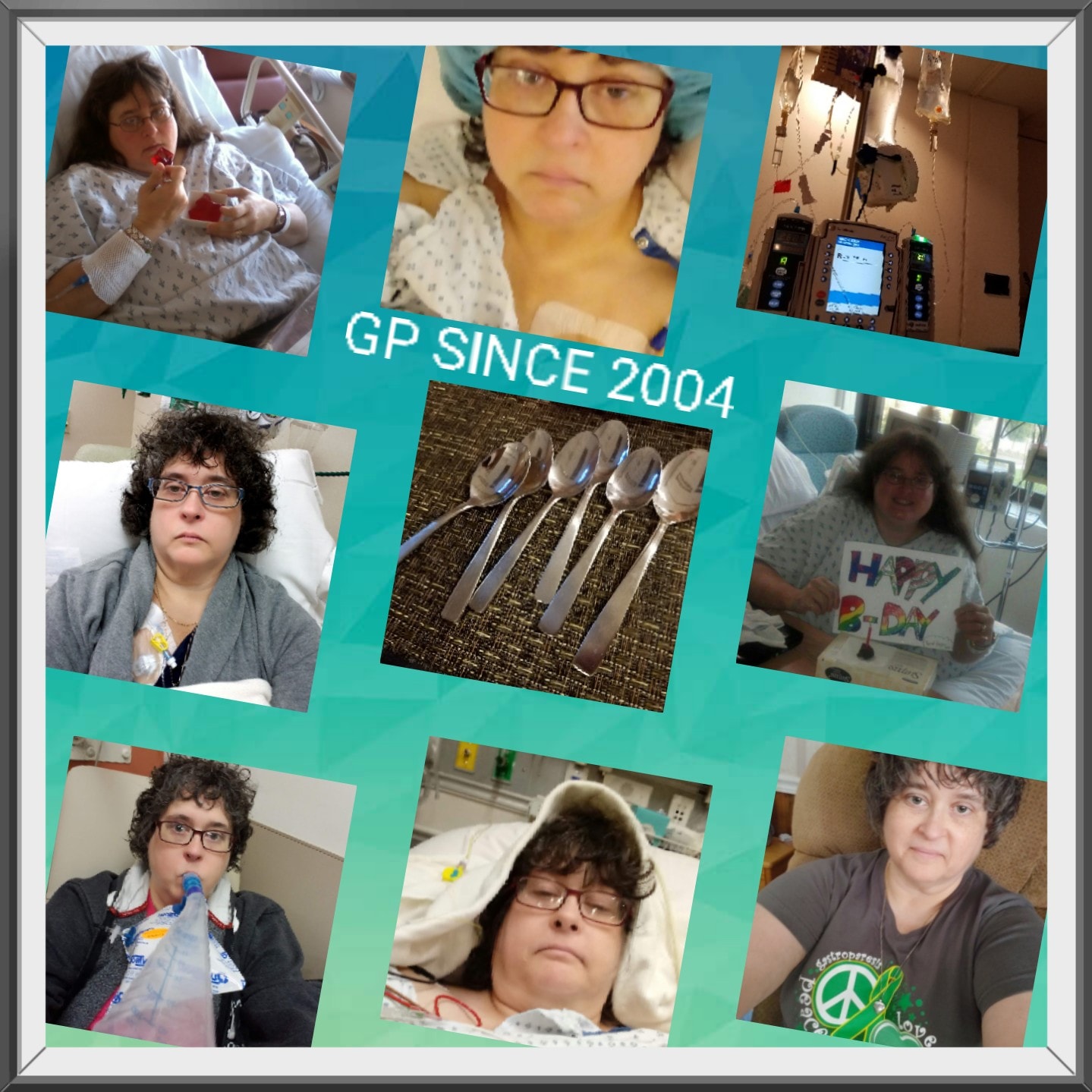
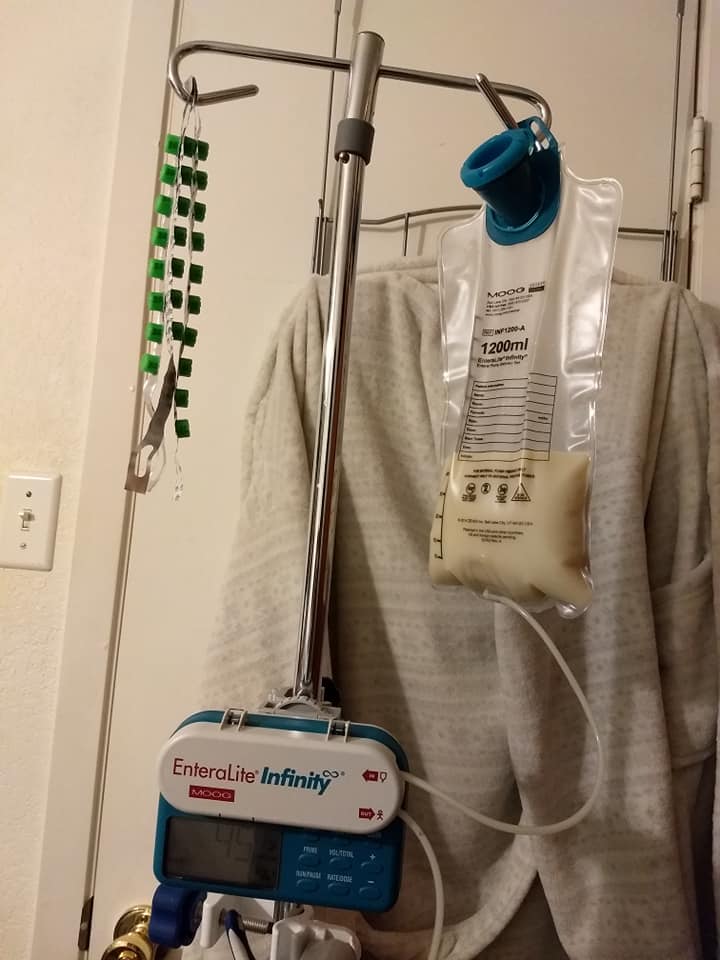
The #RealGP campaign seeks to dispel common myths surrounding Gastroparesis and illustrate the true physical, mental/emotional, and financial impact of this illness upon patients and their loved ones.

To make this effort a success, we will need your help! Your contributions can take several forms:
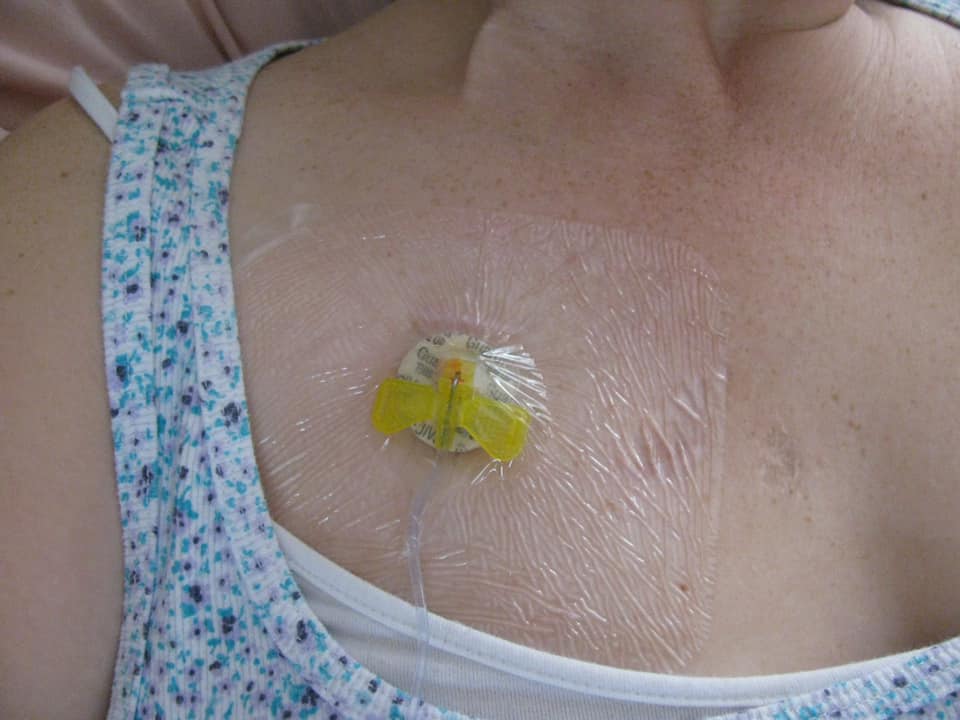
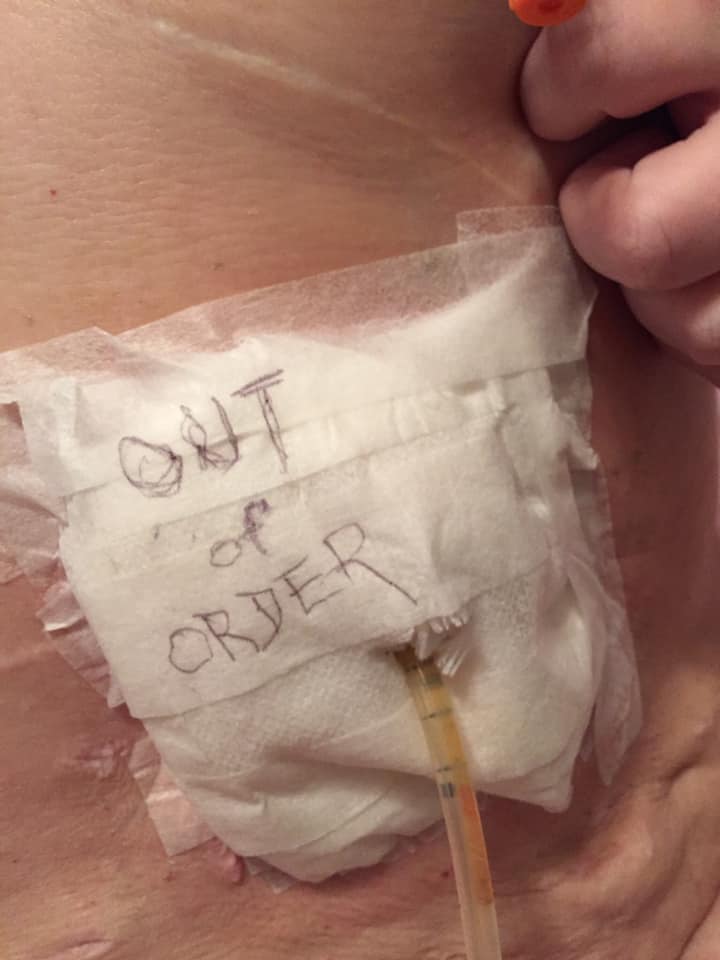
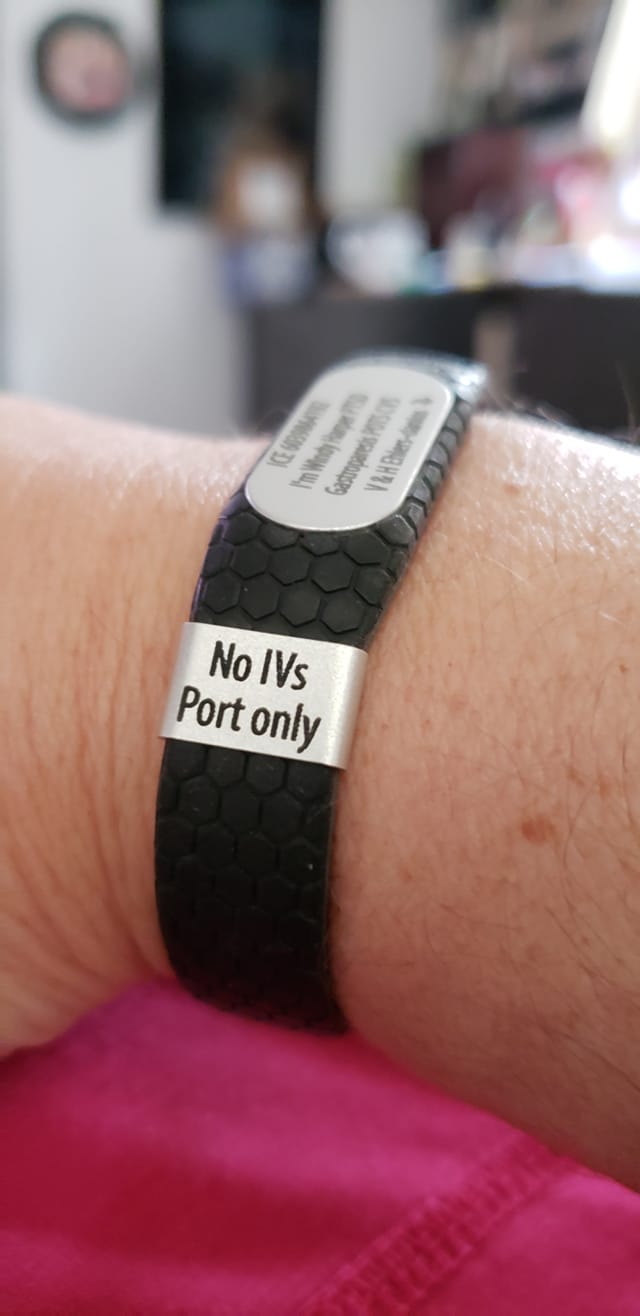
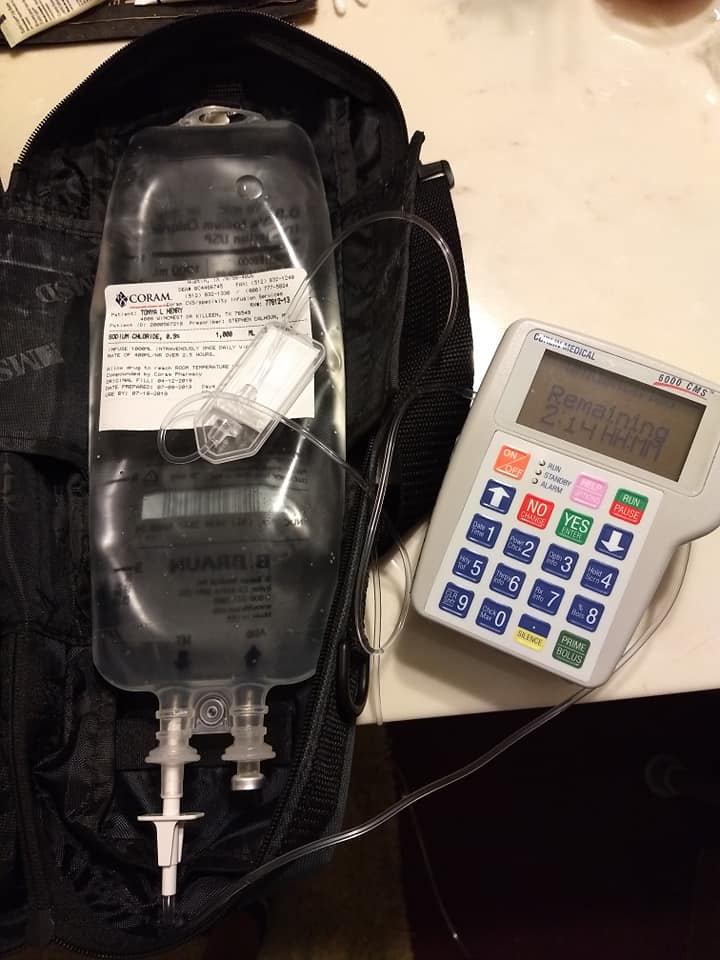
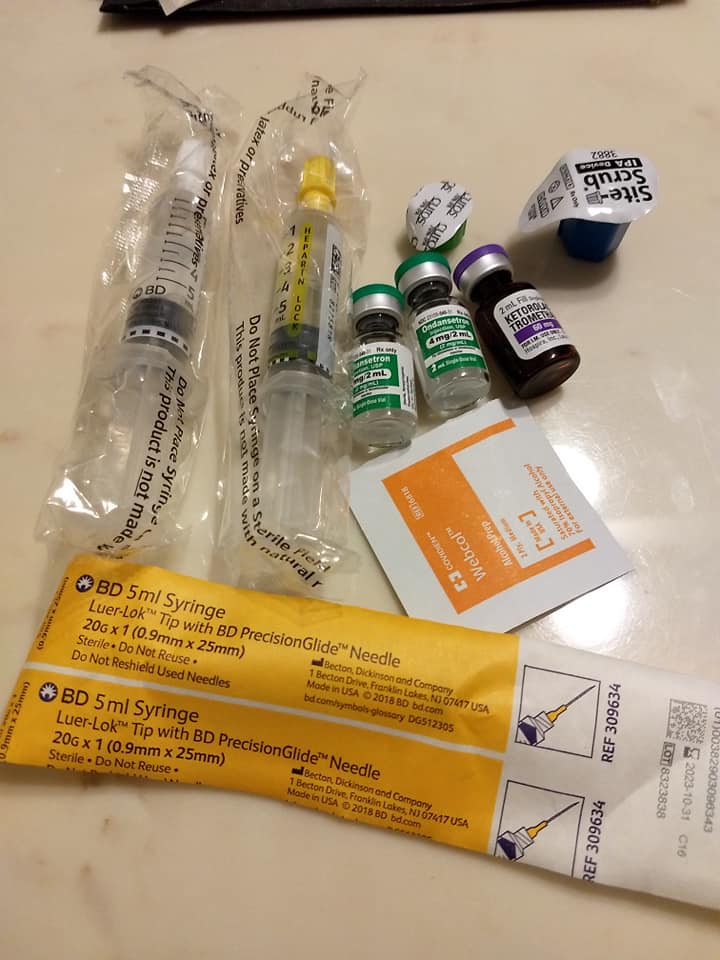
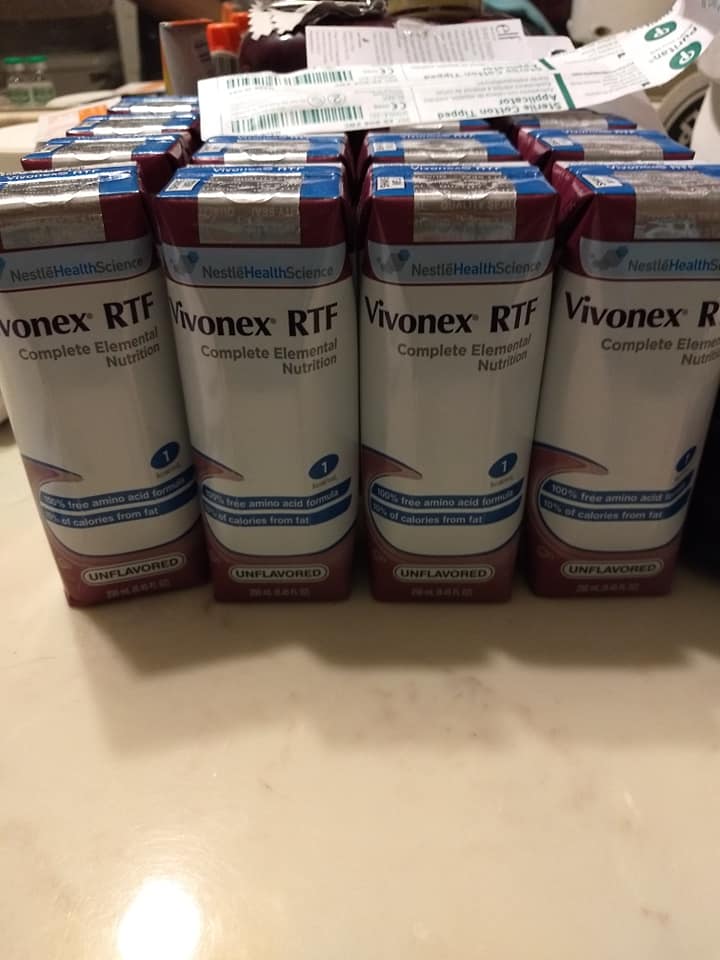
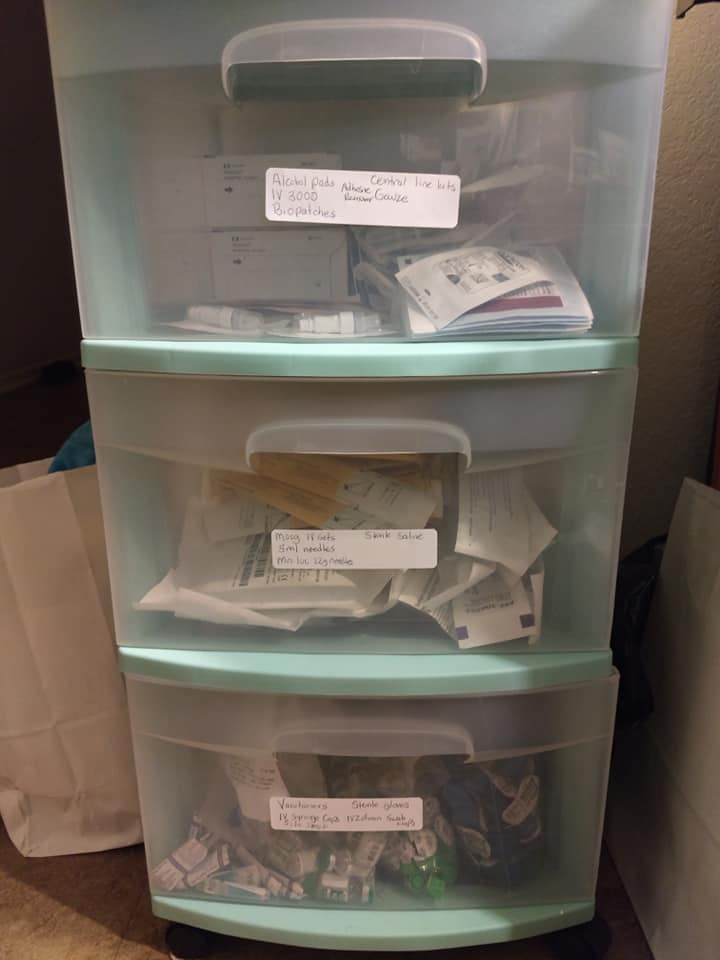
  • Photos depicting your GP reality
  • Statements and memes contrasting common myths (such as all GP patients are thin) with your personal experience
  • Stories of struggle with issues most people do not see (making the “invisible,” visible, in other words)
  • Discussion of the mental/emotional aspects of this illness which are rarely (or poorly) addressed
  • Examples of financial hardships — insurance, medical care, prescription costs, lack of employment, difficulty establishing disability, etc.
The manner and subject of your participation are only limited by your imagination, and this list is not exhaustive. You may comment here or send ideas and projects by emailing us at campaigns@curegp.org.
 
Please be creative and help us make an impact for our GP community!
Loading spinner